Definition of Mitosis – Introduction to fundamental concepts of Biological Science including the organization and common characteristics of living matters, cell structures and functions, food production by photosynthesis, harvesting energy, mechanism of cells reproduction, genetics, evolutions, and Human Biology. Introduction to general chemistry including basic concepts about matter, atomic structure, chemical bonds, gases, liquid, and solids, solutions, chemical reactions, acid, bases, and salt;
organic and biochemistry including hydrocarbons and their derivatives, carbohydrates, lipids, proteins, enzymes, vitamins, and minerals, nucleic acids; principles of physics and applications to nursing including gravity and mechanics, pressure, heat and electricity; nuclear chemistry and nuclear physics, effects of radiation on human beings, and protection and disposal. The aim of the course is to acquire knowledge and skills in general biological science, general chemistry and physics.
Definition of Mitosis
Mitosis is a type of cell division in which one cell (the mother) divides to produce two new cells (the daughters) that are genetically identical to itself
Phages of Mitosis
A. Prophase:
- It is the first and the longest phase in the mitotic cell division.
- Chromosomes become visible in the nucleus as short, thick, helically coiled threads instem
- Each chromosome splits into two chromatids (Fig. 305B, C) joined at the centromere.
- Nuclear membrane starts dissolving.
- Nucleolus also starts dissolving and disappearing.
- Prophase changes into next stage called metaphase.
- Chromosomes become shorter and thicker.
- Chromosomes arrange themselves in the centre or on the equator of spindle.
- At the end of metaphase, two chromatids of each chromosome also start separating.
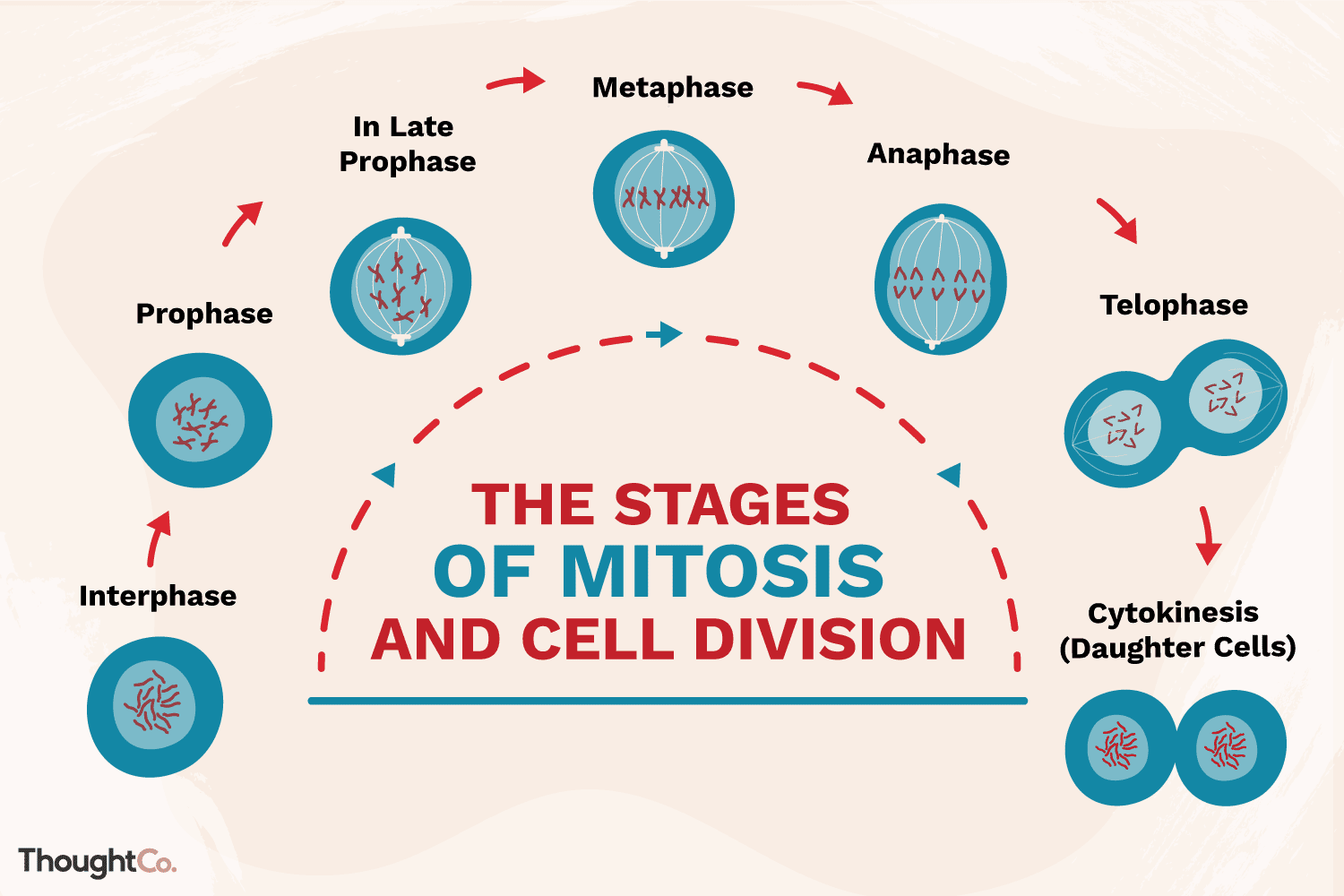
B. Metaphase
- Nuclear memb are disintegrates and disappears completely (Fig. 306).
- Nucleolus disintegrates and disappears completely.
- Spindle fibres start appearing and these fibres get attached to chromosomes at centromeres.
- Chromosomes become shorter and thicker.
- Chromosomes arrange themselves in the centre or on the equator of spindle.
- At the end of metaphase, two chromatids of each chromosome also start separating.
- Metaphase changes into the next stage called anaphase.
C. Anaphase:
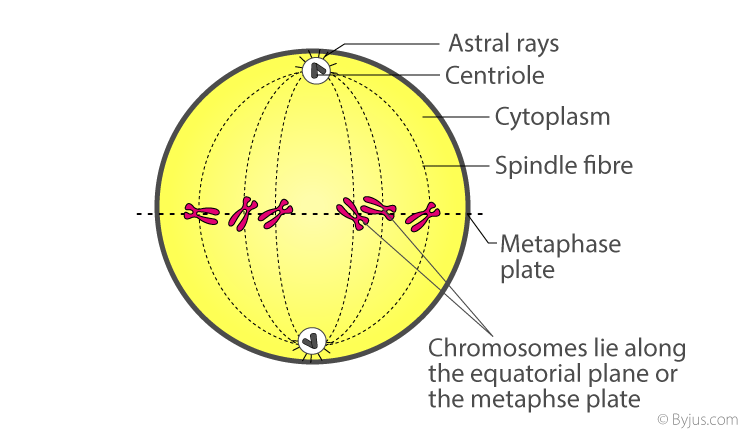
- Chromatids separate from each other at centromere and called daughter chromosomes (Fig. 307).
- Daughter chromosomes move to the opposite poles of the spindle.
- Daughter chromosomes appear ‘V’, ‘U’ or J-shaped during their movement towards poles.
- Anaphase changes into the next stage called telophase.
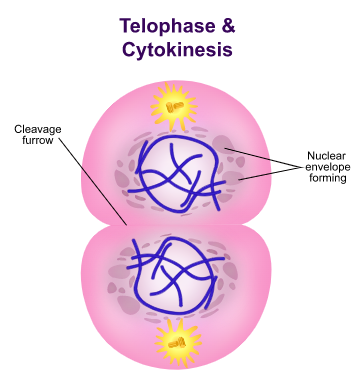
D. Telophase:
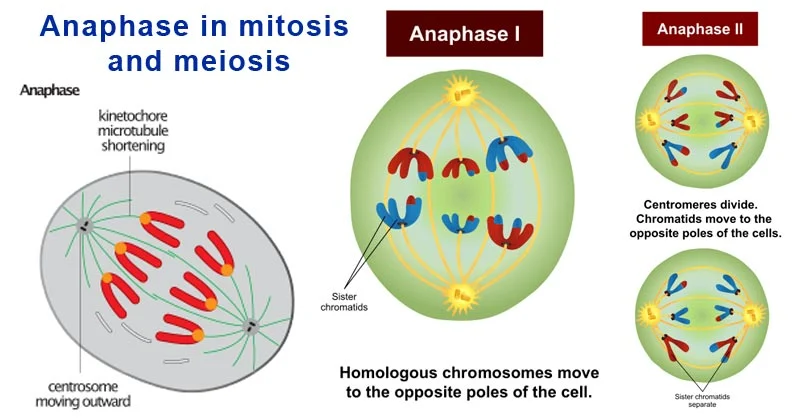
- Daughter chromosomes are now at the end of the spindle, i.e., present on two opposite poles (Fig. 308A).
- Nuclear membrane reforms around each group of daughter chromosomes (Fig. 308B).
- Nucleolus reforms (Fig. 308C).
- Two nuclei are thus organised, one at each pole of the parent cell.
- Chromosomes begin to loose their compact structure.
- Spindle fibres disappear gradually.
- Thus formed two daughter nuclei are exactly similar to the parent nucleus.
Importance/Significance of Mitosis:
- Mitosis results in the formation of two daughter cells identical with that of the parental cell.
- By this process, DNA, the main component of chromosomes, is distributed equally among the two newly formed nuclei.
- Both the daughter cells formed after mitosis are identical and have the same genetic
constitution, qualitatively as well as quantitatively, as the parent cell. - The number of chromosomes remains the same from one generation to another generation.
- Resulted daughter cells have the same characters as were present in the parent cell.
- The characters of the plants grown by vegetative reproduction may be preserved for a long period.
Function of Mitosis:
Development and growth : The number of cells within an organism increases by mitosis. This is the basis of the development of a multicellular body from a single cell, i.e., zygote and also the basis of the growth of a multicellular body.
Cell replacement : In some parts of body, e.g. skin and digestive tract, cells are constantly sloughed off and replaced by new ones. New cells are formed by mitosis and so are exact copies of the cells being replaced. In like manner, red blood cells have short lifespan (only about 4 months) and new RBCs are formed by mitosis.
Regeneration : Some organisms can regenerate body parts. The production of new cells in such instances is achieved by mitosis. For example, starfish regenerate lost arms through mitosis.
Asexual reproduction : Some organisms produce genetically similar offspring through asexual reproduction. For example, the hydra reproduces asexually by budding. The cells at the surface of hydra undergo mitosis and form a mass called a bud. Mitosis continues in the cells of the bud and this grows into a new individual. The same division happens during asexual reproduction or vegetative propagation in plants.