
Nasal polyps – This course is designed to understand the concept of community health nursing: nurses’ roles and interventions in family health, school health, occupational health, environmental health, elderly health care, gender issues, disaster management and principles and terminology of epidemiology. The aim of the course is to acquire knowledge and skills in community health nursing.
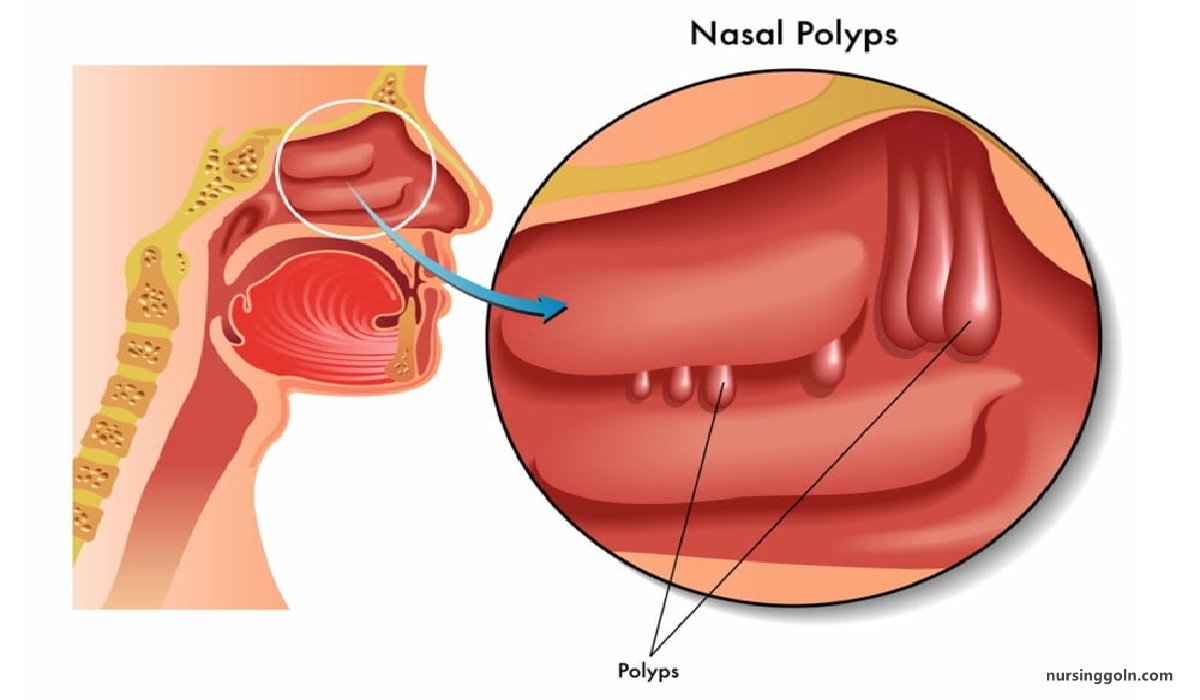
Nasal polyps
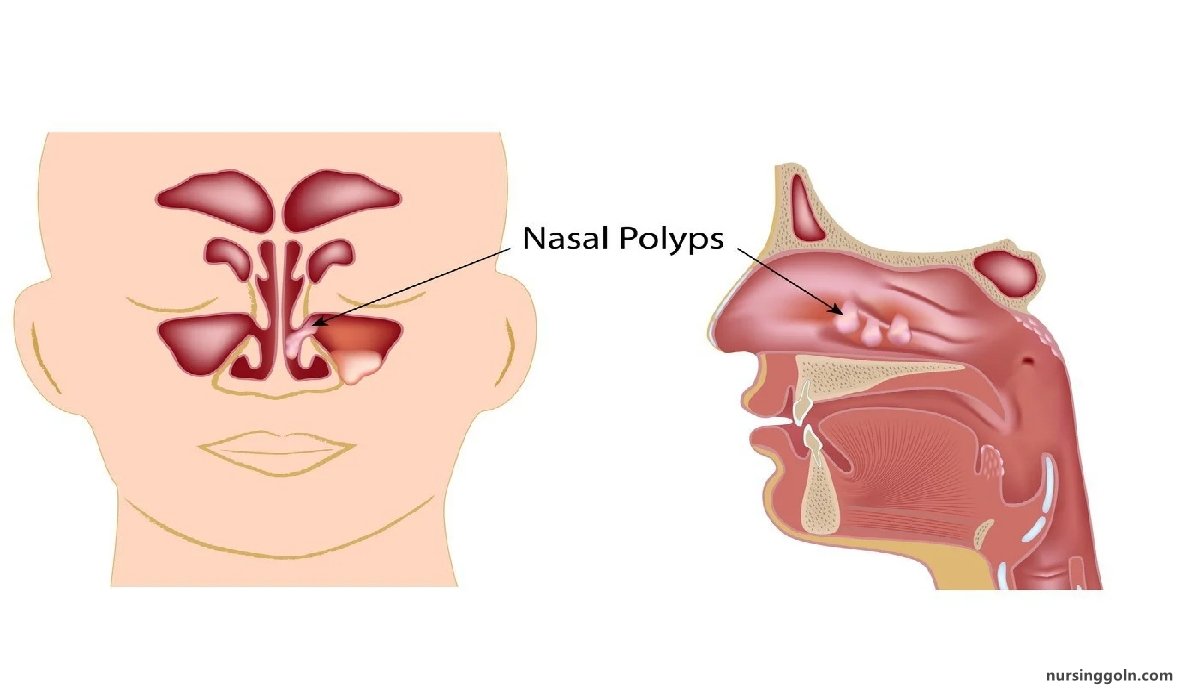
Nasal polyps are edematous sagging down of hypertrophied mucosa of nose & paranasal sinuses resulting in a pedunculated mass.
Types of Nasal Polyps:
Anatomically:
- Antrochoanal polyp.
- Ethmoidal polyp
According to cause:
- Allergic.
- Vasomotor.
- Inflammatory.
- Infective.
- Mixed.
- Neoplastic.
Aetiology of Nasal Polyp:
- Idiopathic or unknown (majority of cases).
- Chronic infection.
- Allergic (allergic rhinitis, food allergy)
- Combined allergy & infection.
- Intrinsic rhinitis with eosinophilic secretion.
- Aspirin hypersensitivity.
- Cystic fibrosis.
- Coeliac disease.
Management of Ethmoidal Polyp:
History:
➤ Usually elder patient.
➤ Allergic in origin.
➤ History of excessive sneezing for prolonged period.
Clinical features:
➤ Symptoms:
- Onset-slow & insidious.
- Nasal obstruction – Bilateral & complains during inspiration.
- Nasal discharge – Watery or mucoid.
- Headache.
- Sneezing.
- Anosmia.
➤ Signs:
- Discharge through nose.
- Difficulty in inspiration.
- Total or partially obstructed airway.
- On anterior rhinoscopy: There are multiple polypoidal mass occupying the both nasal cavity & seems to be arising from root of nasal cavity comes to the anterior nares; pale in colour.
- On probing: Insensitive to touch, dose not bleeds on touch, mobile soft in consistency, so smooth surface.
Investigation:
➤ X-ray PNS occipito-frontal view: Hazy frontal air sinus & hazy maxillary sinus but no opacity
➤ Nothing seen in posterior rhinoscopy.”
➤ Blood for TC, DC, ESR, H6%.
➤ Coronal CT scans of paranasal sinuses.
Treatment
➤ Conservative treatment:
- Nasal decongestant.
- Antibiotic: First parenteral then orally
- Prolonged period of anti-histamine for 3-6 month.
- Topical steroid – Beclomethasone.
➤ Surgical: tranl
- Intranasal polypectomy under G/A.
- If recurrence- Ethmoidectomy (Intranasal, Extranasal, Trans-antral),
- FESS (functional endoscopic sinus surgery).
Advice during discharge of a patient following ethmoidal polyp operation:
- Rest for one to two weeks.
- The nose will feel blocked due to post-operative swelling and can take a few weeks to settle down. Apply nasal drops/spray to decongest the nose and follow the recommended method of installation.
- There may have a blood-stained watery discharge from the nose. This is normal and should settle after a few days.
- Scabbing within the nose may occur as it heals. Do not pick this off as the area will bleed.
- For the first few days, avoid very hot drinks, meals, baths or showers.
- For one week, avoid blowing your nose and sneeze with your mouth wide open. These all help to reduce any risk of bleeding.
- Avoid or cut down on smoking as smoking affects the body’s ability to heal and irritates the inside of the nose.
- Avoid crowded or dusty places and people with coughs and colds, as infection can be picked up in the nose.
- Avoid contact sports for four weeks due to the risk of trauma and bleeding.
- If fresh, steady bleeding occurs, pinch the fleshy part of the nose, lean forward and apply ice to the forehead & bridge of nose. A frozen bag of vegetables is a good alternative if you
don’t have ice in the freezer. - Avoid swallowing any blood as it can make you feel sick. If the bleeding does not stop after 30 minutes, ring the ward for advice
Antro-Choanal Polyp:
It is that type of nasal polyp which arises from maxillary antrum & goes posteriorly through posterior nasal aperture due to direction of osteum.
Management of a Case of Antrochoanal Polyp:
History:
➤ Children.
➤ Young adult.
Clinical features:
➤ Symptoms:
- Slow & insidious.
- Nasal obstruction – Complains during expiration, unilateral in early.
- Nasal discharge – Purulent/Muco-purulent,
- Headache.
- Hyposmia
➤ Signs:
- Discharge: Purulent/Muco-purulent.
- Anterior rhinoscopy: A single polypoidal mass, pale in colour smooth surfaces occupying the left rights nasal cavity arising from lateral wall & directed posteriorly.
- Probing: It is insensitive to touch, does not bleed on touch, soft in consistency & mobile.
Investigations:
➤ X-ray P.N.S occipito-mental view: Opacity of respective antrum.
➤ X-ray nasopharynx (lateral view).
➤ Pus for culture and sensitivity.
Treatment:
➤ Below 14 years of age: Polypectomy followed by antral wash out.
➤ Above 14 years of age: Cald-Well-Luc operation (Sublabial antrostomy).
➤ FESS (Functional Endoscopic Sinus Surgery).
Differences between Antrochoanal and Ethmoidal Polyp:
| Traits | Antrochoanal polyp | Ethmoidal polyp |
| Age | Common in children & adolescent | Common in middle age & elderly people. |
| Aetiology | Mainly infective in origin. | Mainly allergic in origin. |
| Origin | Arises from the maxillary antrum & comes out through the osteum | Arise from anterior, middle & posterior groups of ethmoid cells. |
| Involved side | Usually unilateral. | Bilateral |
| Number | Single. | Multiple, look like bunch of grapes. |
| Extension | Extends backward & best seen in P.N.S by posterior rhinoscopy. | Extend forward & best seen in AN.S. by anterior rhinoscopy. |
| Extension to pharynx | May extend into the nasopharynx & oropharynx | No |
| Pus in meatus | No evidence of infection in meatus. | Pus seen in middle meatus |
| Recurrence | Unusual after radical operation | Common even after radical operation. |
| X-ray of sinuses | Unilateral opacity of the maxillary antrum. | Bilateral antral haziness due to associated maxillary sinus infection. Ethmoid cells are also hazy |