Vertebral column- The course is designed for the basic understanding of anatomical structures and physiological functions of human body, musculoskeletal system, digestive system, respiratory system; cardiovascular system; urinary system, endocrine system, reproductive system, nervous system, hematologic system, sensory organs, integumentary system, and immune system.
The aim of the course is to acquire knowledge and skills regarding anatomy and physiology.
Vertebral column
VERTEBRAL COLUMN
The vertebral column, also called the spine, spinal column, or backbone, is composed of a series of bones called vertebrae. The vertebral column functions as a strong, flexible rod that can rotate and move forward, backward, and sideways. It encloses and protects thespinal cord, supports the head, and serves as a point of attachmentfor the ribs, pelvic girdle, and the muscles of the back.
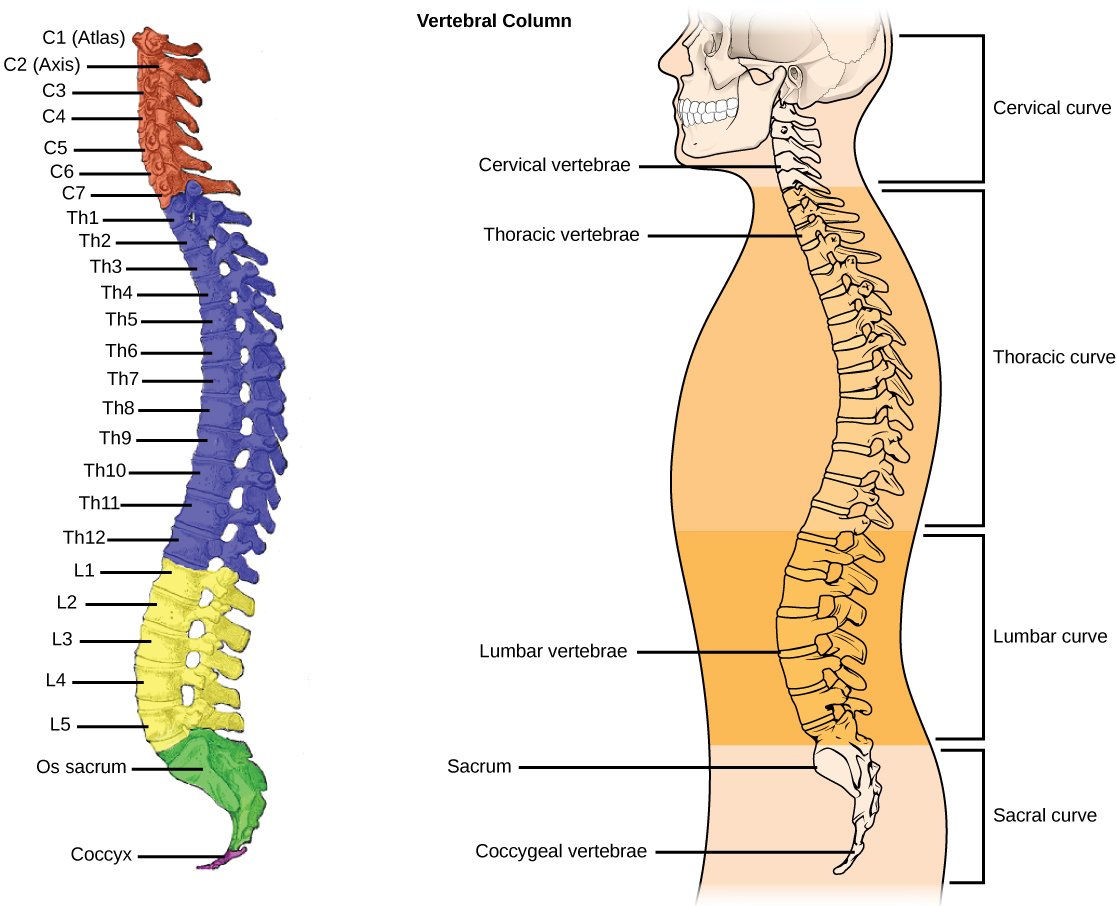
The vertebral column consists of 33 vertebrae, which are divided into cervical (C), thoracic (T). lumbar (L), sacral (S), and coccygeal (Co) regions To simplify their descriptions, each vertebra is referred to by the first letter of its region. For example, the fourth cervical vertebra is referred to as the C4 vertebra.
The total number of vertebrae during early development is 33. Then, several vertebrae in the sacral and coccygeal regions fuse. As a result, the adult vertebral column typically contains 26 vertebrae. These are distributed as follows:
- 07 (Seven) cervical vertebrae (cervic neck). The C-1 vertebra, also called the “atlas,” articulates with the skull. The C-2 vertebra is also called the “axis” because, through its synovial joint articulation with C-1, it provides a side-to-side rotation, as in the head movement indicating “no.” A unique characteristic of cervical vertebrae is that each transverse process has its own transverse foramen for the transmission of the vertebralarteries from the subclavian artery to the brain.
- 12 (Twelve) thoracic vertebrae (thorax = chest). On each side of a thoracic vertebra, there is a rib that articulates with the vertebral body and transverse process. Thus, there are 12 pairs of ribs articulating with 12 thoracic vertebrae.
- 05 (Five) lumbar vertebrae These massive vertebrae form the support to the lower part of the back.
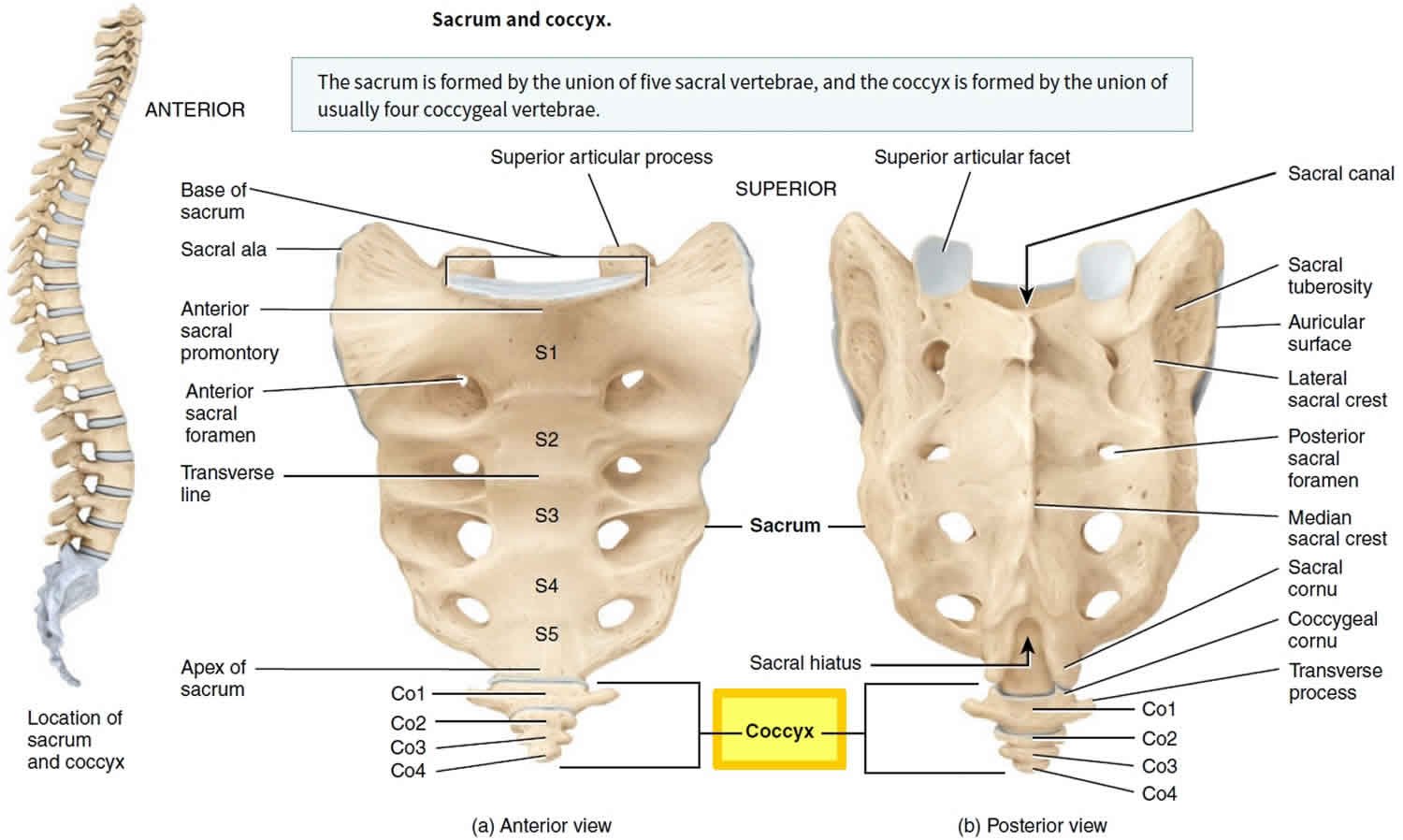
- 01(One) sacral vertebrae These 05 vertebrae are fused into one bone called the sacrum.
- 01 (One) Coccygeal vertebrae( = cuckoo, because the shape resembles the bill of a cuckoo bird) usually consists of four fused coccygeal vertebrae that form the coccyx, or “tailbone.”
(Ref-J. Tortora, The essentials of anatomy and physiology, 8 edition, P-139,140 + Guyton and Hall, Textbook of Medical Physiology, 12th ed)
Normal Curves of the Vertebral Column
When viewed from the side, the vertebral column shows four slight bends called normal curves. Relative to the front of the body, the cervical and lumbar curves are convex (bulging out), and the thoracic and sacral curves are concave (cupping in). The curves of the vertebral column increase its strength, help maintain balance in the upright position, absorb shocks during walking and running. and help protect the vertebrae from breaks.
In the fetus, there is a single concave curve. At about the third month after birth, when an infant begins to hold its head erect, the cervical curve develops, Later, when the child sits up, stands, and walks, the lumbar curve develops.
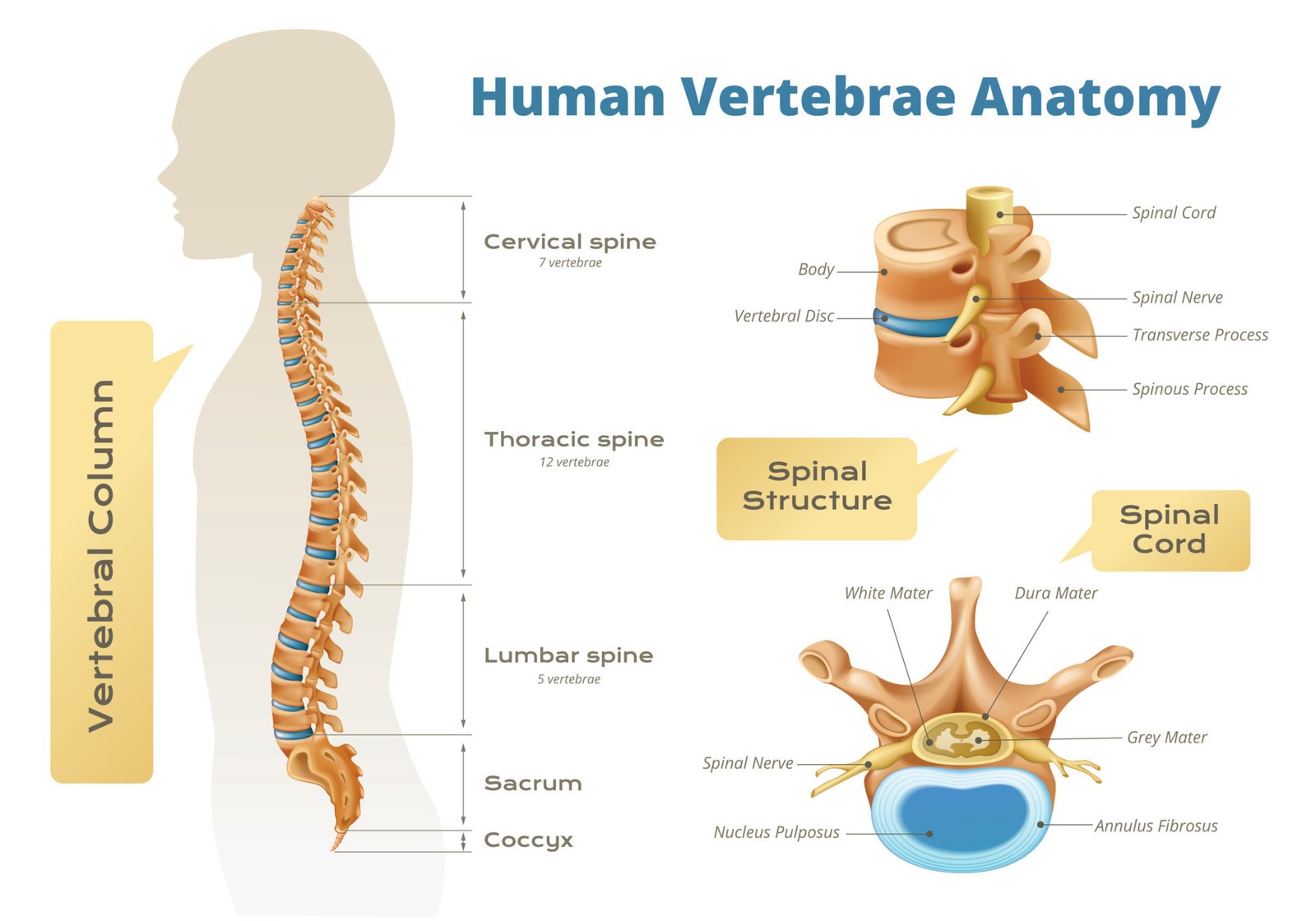
There are four normal curves (02 primary & 02 secondary) are present in vertebral column which are alternately convex (curve backward) and concave (curve forward). They are mentioned below…
- Primary curves (concave curve):-There are two concave curves are present in thoracic and pelvic region which are called primary curves because they exist in fetal life and are designed for the accommodation of viscera.
- Secondary curves (convex curve). There are two convex curves are present in cervical and lumbar region which are called secondary or compensatory curves because they are developed after birth.
(Ref:- Indu Khurana, Text book of Anatomy and Physiology for Nurses, 1″ edition, P-99)
Kyphosis: (kypho = bent; osis = condition) An exaggeration of the thoracic curve of the vertebral column. In the elderly, degeneration of the intervertebral discs leads to kyphosis; it may also be caused by osteoporosis, rickets, and poor posture.
Lordosis: (lord=bent backward) An exaggeration of the lumbar curve of the vertebral column, also called hollow back. It may result from increased weight of the abdomen as inpregnancy or extreme obesity, poor posture, rickets, or tuberculosisof the spine.
Scoliosis (scolio crooked) A sideways bending of the vertebral column, usually in the thoracic region. It may result from congenitally (present at birth) malformed vertebrae, chronic sciatica, paralysis of muscles on one side of the vertebral column, poor posture, or one leg being shorter than the other.
Concept about Vertebrae


(Ref:- Guyton and Hall, Textbook of Medical Physiology, 12th ed) + J. Tortora, The essentials of anatomy and physiology, 8th edition, P-158,159.)