Agonist, Antagonist and Inverse Agonist – This book covers the entire syllabus of “Pharmacology” prescribed by BNMC- for diploma in nursing science & midwifery students. We tried to accommodate the latest information and topics. This book is an examination set up according to the teachers’ lectures and examination questions.
At the end of the book, previous questions are given. We hope in touch with the book students’ knowledge will be upgraded and flourish. The unique way of presentation may make your reading of the book a pleasurable experience.
Antagonist and Inverse Agonist
Agonist:
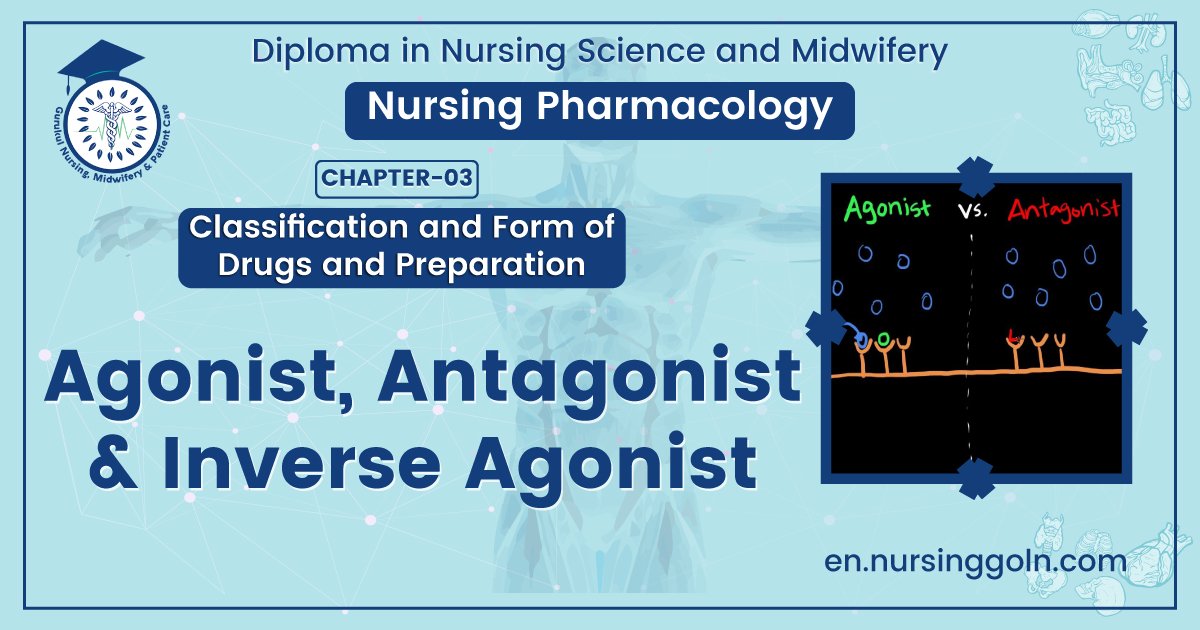
A drug that binds with receptor and activate them to produce a pharmacological response is called agonist.
Example: – Salbutamol, beta adrenoceptor agonist Pilocarpine, muscarinic agonist
Antagonist
Drugs that bind with receptor but no activating effect are termed pure antagonist
Example: – propranolol, beta adrenoceptors antagonist Atropine, muscarinic antagonist
Partial Agonist:
Drugs that bind with receptor and are capable of low degree of activating of receptors.
Example: – clonidine, nalorphine

Inverse agonist:
Some drugs bind with receptors and produce effects that are opposite to those produced by the true agonist.
These agents are called inverse agonist. Example: – Benzodiazepine acts on benzodiazepine receptors in the CNS and produces sedation, anxieolysis, muscle relaxation and control convulsion. Now, the substance, called “B-carbolines” which also bind to this receptor causes stimulation, anxiety, increase muscle tone and convulsions. So, it is inverse agonist. Both types of drug act by modulating the effect of
neurotransmitter Gaga.
Read more: