Concept about Pancreas-The course is designed for the basic understanding of anatomical structures and physiological functions of human body, musculoskeletal system, digestive system, respiratory system; cardiovascular system; urinary system, endocrine system, reproductive system, nervous system, hematologic system, sensory organs, integumentary system, and immune system.The aim of the course is to acquire knowledge and skills regarding anatomy and physiology.
Concept about Pancreas

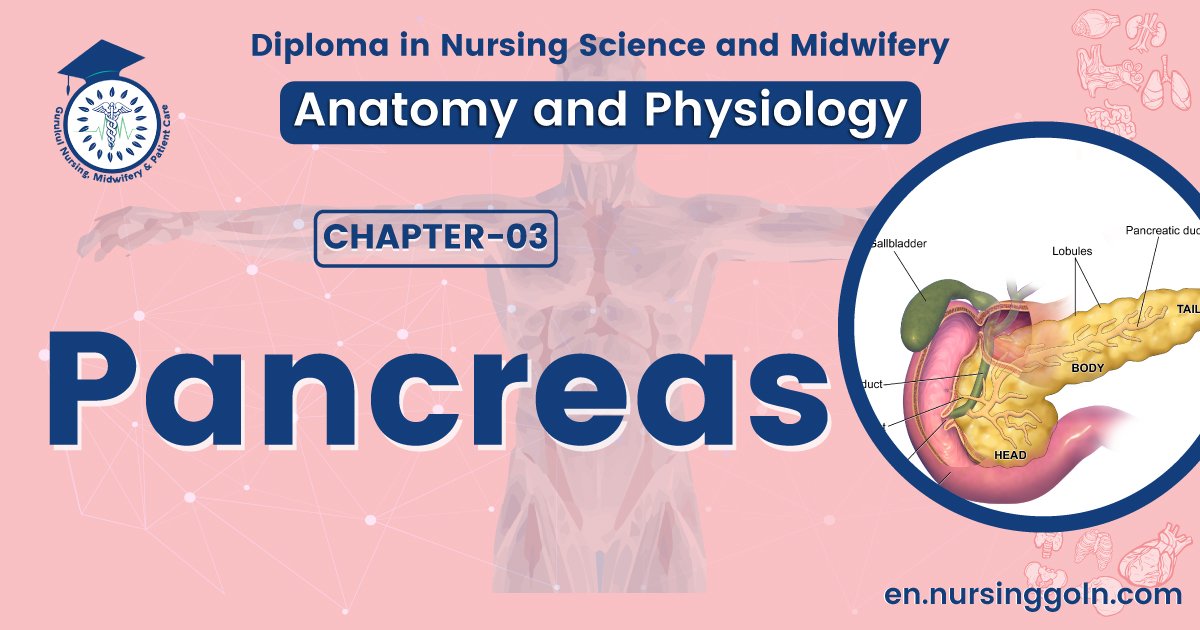
The pancreas is a soft, glandular organ that has both exocrine and endocrine functions. It is also known as mixed gland.
Location:-
The pancreas lies on transversely across the posterior abdominal wall from the duodenum, on the right and to the spleen, on the left.
Length & weight:-
Length is about: 15-20 cm and weight is about 90 gm.
Functions:-
- The endocrine function is performed by clusters of cells called the pancreatic islets, or islets of Langerhans, that secrete the hormones insulin and glucagon into the blood.
- As an exocrine gland, the pancreas secretes pancreatic juice through the pancreatic duct into the duodenum. Within the lobules of the pancreas are the exocrine secretory units, called acini. Each acinus consists of a single layer of acinar epithelial cells surrounding a lumen, into which the constituents of pancreatic juice are secreted

Digestion and Absorption of Carbohydrates
Most carbohydrates are ingested as starch, which is a long polysaccharide of glucose in the form of straight chains with occasional branchings. The most commonly ingested sugars are sucrose (table sugar, a disaccharide of glucose and fructose ) and lactose (milk sugar, a disaccharide of glucose and fructose ).
The digestion of starch begins in the mouth with the action of salivary amylase. This enzyme cleaves some of the bonds between adjacent glucose molecules, but most people don’t chew their food long enough for sufficient digestion to occur in the mouth.
The digestive action of salivary amylase stops some time after the swallowed bolus enters the stomach because this enzyme is inactivated at the low pH of gastric juice. The digestion of starch, therefore, occurs mainly in the duodenum as a result of the action of pancreatic amylase.
This enzyme cleaves the straight chains of starch to produce the disaccharide maltose and the trisaccharide maltriose. Pancreatic amylase, however, cannot hydrolyze the bond between glucose molecules at the branch points in the starch.
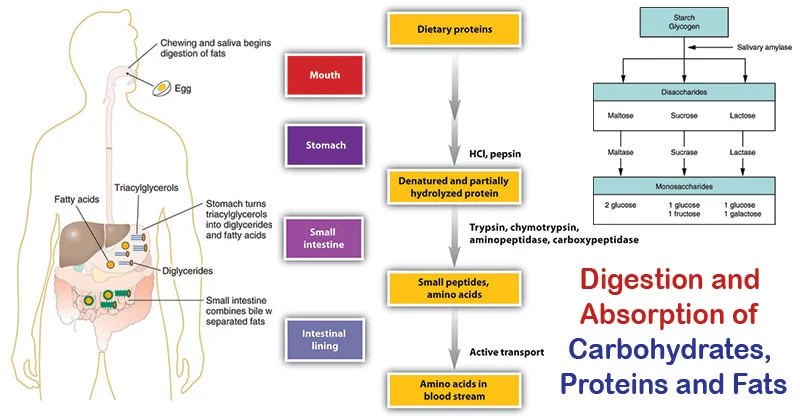
As a result, short, branched chains of glucose molecules, called oligosaccharides, are released together with maltose and maltnose by the activity of this enzyme. Maltose, maltriose, and oligosaccharides are hydrolyzed to their monosaccharides by brush border enzymes located on the microvilli of the epithelial cells in the small intestine.
(Ref:-Stuart Ira Fox, Pierce College, Human Physiology-12th edition
Read more: