Concept of Diarrhoea – This book covers the entire syllabus of “Pharmacology” prescribed by BNMC- for diploma in nursing science & midwifery students. We tried to accommodate the latest information and topics. This book is an examination setup according to the teachers’ lectures and examination questions.
At the end of the book, previous questions are given. We hope in touch with the book students’ knowledge will be upgraded and flourish. The unique way of presentation may make your reading of the book a pleasurable experience.
Concept of Diarrhoea
Therapy for diarrhoea involves
1. First Correction of fluid and electrolytes imbalance.
2. Second = Drug treatment.
Fluid and electrolytes treatment
1. Oral rehydration saline/therapy (ORS/T)
- Simple therapy in acute watery diarrhoea..
- Easily available and cheap.
- Very much effective.
- Readily administered therapy for a potentially lethal condition.
2. Other ORT includes:
- Rice powder ORS
- Glycin ORS
- Composition of ORS:
- The WHO/UNICEF recommended Oral Rehydration Saline
Salt (ORS) formulation is in 1 litre of water:
1. Sodium chloride= 3.5g
2. Tri-sodium citrate= 2.9g
3. Potassium chloride -1.5g
4. Anhydrous glucose=20g
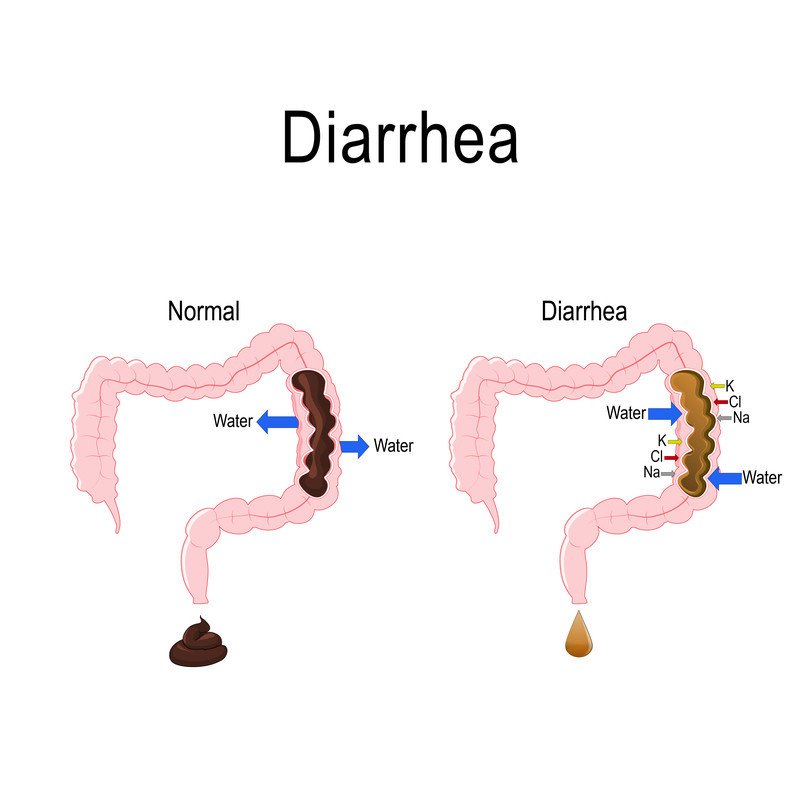
ORS is effective because glucose coupled sodium transport (secondary active transport) continues during diarrhoea and provides a means of replacing water and electrolytes loss in the stool.
Drug treatment of Diarrhoea:
1. Anti-motility drugs (delay passage of gut contents):
- Codeine (opioid agonist, so reduces peristalsis and so more water is absorbed)
- Diphenoxylate (half life:3 hours)
- Loperamide (half life: 10 hours)
2. Adsorbents: increase viscosity of the gut.
- Kaolin
- Pectin.
Kaolin and pectin are adsorbent powder that acts by providing a coating for the bowel and by. adsorbing potential intestinal toxins responsible for diarrhoea. Antimony drugs, chemically related to haloperidol
Mode of action:
Possibly it impairs propulsion of gut contents by effects on intestinal circular and longitudinal muscles that are at least partly due to an action on opioid receptors. Route of administration; oral.
Plasma half-life: 10 hours.
Adverse effects:
1. Paralytic ileus
2. Abdominal distress
3. Respiratory distress
4. Nausea and vomiting.
Contraindications:
1. Acute watery diarrhoea (babies)
2. Severe ulcerative collitis
3. Toxic megacolon
4. Shigella and salmonella infection.
Digestants
Digestants are substances that promote digestion of food.
Name of some digestants
- Hydrochloric acid.
- Pepsin.
- Papain
- Pancreatin
- Diastases
- Taka-diastases
- Methyl poly-siloxane
Comparison between omeprazole and antacid:
| Omeprazole | Antacid |
| Inhibit proton pump (H+ -K+ pump) by inhibiting H+K+-ATPase | Neutralisation of acid by chemical antagonism |
| Blocks both basal and blood stimulated HCI secretion (100% reduction) | No effect on secretion |
| Heals the ulcer | No effects on the underlying pathology |
| Activated in acid pH | |
| Dose: 40-60 mg/day (BID or single dose) | 2+2+2 in acute exacerbation |
| Adverse effect Carcinoid tumor | Adverse effects: Constipation |
Role of H2 blocker (Ranitidine) and Omeprazol in PUD:
| H2 Blocker | Omeprazol |
| Blocks H2 receptors parietal cells & inhibit secretion | Inhibit proton pump (H-K pump) by inhibiting H+- K+ ATPase |
| Blocks both basal and food stimulated HCI secretion (97% reduction) | Blocks both basal and food stimulated HCI secretion (100% reduction) |
| Heals the ulcer | Heals the ulcer |
| Acid environment is not required for activation | Activated in acid PH |
| Dose: 150 mg 12 hourly (after meal) | Dose: 40-60 mg/d (single dose) |
| Adverse effect: no significant adverse effect |