Ureters and Urinary bladder – The course is designed for the basic understanding of anatomical structures and physiological functions of human body, musculoskeletal system, digestive system, respiratory system; cardiovascular system; urinary system, endocrine system, reproductive system, nervous system, hematologic system, sensory organs, integumentary system, and immune system.The aim of the course is to acquire knowledge and skills regarding anatomy and physiology.
Ureters and Urinary bladder
Ureters
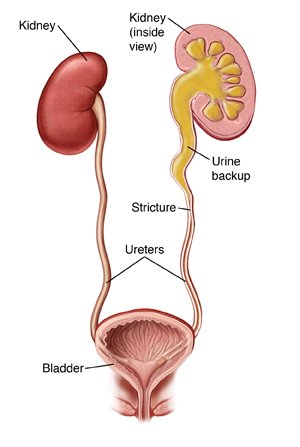
The ureters are the tube that convey urine from the kidneys to the urinary bladder. They are about 25 to 30 cm long with a diameter of about 3 mm.
Each of the two ureters transports urine from the renal pelvis of one of the kidneys to the urinary bladder. The ureters pass under the urinary bladder for several centimeters, causing the bladder to compress the ureters and thus prevent backflow of urine when pressure builds up in the bladder during urination.
Urinary Bladder
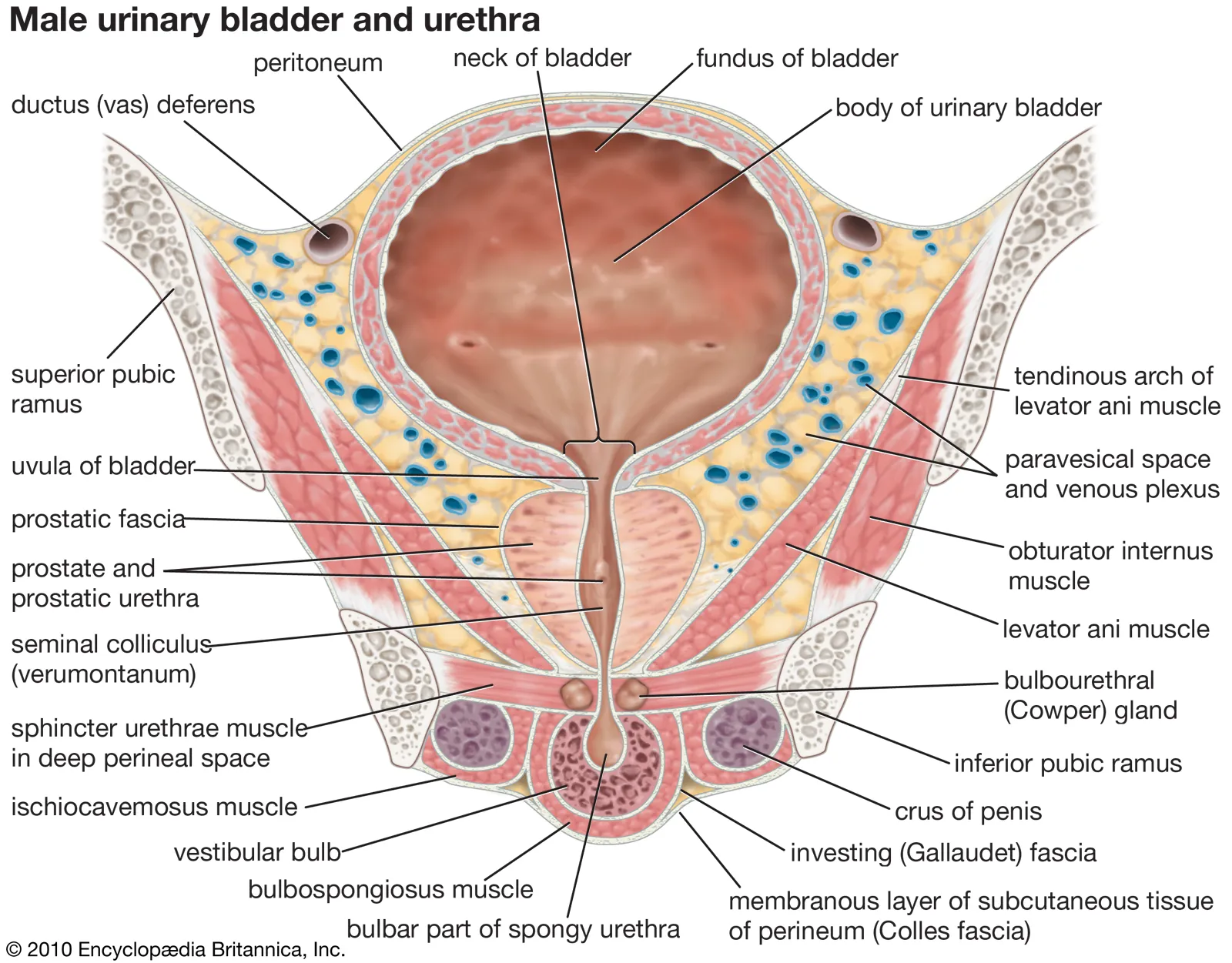
The urinary bladder is a hollow muscular organ situated in the pelvic cavity behind the pubic symphysis.
In males, it is directly in front of the rectum.
- In females, it is in front of the vagina and below the uterus.
- Folds of the peritoneum hold the urinary bladder in position.
- The shape of the urinary bladder depends on how much urine it contains. When empty, it looks like a deflated balloon. It becomes spherical when slightly stretched and, as urine volume increases, becomes pear-shaped and rises into the abdominal cavity.
- Urinary bladder capacity averages 700-800 mL.
- It is smaller size in females than male because the uterus occupies the space just superior to the urinary bladder.
(Ref:- Ross & Wilson 9th /347-349p+ J. TORTORA, 8th edition, P-550, 551)