Ward Management – this book covers the entire syllabus of “Leadership & Management” prescribed by the BNMC for Diploma in Nursing Science & Midwifery Students.
We tried to accommodate latest information and topics. This book is examination friendly setup according to the teachers’ lectures and examination’s questions. At the end of the book previous university questions are given. We hope in touch with the pook students’ knowledge will be upgraded and flourished. The unique way of presentation may make your reading of the book a pleasurable experience.
Ward Management
Definition of Ward Management:
According to Kozier, Erb and burk (2011)
Ward Management is a process whereby the ward manager through people and with people makes use of ward resources to achieve ward objective. The main goal of ward management includes optimal utilization of ward resources to produce maximum output in patient care, provide personal training and advancement of patient care services.
Objectives of Ward Management
- To foster team spirit in the ward that will provide highest quality healthcare services.
- To provide a clean, well ventilated environment, free om infection, accidents and hazards for patients.
- To provide facilities that meets the needs of patient and their attendants.
- To optimally utilize ward resources for maximum output.
- To encourage personnel training, job satisfaction and advancement for patient care.
Another Answer:
Goal of Ward Management
- To provide highest quality nursing care for patient.
- To provide a clean, well ventilated environment for patient and protect her/him from infection, accidents and hazards.
- To help the staff in achieving highest degree of job satisfaction
- To provide facilities to meet the needs of patient and their attendants.
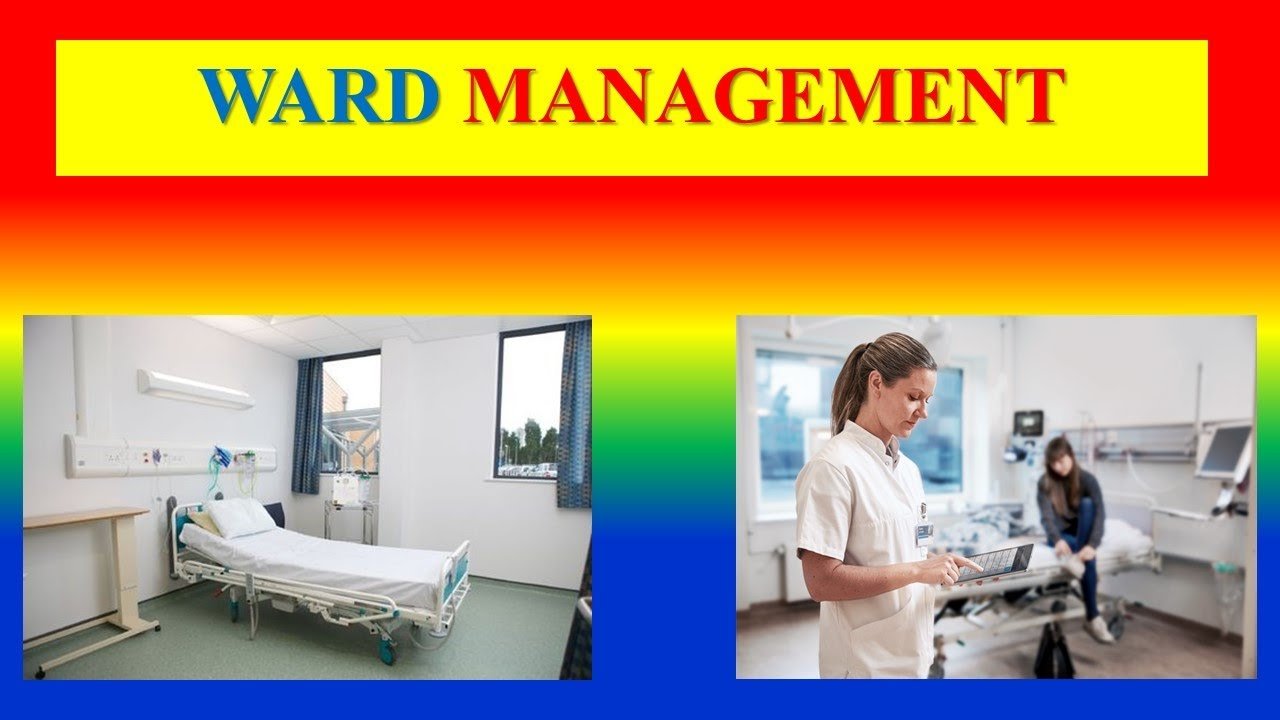
Process/Methods of Ward Management:
- Identify the people of organization as its greatest assets.
- Make profit in order to continue rendering service (specially profit making organizations).
- Establish the long and short term objective to ensure greater accomplishment.
- Secure full attainment of object through general understanding and acceptance by others.
- Keep individual members of the team well-adjusted by seeing that each one knows what he is supposed to do ‘and how well he is supposed to do what is his authority and what is his authority and what his work relationship with others should be.
- Concentrate on individual improvements through regular review of performance and
potentials. - Provide opportunity for assistance and guidance in self-department as a fundamental of institution growth.
- Maintain adequate and timely incentives and rewards for increases in human efforts.
- Supply work satisfaction for these who perform the work and those who are served by it
In the management process there should be establishment of purposes and goals to achieve greatest possible benefit resources or personnel equipment and time should be used carefully. Responsibility and authority must be delegated and clearly defined for each person in writing, with the degree of authority equal to the responsibility.
An efficient two way system of communication is necessary with communication travelling from the lowest to the highest and highest to the lowest level. Authority and responsibility must be equal in each one’s role and should be clearly defined in writing. Various functions are involved in management of any institution and more so in hospital administration.
Components of Ward Management:
The components of ward management include;
- Patient care.
- Personnel management.
- Ward Sanitation and Provision of Therapèutic environment
- Supply and equipment.
- Interpretation of policies and procedures,
Patient care:
The ward manager is concerned with the security, comfort and well-being of every patient in the ward. It is the duty of the ward manager to utilize administrative and professional skill, to coordinate the following activities in her ward, to provide timely and effective nursing care including nutrition, proper handing and taking over of shifts, utilization of nursing process approach in proper assessment of patients need, planning and implementing care.
She is responsible for 24hours of nursing care of patient in the hospital. She offers a helping hand to physicians in carrying out procedures, assisting and preparing equipment for diagnostic tests and therapeutic measures. Giving medication and monitoring of patients for any reaction and making necessary actions to combat them.
Personnel management:
In personnel management “everyone” is important. Personnel are shown in clear and easy-to- understand terms how important, valuable and essential their contribution is to the ward work. Personnel should be informed extensively about current developments at the work place at all times.

Ward sanitation and provision of therapeutic environment
The primary role of the hospital is to provide curative care to the sick through provision of a shelter in the hospital, under direct supervision by the ward manager. It requires a systematically organized ‘In patient care facility. This is very important because while providing curative care, there should be provision to look into the patients physical, emotional and psychological needs. Sanitation and provision of therapeutic environment includes –
- Temperature regulation.
- Proper light
- Elimination of unpleasant odours.
- Safe water supply
- Safe disposal of excreta
- Dust control.
- Free from insects and pest.
- Protect patients from mechanical, thermal, chemical and bacteriological injury
- Protection from radiation.
- Provide adequate privacy.
- Control of visitors,
- Prevention of infection.
Supply and equipment
This entails all the physical equipment’s/instruments needed in the ward for the performance of the daily ward duties. The ward manager should always assess and determine the needs of her wards and put up requisition for supply and actually ensure they are supplied and maintains inventory. Prompt and adequate supplies facilitate the work of the staff and ultimately increase productivity.
Interpretation of policies and procedures
It is the duty of the ward manager to interpret standing policies and procedures of the hospital and ward to the staff. Policies and procedures are standing plans which helps in decision making. They will help the subordinates, to take decisions and the ward administration’ will continue to flow even in the absence of the manager. The policies and procedures should be made very clear, written in simple, clear language, avoiding the use of ambiguous words e.g. examination in progress, visiting hours 4pm-6pm.
Role of In-Charge Nurse
In the health care delivery systems where the health status of the client is considered stable, implementation of the plan of care may be carried out by the in-charge nurse in the capacity of a “nurse-in-charge” as long as the following criteria are met:
- The time period for such assigned “nurse-in-charge” responsibilities is limited to a specific hour of duty which shall not exceed the usual 8-12 hours within any 24-hour time frame;
- Implementation of the “nurse-in-charge” role is limited to a geographically-defined unit or clinical area within an institutional setting in a specified program or service area, such as, OT in-charge or labor-room in-charge; and
- Implementation of the “nurse-in-charge” role is limited to the care of clients, as per assigned protocol, not by previewed or expected outcome.
- Monitoring: An in-charge is always a supervisor. Monitoring is her/his prime duty all- over the time as defined by the Board/Council. Supervisors are first leader-level nurses, who are appropriately qualified and experienced and have received some preparation for the role. Supervisors can also be other, except in-charge nurse, who have sufficient training and experience in supervisory skills. They also to be supervised.

Principles for Best Practice during Ward Round:
This recommendation was jointly produced by the Royal College of physician and Royal college of Nursing, (2015) as principles for best practice conducting medical ward rounds:
- Structuring ward rounds: The preparation, schedule and post round review with allocation of task.
- Patient’s participation: preparing patients in advance and promoting shared decision- making and self-management.
- Protection of vulnerable patients: ward manager should ensure their needs are articulated and addressed
- Ensure nurses involvement: sharing information about patient and being informed of all patients care.
- Use of safety checklist: this will reduce omissions and variations in practice.
- Discharge planning: set a date for patients discharge and give detailed plan on how to manage their care outside hospital
Ward round is a tool of supervision, evaluation and teaching. Ward round is of different types
➤ Doctor round
➤ Nursing superintendent round
➤In-charge or Nursing supervisor round
Doctor Round
Two essential persons in the ward round are doctor and nurse. It should not be feel by ward sister that she/he is inferior to a doctor when s/he comes to her ward as her function is, that of coordinating team which functions for the benefit of patients.
Preparations for Round
- Ward should be clean and tidy.
- There should not be too many relatives within the ward.
- Patient’s treatment charts should be up to date and all relevant information should be available.
- Have all patients in bed before round
- Diagnostic tray should be ready for use.
- Do not conduct round during lunch time/visiting hours
Conducting Round
- Instruct the staff nurse to stay on patients left side to help in patient’s examination.
- Remember the patients record and informed it to the doctor and report any observation to doctor.
- Keep record orders/get them written by doctors.
After the Ward Round
- Instruct staff nurses to carry out orders; and
- Observe patient carefully.
Nursing Superintendent Round
- Role of matron as a confident adviser. She must visit patients regularly and take provide necessary guidance to nurses
Nursing Supervisor Round
- Ward nurse should also take round with staff nurses.
- She observes patient who is critically ill and requires skilled attention, to attend supervisor normal routine of ward.
✓ To check poison cupboard.
✓ To have an idea of present stock of medicine and also equipment and to note the standard of work.

Actions for Ward Management
- Evaluate nursing needs of patient and skill of person
- Prepare monthly, weekly and daily time table for staff nurses.
- Give teaching and guidance nce to to juniors.
- Develop good human relations.
- Evaluate personnel.
- Maintain inventories, requesting for supplies and services
- Assign tasks to nurses
- Coordinate with other departments for effective patient care
- Gain co-operation from subordinates and supervisors.
- Delegate responsibility for patient care.
Tools for Effective Ward Management
Organizational philosophy
This simply means the beliefs of an organization. For any organization to succeed, it must have a sound set of beliefs on which its policies and actions are based. The ward manager should develop her philosophy from the beliefs of the nursing service in assisting the patient with meeting his activities of daily living when he is located along the health-illness continuum. It is this set of beliefs that will determine actions that will lead to the achievements of ward objectives.
Organizational chart
This is also called an organogram. It is used to show organizational structure. The chart shows the positions of every staff in the department (ward), and to whom each person is responsible to. It helps in delegation of duties and in communication.
Supervision:
Supervision is a management tool that aims at overseeing, observing and assessing performance of workers in all their activities to ensure adequacy of standard to monitor the extent the desired objective have been achieved. It is a process of helping the subordinate to improve on her performance to ensure that one delivers the best possible care to the client.
Delegation
Delegation is a management process that permits the transfer of duty/ responsibility and authority from an executive to a subordinate for which shall be accounted for. Ward manager should develop good human relations in her ward through effective delegation. She should gain co-operation from subordinates and supervisors. Delegation should include administrative roles and responsibilities for patient care. She should evaluate the skill of the personnel before assigning duties and responsibility to o a subordinate.
Nursing Audit
Nursing. Audit is an administrative tool for assessment of the quality of nursing care, It is a systematic method of assessment and evaluation of nursing cares rendered, to see to which extent the desired objective was achieved. It involves the review of clients records for the Structure, process and outcomes through which the outcomes were achieved. Structure deals on therapeutic environment required for nursing care delivering.
Formulation of policy and procedure
Formulation of policies and procedures is one of the most important functions of management. Policies according to Huston and Marquis (2011) are general statements that channel the thinking of all staff charged with decision making. Policies and procedures are formulated based on the organization. In this contest, it is hospital and ward. It is a guide that clearly spells out responsibilities and states actions for a particular circumstance. Policies and procedure ensure uniformity in decision making and should be in written order e.g. nursing care
Budget
According to Harold and Heinz (2005), budgeting is th is the formulation of plans for a given future period in numerical terms, either in financial terms or nonfinancial terms. Budgeting involves estimating cost that will cover of manpower, physical materials and services. It is the duty of the ward manager to identify those needs that are necessary for patient care for the smooth running of the ward.
Factors Influencing Ward Management:
Ward Management is one of the pre requisites for good nursing care. There are many factors involved in good ward management, which the manager needs to understand thoroughly for the effective management. If the ward manager, fails to be aware, understand and plan for the under listed factors, definitely her ward will be in shambles e.g.
- Poorly designed hospital wards which lack adequate features will not promote suitable habitable and working environment
- Interruptions in the ward from establishing ward routines e.g. power outage, inconsistent supplies of equipment’s!
- Failure of orientation of new personnel.
- Poor communication skill.
- Poor working relationship
- Poor delegation and supervision.

Definition of Ward Manager:
Managers are people who are primarily responsible for the achievement of organizational goals. A ward manager is a person trained in the scientific basics of nursing, who have met certain prescribed standards of education and clinical competence, required to provide services that are essential in the promotion, maintenance, and restoration of health and well-being of patients.
Characteristics of a Nurse Ward Manager:
The ward manager should possess attributes of a good leader, able to influence her staff to work willingly towards the achievement of the ward objectives.
➤ Vision/Mission and Wisdom: should have ability to see and think about the future with imagination of an important task/assignment ahead. With wisdom, she is focused, not sitting to wait for events to occur before thinking of how to handle challenges. Wisdom is the ability to apply knowledge and experience to any given situation. It gives insight and the ability to recognize a problem before it becomes an emergency.
➤ Hard working: Elevation of a nurse practitioner to a ward manger often emanate from hard working, because success comes from hard-work. A hard worker does not believe in short cuts. She strives to maintain the highest standards to achieve excellence in nursing care of her patients.
➤ Discipline: A ward manager must be disciplined because success is not possible without discipline. According to Houston and Marquis (2011), self-discipline is the willingness to perform the acts that are beneficial to us even though we do not want to perform them because they may be unpleasant. She cannot be a truant, yet expects the subordinate to be angel.
➤ Good listening with good communication skill: A good ward manager should have good listening/communication skill. She should always give a listening ear to the subordinates and patients under his care. Effective communication enhances understanding and cooperation. These make them feel important and respected.
Golden Rules for a Good Ward Management
➤ Early arrival to duty: The ward manager should form the habit of arriving early to duty. This will give the chance to read through reports an handover sheets, settle down mind/body and organize tasks before the hustle and bustle of the shift ahead.
➤ Make a note: Writing down activities for the day will allow you to clearly see what tasks you need to accomplish. If it is just for personal use only, it could be in any form one fancy, whether it’s a tick box on handover notes, the important thing is make a to-do list in the notebook or a grid of patient names with associated tasks to perform,
➤Time planning: Estimate how long it will take to accomplish a task. Add time estimates next to each task/personnel so that you can see at a glance how much time you’re likely to spend on each. This will prevent spending too much time on one task/personnel and neglecting another.
➤ Prioritize task. Since there are list of tasks for the day, it’s a good idea to prioritize them. Select the needs/tasks to be done first, the tasks that are urgent, and ones that need to be undertaken before the others. What would happen if a task wasn’t carried out immediately? Give each task on the list a number according to how urgent it is numberl being the most urgent and 10 being the least.
➤ Follow schedule: Ignore tasks that are not on the list, to maximize best use of time. Avoiding activities such as watching television, taking long chats, sending mails or getting involved in long conversations with colleagues, will allow more tasks to be included to a shift and make work less stressful.
➤ First thing first/Learn to say “No” with compassion. The manager cannot be everywhere at the same time, some things will have to wait. Quick assessment of situations will suggest which case should be attended to first. Attend to life threatening situations first. Say something like ‘I’m sorry I have to deal with this right now, but I will be back to help, you in a few minutes. This is because other’s (colleagues/patient’s) priorities may be different to yours, so try not to assume they would understand.
➤ Take a break. The stress of the ward may make you feel like you can’t take a break, but using a few minutes to recollect your thoughts and actions can help you relax and focus on what needs to be done. All works and no play make jack a doll boy.
➤ Be flexible. Working on a ward can be unpredictable and your expectations can change very quickly, so learn to be flexible and respond to what’s going on around you. It may be useful to regularly reassess and refresh your to-do list as shift continues.
➤ Encourage yourself. Appreciate yourself for the achievements made so far. With practice, you will get better at time management. Berating yourself for things that you didn’t manage to do during your shift is not helpful. There will always be something that you wanted to do but didn’t have time.
Inventory & Inventory Control
Control of the items is done through regularized inventory wherein the items are piled up. The items are recognized, stored, used, transferred and replaced. Methodical inventory creates maximum balance of controlling the procured materials. If the inventory is done proper details of the items will be clarified, viz., what is used, stocked and what more is needed.
Definition of Inventory Management/ Inventory Control:
Inventory is defined as the blocked working capital of an organization in the form of materials. As this the blocked working capital of organization, ideally it should be zero, but we are maintaining inventory.
Inventory control is the process of maintaining the optimum needed quantity that is sufficient for the smooth operation of the organization.
or
Inventory management can be viewed as the process of maintaining an adequate supply or something so that the demand pattern can be satisfied without hiccups.
Objectives/Purposes of Inventory Control
1. Maintain availability of materials whenever and wherever required in optimal quantity.
2. Minimize the ineffective stock, which may be drugs, dressing materials, suture, etc.
3. Optimize the various costs associated with inventories, such as purchase cost, carrying cost, shortage cost etc.
4. To keep material cost under control as they contribute to reducing the cost of production.
5. To minimize loss through deterioration, pilferage, wastages, and damages
6. To facilitate furnishing of data for short and long-term planning with a controlled inventory.
7. To supply the required material continuously.
8. To maintain a systematic record of inventory.

Steps in Inventory Control
- Creating stores accounts, which will control the store room
- Arranging a method for allocation of material and orders which are in process
- Fixing minimum quantities for ordering points and maximum quantities to order, for all materials
Functions of Inventory Control
- To mediate between the predicted and the actual demand for the material.
- To provide optimum supply of services, consistent with good effort and maximum investment
Types of Inventory:
| Types | Description |
| Raw material inventory | Raw material and semi-finished goods supplied by another firm. |
| Finished goods inventory | Finished goods inventory idling in the stock room waiting for dispatch |
| In process inventory | Semi-finished goods undergoing the manufacturing process. |
| Indirect inventory | Includes lubricants, spare parts, etc., that are necessary for proper operations and maintenance. |
Another Answer
| Classification of Inventory Control | ||
| Technique | Basis | Main Use |
| 1. ABC analysis (always better control) | Value of consumption | To control inventories |
| 2. VED analysis (vital, essential, desirable) | Criticality of item | To determine the stocking levels |
| 3. FSN analysis (fast, slow moving and non-moving) | Consumption pattern of items | To control obsolescence |
| 4. SDE analysis (scarce, difficult, easy) | Problem faced in procurement | Lead time analysis and purchasing strategies |
| 5. HML analysis (high, medium, low) | Unit price of material | To control purchasing |
| 6. XYZ analysis | Value of items in storage | To review the inventory and their uses at scheduled intervals |
| 7. GOLF analysis (government, ordinary local, foreign) | Sources of material | Procurement from different sources |
| 8. SOS analysis (seasonal, off-seasonal item) | Nature of supplies | Procurement/ holding strategies for seasonal items |
Principles of Inventory Management
- Determination of where the reorder will be recorded.
- Determination of quantity to be ordered.
Advantages of Inventory Management:
- Possibility of discount for bulk purchases
- Delivery in time.
- Workers and machinery need not be idle.
- Unforeseen circumstances can be handled to some extent.
Disadvantages
- Charges of damage, pilferage, replacement, etc., are more.
- Increase in insurance charges.
- Increased charge for obsolescence.
- Working capital is bed up.
- Increased overhead expenses.
- More space required.
Techniques in Inventory Control
Various techniques are available to decide in inventory control:
1. Items quality: Value analysis, standardization, codification.
2. Quantity: Purchasing balancing of inventories EOQ.
3. Price: Cost price value analysis.
4. Source: Market research, purchasing techniques selection.
5. Delivery: Procurement technique, follow-up PERT/ operational research
6. Methods: Work-study system analysis, ABC analysis, etc.
7. People: Organization analysis.
Inventory Control Methods
1. Intuitive method: This is the ‘want book method’ that is most effective method. Here the items are recorded in the want book when the number of units in stock reaches close to zero. The amount ordered then is the best estimate for the storekeeper or worker in the field.
2. Perpetual inventory method: This is one of the best accurate and effective methods of inventory are, of course, an ideal situation if the record keeping can be kept up-to-date. In a ward situation, the nurse in charge of dispensing at the end of each day, summarizes all drugs issued to patients and make the proper posting in the perpetual inventory file. The file consists of appropriate forms.
3. ABC method: This method is based on the fact that some stock items have a much higher annual usage value than others. This after doing a cost analysis, stock items are separated into three classes with the following characteristics:
| Class | Number of items | Taka value in items |
| A | 10% of total items | 70% |
| B | 20% of total items | 20% |
| C | 70% of total items | 10% |
Inventory control efforts are maximized on expensive items, e.g. inventory level consumption of class ‘A’ items is minimized with the help of tight and close control (frequent stocktaking, secure storage, careful using procedure). On the other hand, in the case of inexpensive ‘C’ items control is comparatively relaxed and an abundant buffer stock is maintained throughout the year because it is quite economical to carry these items.
4. VED method (vital, essential, desirable): In this method each stock item is classified on either vital, essential or desirable based on how critical the item is for providing health services. The vital items are stocked in abundance, essential items are stocked in medium amounts and desirable items we stocked in small amounts. By stocking items in order of priority. Vital and essential items are always in stock, which means a minimum disruption in ‘the services offered to the people.
5. Two-bin method: This method separates the stock of each item into two bins (boxes). One bin (box) contains the main stock; the second (small) bin contains enough stock to satisfy demand during the period necessary for replenishment.
When the first bin is exhausted, an order for replenishment is immediately placed. In the meantime, stock in the second bin is used to satisfy demand until the replenishment stock arrives. Part of the new supply when it arrives, is used to fill the second bin, which against placed in reserve. The remainder of the replenishment stock is placed in the first bin, where it is available for issuing and use.
Inventory control procedures provide continuous means of verifying and accounting for materials and supplies, which are purchased and issued. The object of inventory control is to adhere maximum efficiency in production and sales with the least investment in inventory.
Inventory is usually comprised of stocks of stores, components, work-in-progress and finished products. However, the word ‘inventory’ is meant for medicines purchased and held in stock, medical equipment’s and consumables, medicine, etc. in hospitals and voluntary agencies respectively.
Role of A Nurse Manager in Inventory Control
The manager needs to determine the most economical level of inventory because supplies represent a significant cost factor. The purchasing order, storage and costs of long and short stock must all be considered to determine the most economical level if inventory. The purchasing cost is the price paid per item. Cost may be related to the size of the order with cost per item decreasing as the size of the order increases. Purchasing cost = PD, with P being the cost or price per unit and D being the number of units purchased.
The order costs involve writing specifications, soliciting and analyzing bids, writing orders, receiving the supplies, accounting for the material and paying the bills. The order cost may be relatively large the first time an item is purchased or relatively small for roütine purchasing processes. The order cost varies with the number of orders placed. The more orders per year, the greater the annual costs will be. Annual order cost equals (D/Q) when Dis the number of unites purchased, Q is the order size and O is the average cost of placing a single örder
The carrying cost is the expense involved with holding inventories. It involves involves expenses such as storage, insurance and security. To keep carrying costs down, small orders should be be placed frequently, this approach is in direct conflict with keeping the purchasing and order costs low.
Carrying cost = HQIPQ/2, when H is the cost of storage per item and Qis the order size, IPQ/2 is the opportunity cost elements in which I represents highest obtainable rate of return at the current interest rate, P is price per unit, The short or stock-out costs involved with holding an insufficient amount of inventory must pea considered.
The manager considers the consequences of running out of stock not only is a sale lost but also client satisfaction may suffer. Although this expense is difficult to measure, it is a real cost.
A large order size is merited when there is a large demand, high order cost and low carrying cost. However, a smaller order size desired when there is little demand for the item, the order cost is small and the carrying cost is high.
A high inventory turnover is desired. Low inventory turnover may be caused by poor purchasing policies, overstocking, and a decrease in demand for the item. The inventory turnover can be calculated as follows:
Inventory turnover = Total cost of supplies ⁄Inventories
To determine when to reorder, the manger needs to know the average daily usage and the lead time required to receive the supplies. A manager. needs to keep the average daily usage multiplied by the number of days it takes to receive the goods in order not to run of stock.
Some managers use the ABC method for maintaining inventories. A refers to a small number of items that account for a large percentage of the budget and are carefully monitored; B refers to moderate cost items that receive some monitoring; and C refers to a bulk of inexpensive, expendable items, such as rubber bands, that receive little monitoring.