Definition of Placenta – The course is designed for the basic understanding of anatomical structures and physiological functions of human body, musculoskeletal system, digestive system, respiratory system; cardiovascular system; urinary system, endocrine system, reproductive system, nervous system, hematologic system, sensory organs, integumentary system, and immune system.The aim of the course is to acquire knowledge and skills regarding anatomy and physiology.

Definition of Placenta
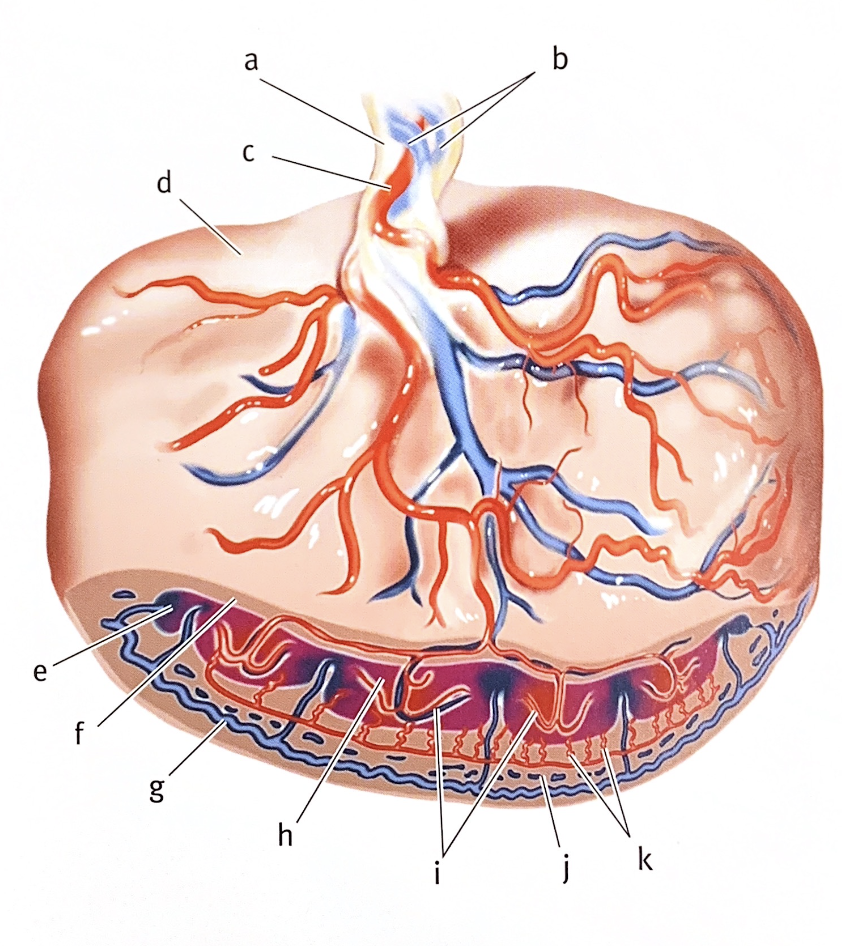
The placenta is a materno-fetal organ which begins developing at implantation of the blastocyst and is delivered with the fetus at birth. The placenta is unique because it develops from two separate individuals, the mother and the fetus. By the beginning of the twelfth week, the placenta has two distinct parts:
a. the fetal portion formed by the chorionic villi and
b. the maternal portion formed by part of the endometrium of the uterus.
When fully developed, the placenta is shaped like a pancake. It is primary site of nutrient and gas exchange between mother and fetus. It also acts as a endocrine gland.
Definition:-
The placenta can be defined as -” a discoid organ in pregnant uterus having both maternal and fetal origin which is attached to the uterine wall and establishes connection between the mother and the fetus through the umbilical cord.”
Anatomical features :-
(Ref:- DC Dutta’s Obst, 7th ed. P-28)
- Shape: Circular, disc shape.
- Size-15-20 cm in diameter.
- Thickness: 2.5 cm at the centre but thins off towards the periphery.
- Weight: 500-600 gm (approximately).
- Covers-30% of the uterine wall.
- Surface-Fetal surface and maternal surface.
Hormones of placenta are:
i. Human chorionic gonadotropin. (HCG)
ii. Estrogen.
iii. Progesterone.
iv. Human chorionic somatomammotropin (HCS)
V. Relaxin.
vi. Inhibin.
Functions of the placenta
- Provide foodstuffs from the mother’s blood into the fetus’s blood by diffusion.
- Carry waste product from the fetus back into the mother’s blood by diffusion. Thus it acts like a kidney.
- Exchange of O2 & CO2 between mother and fetus. Thus it acts like a lung.
- Acts as a barrier for certain harmful substance.
- Produce many hormones vital to the pregnancy. e.g. estrogen, HCG, HCS etc.
(Ref: Guyton & Hall, 12 ed, P-1005).