Lymph nodes-The course is designed for the basic understanding of anatomical structures and physiological functions of human body, musculoskeletal system, digestive system, respiratory system; cardiovascular system; urinary system, endocrine system, reproductive system, nervous system, hematologic system, sensory organs, integumentary system, and immune system.The aim of the course is to acquire knowledge and skills regarding anatomy and physiology.
Lymph nodes
Located along lymphatic vessels are about 600 bean-shaped lymph nodes. They are scattered throughout the body, both superficially and deep, and usually occur in groups
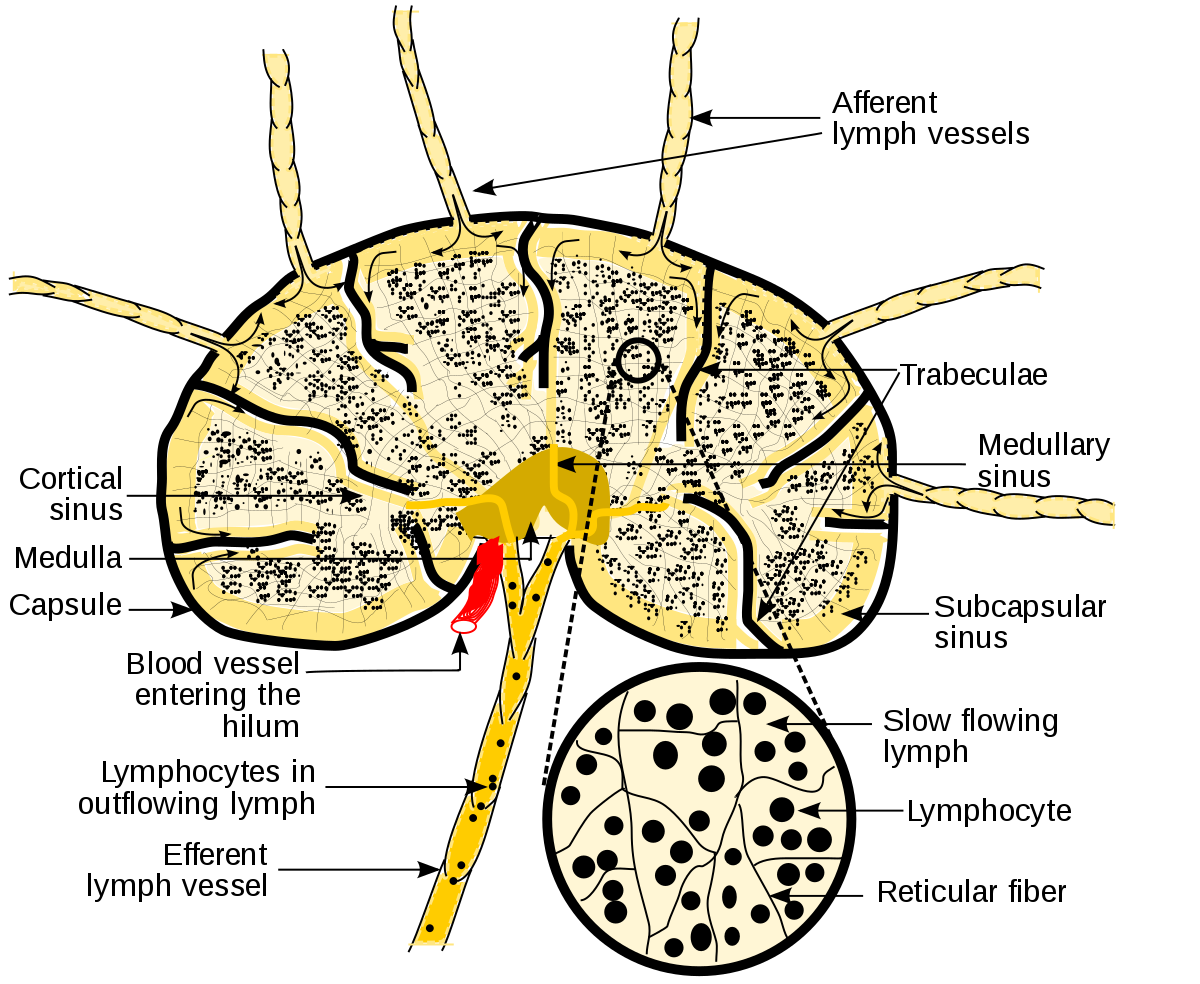
Lymph nodes are heavily concentrated near the mammary glands and in the axillae and groin. Each node is covered by a capsule of dense connective tissue. Internally, different regions of a lymph node may contain B cells that develop into plasma cells, as well as T cells, dendrite cells, and macrophages.
Lymph nodes filter lymph, which enters a node through one of several afferent lymphatic vessels (af = toward; ferrent to carry). As lymph flows through the node, foreign substances are trapped by reticular fibers within the spaces between cells. Macrophages destroy some foreign substances by Phagocytosis, and lymphocytes destroy others by a variety of immune responses.
Filtered lymph leaves the other end of the node through one or two efferent lymphatic vessels (ef= away) Plasma cells and T cells that have divided many times within a lymph node can also leave the node and circulate to other parts of the body. Valves direct the flow of lymph inward through the afferent lymphatic vessels and outward through the efferent lymphatic vessels
The lymphatic capillaries circulation
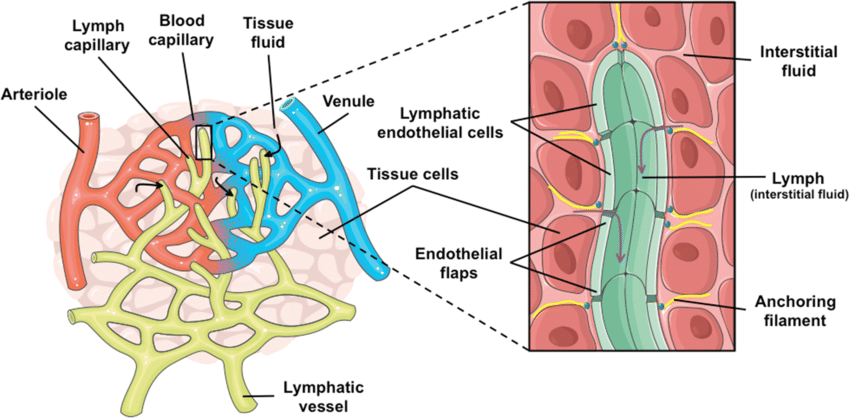
Lymphatic capillaries are found throughout the body except in the central nervous system, portions of the spleen, red bone marrow, and tissues that lack blood capillaries.