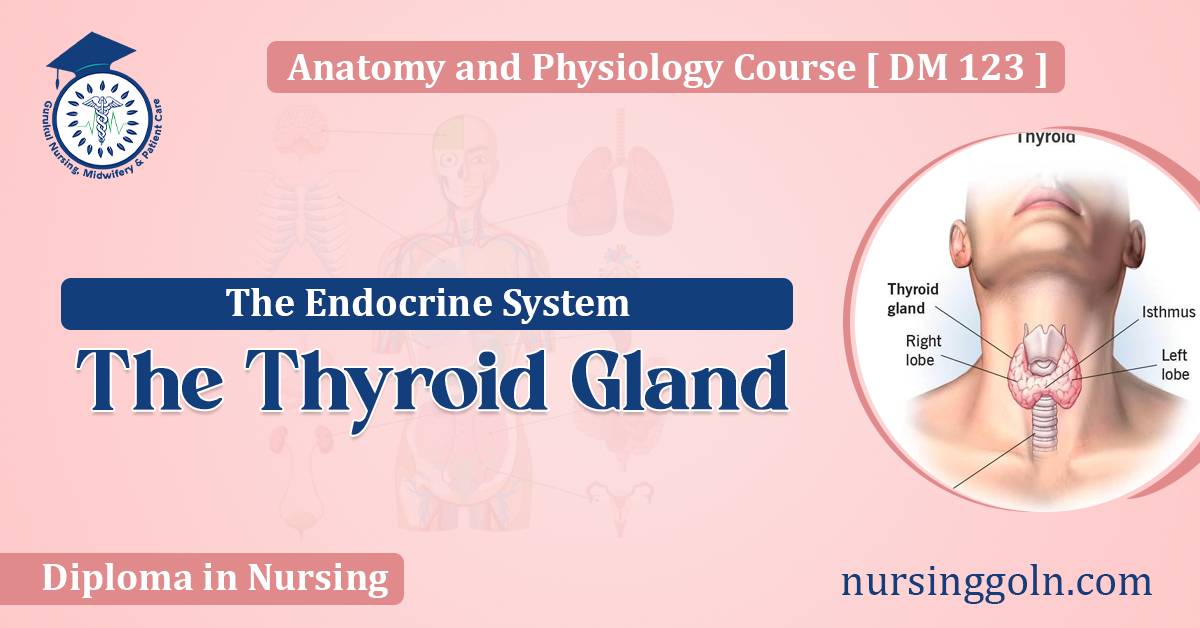
Today our topic of discussion is ” The Thyroid Gland “. The endocrine system, with its ensemble of glands and hormones, acts as the body’s internal communication network. Among these glands, the thyroid stands out for its vital role in regulating metabolism, growth, and development. This article delves into the thyroid gland, its functions, disorders, and overarching significance in the endocrine orchestra.
The Thyroid Gland: The Endocrine System
Introduction: What is the Thyroid Gland?
Resembling a butterfly or a bowtie, the thyroid gland is located at the base of the neck, just below the Adam’s apple. This gland secretes hormones directly into the bloodstream, which then travel to various body tissues.
Anatomy and Histology of the Thyroid
The thyroid gland comprises two main lobes connected by an isthmus. Microscopically, the gland consists of:
- Follicular Cells: These cells arrange themselves in spherical follicles and produce the thyroid hormones T3 (triiodothyronine) and T4 (thyroxine).
- Parafollicular or C Cells: Scattered between follicles, they produce the hormone calcitonin, involved in calcium regulation.
The Hormones: T3, T4, and Calcitonin
- T3 and T4: These hormones play a crucial role in metabolism, heart rate, and body temperature. They also support brain development, especially during infancy and childhood.
- Calcitonin: While not as prominent as T3 and T4, calcitonin helps regulate calcium levels in the blood, particularly inhibiting its release from bones.
Production and Regulation: A Feedback Loop
The hypothalamus-pituitary-thyroid axis is a stellar example of the body’s feedback mechanisms. The process goes as follows:
- Thyrotropin-releasing hormone (TRH): The hypothalamus produces TRH, which signals the pituitary gland.
- Thyroid-stimulating hormone (TSH): In response, the pituitary releases TSH, which then stimulates the thyroid gland to produce T3 and T4.
- Feedback Control: High levels of T3 and T4 inhibit the release of TRH and TSH, ensuring a balance in hormone production.
Thyroid Disorders: When Balance is Lost
Various conditions arise when the thyroid’s function is disrupted:
- Hypothyroidism: Characterized by low thyroid hormone production. Symptoms include fatigue, weight gain, and cold sensitivity. Hashimoto’s thyroiditis, an autoimmune disorder, is a common cause.
- Hyperthyroidism: Excessive thyroid hormone production leads to symptoms like rapid heartbeat, weight loss, and heat intolerance. Grave’s disease is a frequent culprit, another autoimmune condition.
- Goiter: An enlarged thyroid gland. It can occur due to iodine deficiency or inflammatory conditions.
- Thyroid Nodules: Small lumps or growths in the thyroid gland. While most are benign, some can be cancerous.
- Thyroid Cancer: It’s relatively rare and has a high survival rate when detected early.

The Role of Iodine
Iodine, a mineral found in some foods, is vital for thyroid hormone production. The body doesn’t produce iodine, so it must come from the diet. Iodine deficiency can lead to hypothyroidism or goiter.
Treatment and Management of Thyroid Disorders
- Medications: Hypothyroidism is commonly treated with levothyroxine, a synthetic thyroid hormone. Hyperthyroidism treatments include antithyroid drugs, like methimazole, to reduce hormone production.
- Radioactive Iodine: Used for hyperthyroidism, it damages the cells producing excessive hormones.
- Surgery: Thyroidectomy, or partial removal of the thyroid, can treat goiter, nodules, or cancer.
The Thyroid and Pregnancy
Thyroid hormones are vital for fetal brain development. It’s crucial to monitor thyroid function during pregnancy as imbalances can have repercussions for both the mother and baby.
The Evolving Research on Thyroid Function
Emerging research indicates that thyroid hormones might influence more than traditionally believed. There are ongoing studies about their roles in brain health, bone metabolism, and even cardiac function.
Conclusion
The thyroid gland, while small in size, has a monumental impact on our body’s overall function. Its significance in the endocrine system cannot be overstated, given its broad influence on metabolism, growth, and development. Recognizing its functions, potential disorders, and the critical balance it maintains offers profound insights into human health and physiology. As medical research progresses, our understanding of this vital gland will undoubtedly deepen, leading to even better diagnostic, preventive, and treatment strategies.