
Routes of Drug Administration – Nursing is a profession within the healthcare sector focused on the care of individuals, families, and communities so they may attain, maintain, or recover optimal health and quality of life. Nurses may be differentiated from other healthcare providers by their approach to patient care, training, and scope of practice. Nurses practice in many specialisms with differing levels of prescriber authority.
Many nurses provide care within the ordering scope of physicians, and this traditional role has shaped the public image of nurses as care providers. However, nurses are permitted by most jurisdictions to practice independently in a variety of settings depending on training level. In the postwar period, nurse education has undergone a process of diversification towards advanced and specialized credentials, and many of the traditional regulations and provider roles are changing.
Nurses develop a plan of care, working collaboratively with physicians, therapists, the patient, the patient’s family, and other team members, that focus on treating illness to improve quality of life. Nurses may help coordinate the patient care performed by other members of an interdisciplinary healthcare team such as therapists, medical practitioners, and dietitians. Nurses provide care both interdependently, for example, with physicians, and independently as nursing professionals.
Routes of Drug Administration
Definition of Medicine/Medication:
Medication may be defined as a substance used to promote health, to diagnosis, to alleviate or cure disease.
Or,
Medicine may be defined as a substance used to promote health, to prevent to diagnose, to alleviate or cure disease. Because of their effect on the body, the giving of medicine is one of the very important responsibilities of a nurse.
Or
Medicine is any drug having definite form and dose which is used therapeutically for the treatment of the recipient.
Definition of Drug:
According to WHO Scientific Groups:
Any substance or product that is used or intended to be used to modify or explore physiological systems or pathological states for the benefit of the recipient is called drug.
Or,
A drug is any substance (other than food that provides nutritional support) that, when inhaled, injected, smoked, consumed, absorbed via a patch on the skin, or dissolved under the tongue, causes a physiological change in the body.
Definition of Medications Order:
Medications order is a written order by a physician, dentist, nurse practitioner, or other designated health professional for a medication to be dispensed by a pharmacy for administration to a patient.
Parts of the Medications Order:
1. Patient’s name
Parts of the Medications Order:
2. Date and time the order is written
3. Name of drug to be administered
4. Dosage of the trug
5. Route by which the drug is to be administered
6. Frequency of administration of the drug
7. Signature of person writing the order.
Factors Influencing Drug Action:
A. The dose: Very small dose of drug will not be effective while over dose may cause harmful effects. So the drug produces its beneficial effect only in proper therapeutic doses.
B. Age and body weight: Children and old persons are more sensitive to drugs and therefore, require smaller dose. The ratio of body weight to the amount of drug determines the level of concentration of the drug in body. An adult person having a very thin body or less body weight requires smaller dose than an overweight person.
C. The route of administering drug: Drug by mouth has less effect. In injection form whole of drug goes to blood.
D. The time of administration: Drug is more quickly absorbed almost, if given by mouth on empty stomach, whereas it is delayed, if given after full meal. Drugs which cause stomach irritation are given with meal or after meal.
E. Presence of vomiting: When a drug is given to a diarrhea patient, due to rapid peristalsis drug is quickly expelled out from the site of absorption and gets less time for its absorption. So it causes less effect. Similarly a vomiting person may expel out the drug by mouth completely or partially resulting less or no effect.
F. Technique of administration: For optional effect of drug it should be given by proper route by proper technique in correct dose.
Effects of Drug
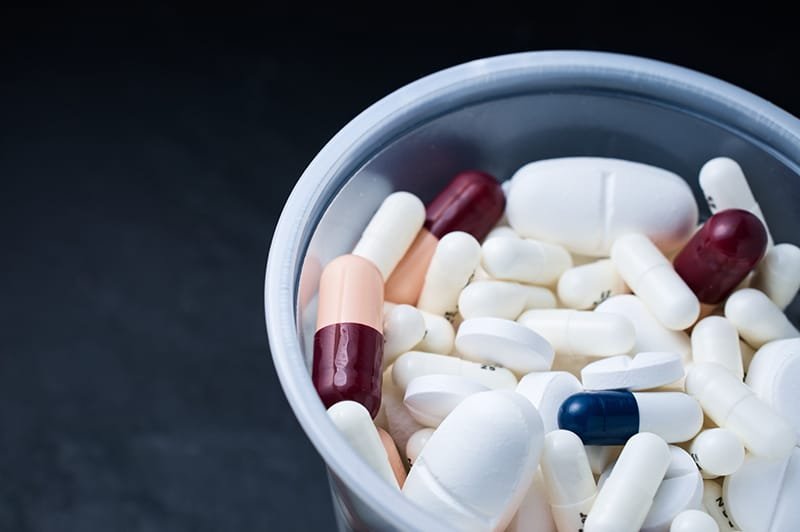
A. Therapeutic effects: This is the action of the drug to act selectively on an organ or body tissue or on disease caused by organisms and to restore normal body functions.
B. Side effects: Along with the useful effect on body, the drugs sometimes produce some side effects which are not required for body and may cause discomfort to the patient.C. Allergic reaction: Some drugs produce some undesirable effect to some group of persons causing minor or severe damage or intolerance to the person. They are known as sensitive persons to a particular drug which will not produce the same undesirable effect to other persons.
The allergy may be mild, moderate or severe and sometimes may cause very alarming situation or even death. The body tissue does not accept the drug. It acts as a foreign body and reach to discard it in form of allergic reaction. Immediate medical measures are given to the patient showing allergic reaction.
Route of Drug Administration.
Definition of Drug Administration:
Medication administration is defined as preparing, giving and evaluating the effectiveness of prescription and non-prescription drugs.
Purposes of Drug Administration:
1. To prevent illness.
2. To treat illness.
3. To restore bodily functions.
4. To provide a medication that has systematic or local effect on gastrointestinal tract.
5. To prevent the disease.
6. To cure the disease.
7. To promote the health.
8. To give palliative treatment.
9. To give as a systematic treatment.
Patient Rights for Administration of Drug
There are many ways to prevent medication errors and one way of which is understanding the 10 “rights” of drug administration:
1. Right Drug – Check and verify if it’s the right name and form. Beware of look-alike and sound-alike medication names. Misreading medication names that look similar is a common mistake. These look-alike medication names may also sound alike and can lead to errors associated with verbal prescriptions.
2. Right Patient – Ask the name of the client and check his/her ID band before giving the medication.
3. Right Dose
- Check the medication sheet and the doctor’s order before medicating.
- Be aware of the difference of an adult and a pediatric dose.
4. Right Route – Check the order if it’s oral, IV, SQ, IM, etc.
5. Right Time and Frequency – Check the order for when it would be given and when was the last time it was given.
6. Right Documentation – Make sure to right the time and any remarks on the chart correctly.
7. Right History and Assessment –Secure a copy of the client’s history to drug interactions and allergies.
8. Drug approach and Right to Refuse – Give the client enough autonomy to refuse to the medication after thoroughly explaining the effects.
9. Right Drug-Drug Interaction and Evaluation –
- Review any medications previously given or the diet of the patient that can yield a bad interaction to the drug to be given
- Check also the expiry date of the medication being given.
10. Right Education and Information – Provide enough knowledge to the patient of what drug he/she would be taking and what are the expected therapeutic and side effects.
Routes of Drug Administration:
1. Systemic route
2. Local route
A. Systemic route:
a) Enteral or alimentary Route:
- Sublingual route
- Oral route
- Rectal route
b) Parenteral route (extra-intestinal)
Injection
- Subcutaneous (SC)
- Intracutaneous (IC)
- Intraarterial (IA)
- Intravenous (IV)
- Intramuscular (IM)
- Intraarticular (IArt)
- Intraperitoneal (IP)
- Intraventricular
- Intracardiac
- Intrapleural
Inhalation
- As a gas: e.g.: Volatile anaesthetic: N20, Chloroform
- As an aerosol: e.g. Beta 2 adrenoceptor agonist: Salbutamol (Bronchodilator)
- As a powder: e.g. Na chromoglycate
B. Local route: Applied to the localized area and action is confined to that particular area.
a) Topical application: Ointment, paste, drops, powder, lotions etc. • Skin inunction (by rubbing of drug on skin)
- To mucous membrane of nose, urethra, rectum, anal canal, vagina.
- To eye and ear.
b) Iontophoresis: In this process the drug is applied to the particular area of skin and Galvanic current is used to increase absorption through skin.