
Definition of Oedema – Nursing is a profession within the healthcare sector focused on the care of individuals, families, and communities so they may attain, maintain, or recover optimal health and quality of life. Nurses may be differentiated from other healthcare providers by their approach to patient care, training, and scope of practice. Nurses practice in many specialisms with differing levels of prescriber authority.
Many nurses provide care within the ordering scope of physicians, and this traditional role has shaped the public image of nurses as care providers. However, nurses are permitted by most jurisdictions to practice independently in a variety of settings depending on training level. In the postwar period, nurse education has undergone a process of diversification towards advanced and specialized credentials, and many of the traditional regulations and provider roles are changing.
Nurses develop a plan of care, working collaboratively with physicians, therapists, the patient, the patient’s family, and other team members, that focus on treating illness to improve quality of life. Nurses may help coordinate the patient care performed by other members of an interdisciplinary healthcare team such as therapists, medical practitioners, and dietitians. Nurses provide care both interdependently, for example, with physicians, and independently as nursing professionals.
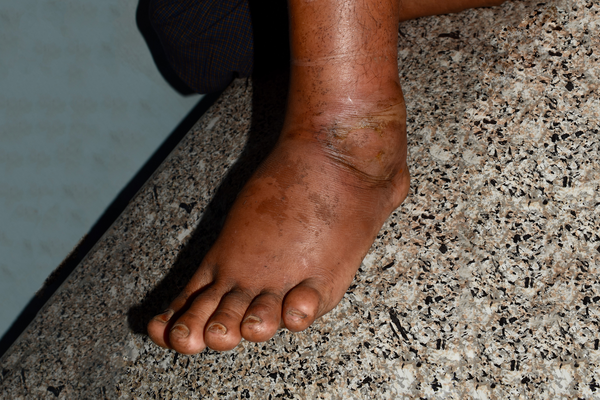
Definition of Oedema
Definition of Oedema:
Abnormal and excessive accumulation of free fluid within the interstitial space or body cavities. At least 10% excess fluid should be accumulated for the oedema to be clinically detected.
Or,
Edema or cædema is an abnormal accumulation of fluid in the interstitium, located beneath the skin and in the cavities of the body, which can cause severe pain. Clinically, edema manifests as swelling.
Classification of Oedema:
| 1. According of distribution: |
|
| 2. According to nature of fluid: |
|
| 3. According to pathophysiology: |
|
| 4. According to clinical basis |
|
Site for Find out Oedema:
1. In leg above the medial malleolus & in shin
2. In the pt. confined to bed – over the sacrum
3. Malar prominence of face and dorsal spine
N.B:-The pressure of the finger should be maintained for 30 sec.
Nice to know:
Oedema occurs due to | Oedema can be recognised by | Oedema 1st appears |
|
|
|
Causes of Bilateral Oedema/Pitting Oedema:
- Heart failure
- Nephrotic syndrome/AGN.
- Cirrhosis of liver
- Severe malnutrition
- Severe anaemia
- Thiamine deficiency (wet beri-beri)
Causes of Non-Pitting Oedema:
- Lymphodema due to any cause e.g.
- Filariasis
- Trauma
- Tumor
- Tuberculosis
- Surgery
- Radiation
- Bum
- Milroy’s disease (Hereditary)
- Myxoedema (Hypothyroidism)
common causes of unilateral leg oedema.
- Lymphodema due to any cause (See above)
- Deep vein thrombosis
- Ruptured popliteal (Baker’s) cyst
- Cellulitis
- Trauma
- Gastrocnemius musculotendinous rupture
- Angio-neurotic oedema.
Common Causes of Generalized Oedema:
- Heart failure.
- Renal cause: Nephrotic syndrome.
✓ Acute nephritic syndrome,العال
- CLD (Chronic liver disease): Cirrhosis of liver.
- PEM (Protein energy malnutrition): Kwashiorkor.
Common Causes of Localized/Unilateral Oedema:
- Venous obstruction: Deep vein thrombosis (DVT).
- Lymphatic obstruction: Filariasis.
- Acute inflammatory oedema: Cellulitis.
- Type-I hypersensitivity oedema.
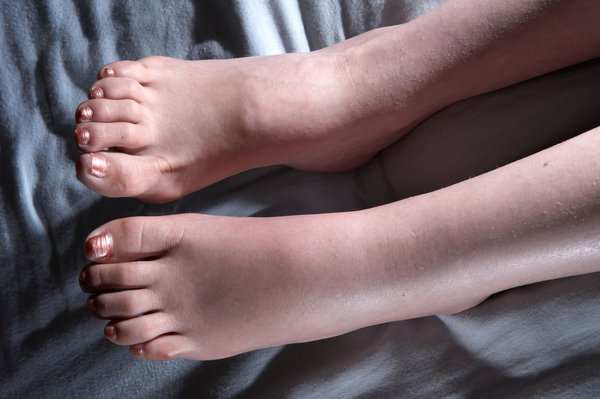
Causes (Differential Diagnoses) of Leg Swelling/Leg Oedema:
Bilateral leg swelling:
1) Heart failure.
- Right or combined left & right heart failure.
- Pericardial construction
- Cardiomyopathy
2) Chronic venous insufficiency
3) Hypoproteinaemia:
(oedema is often widespread. can affect arms & face)
- Nephrotic syndrome.
- Chronic liver disease.
- Protein losing enteropathy
4) Drugs:
a) Na+ retention:
- Non-steroidal anti-inflammatory drugs (NSAIDs)
- Fludrocortisone
b) Increased capillary permeability:
- Nifedipine
- Amlodipine
(Ref: Davidson’s/22nd/549/Box-18.13)