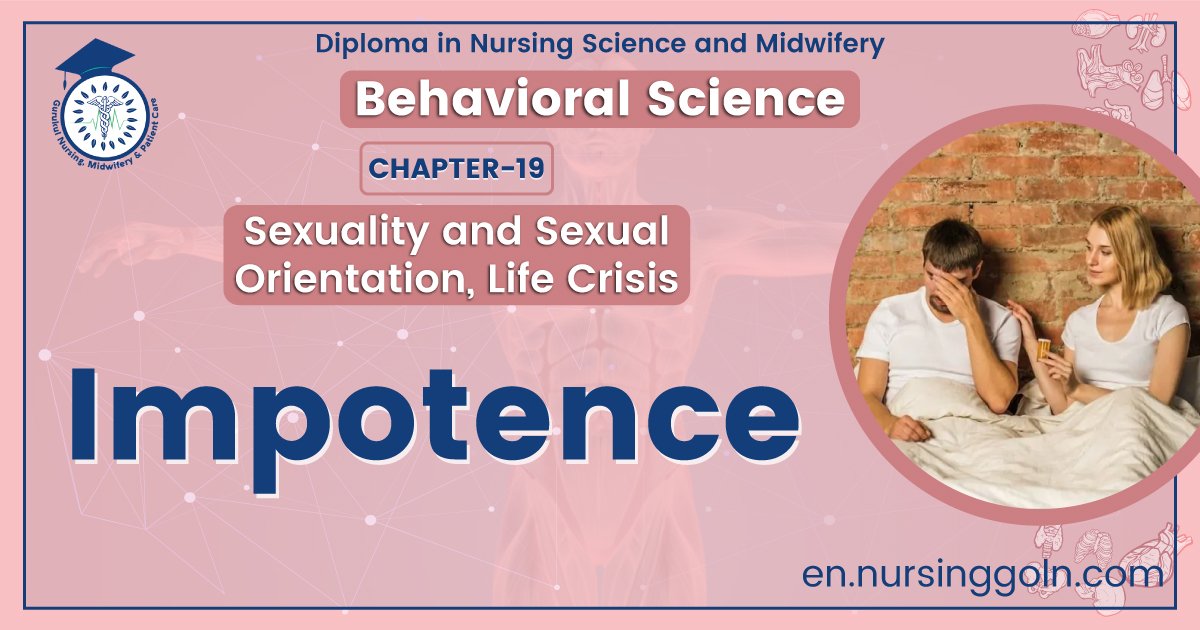
Definition of Impotence – Behavioral sciences explore the cognitive processes within organisms and the behavioral interactions between organisms in the natural world. It involves the systematic analysis and investigation of human and animal behavior through the study of the past, controlled and naturalistic observation of the present and disciplined scientific experimentation and modeling.
It attempts to accomplish legitimate, objective conclusions through rigorous formulations and observation. Generally, behavior science deals primarily with human action and often seeks to generalize about human behavior as it relates to society.

Definition of Impotence
Impotence is a common problem among men characterized by the consistent inability to sustain an erection sufficient for sexual intercourse or the inability to achieve ejaculation, or both.
Causes of Impotence:
| Physical causes |
|
| Psychological causes |
|
Risk Factors
Various risk factors can contribute to erectile dysfunction, including:
1. Medical conditions, particularly diabetes or heart conditions.
2. Tobacco use, which restricts blood flow to veins and arteries, can over time chronic health conditions that lead to erectile dysfunction cause.
3. Being overweight, especially if you’re obese.
4. Certain medical treatments, such as prostate surgery or radiation treatment for cancer.
5. Injuries, particularly if they damage the nerves or arteries that control erections.
6. Medications, including antidepressants, antihistamines and medications to treat high blood pressure, pain or prostate conditions.
7. Psychological conditions, such as stress, anxiety or depression.
8. Drug and alcohol use, especially if you’re a long-term drug user or heavy drinker.

Complications
Complications resulting from erectile dysfunction can include:
- An unsatisfactory sex life
- Stress or anxiety
- Embarrassment or low self-esteem
- Relationship problems
- The inability to get your partner pregnant