
Auditory function tests -The course is designed for the basic understanding of anatomical structures and physiological functions of human body, musculoskeletal system, digestive system, respiratory system; cardiovascular system; urinary system, endocrine system, reproductive system, nervous system, hematologic system, sensory organs, integumentary system, and immune system.The aim of the course is to acquire knowledge and skills regarding anatomy and physiology.
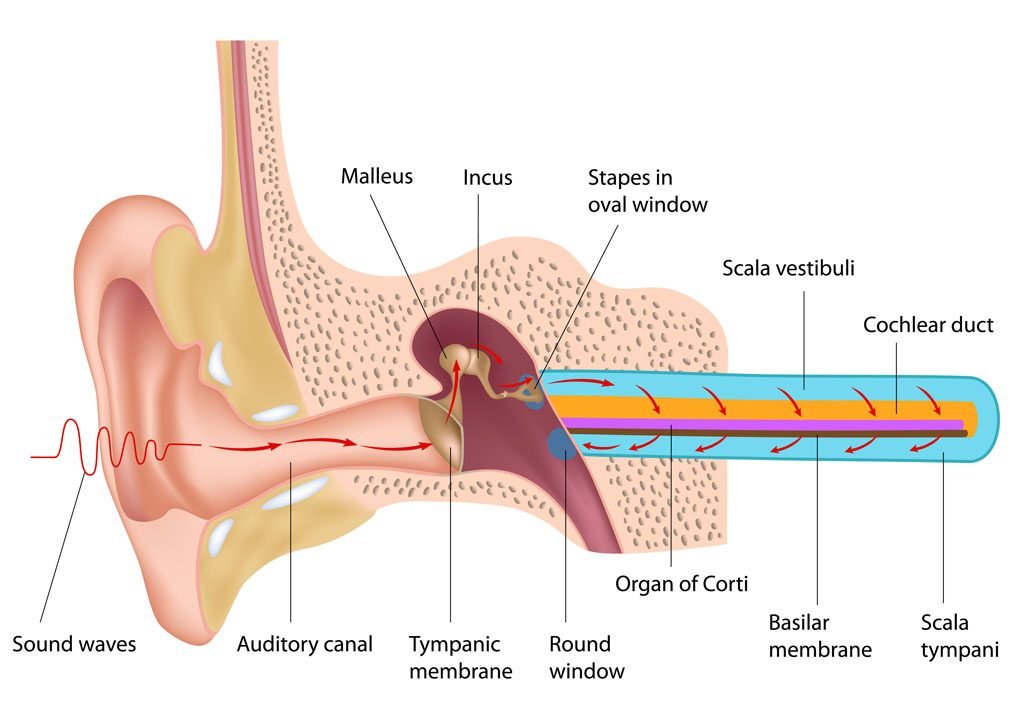
Auditory function tests
Auditory function tests:
A. Common hearing test with a tuning fork:
| Weber test | Rinne test | |
| Method | Base of vibrating tuning fork placed on vertex of skull | Base of vibrating tuning for placed on mastoid process until subject on longer hears it, then held in air next to ear. |
| Normal | Hears equally on both sides | Hears vibration in air after bone conduction is over |
| Conduction deafness (one ear) | Sound louder is diseased ear because masking effect of environmental noise is absent on disease side. | Vibration in air not heard after bone conduction is over |
| Nerve deafness (one ear) | Sound louder in normal ear | Vibration heard in air after bone conduction is over, as long as nerve deafness is partial. |
B. Audiometer is also used to determine the nature of hearing defect.
Some common disorders and common terminology of special sense organs
Miosis: The constriction of the pupil of the eyes is called miosis.
Mydriasis: The dilatation of the pupil of the eyes is called mydriasis.
Miotics: The agents which causes miosis are called miotics.
Mydriatics: The agents which causes mydriasis are called mydriatics.
Ageusia/ Ageustia: Absense or partial loss of the sensation of taste. It may be due to –
- the disease of the chorda tympani.
- effect of drugs.
- aging.
- lesion involving sensory pathway or taste center in the brain.
Hypergeusia or Hypergeusesthesia: It is the excessive acuteness sensation of taste.
Hypogeusia: It is the Blunting or absense of taste sensation. Zinc may be added to correct the symptoms.
Dyspgeusia: Disturbed sense of taste.
Anosmia: It is the loss of sensation of smell. Several types of anosmia present in human being. These are due to the impairment of the functions of the odorant receptors.
Hyposmia: It is the diminished olfactory sensitivity.
Dysosmia: It is the distorted sense of smell.
Kallman’s syndrome: Anosmia associated with hypogonadism.