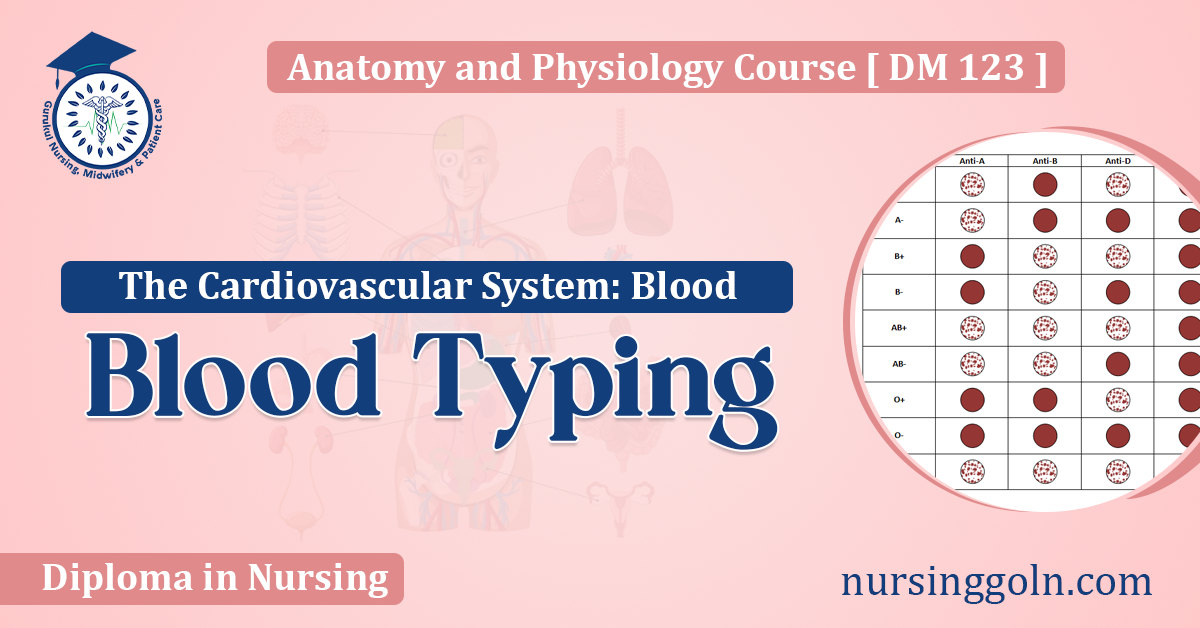
Today our topic of discussion is ” Blood Typing “. The cardiovascular system is an intricate and essential part of the human body, ensuring a continuous flow of blood, oxygen, and nutrients to various tissues. As blood travels through this vast network, its compatibility becomes paramount, especially during transfusions. Enter the realm of blood-typing—a critical system that classifies blood based on its antigens and antibodies.

Blood Typing – The Cardiovascular System: Blood
1. The Basics of Blood
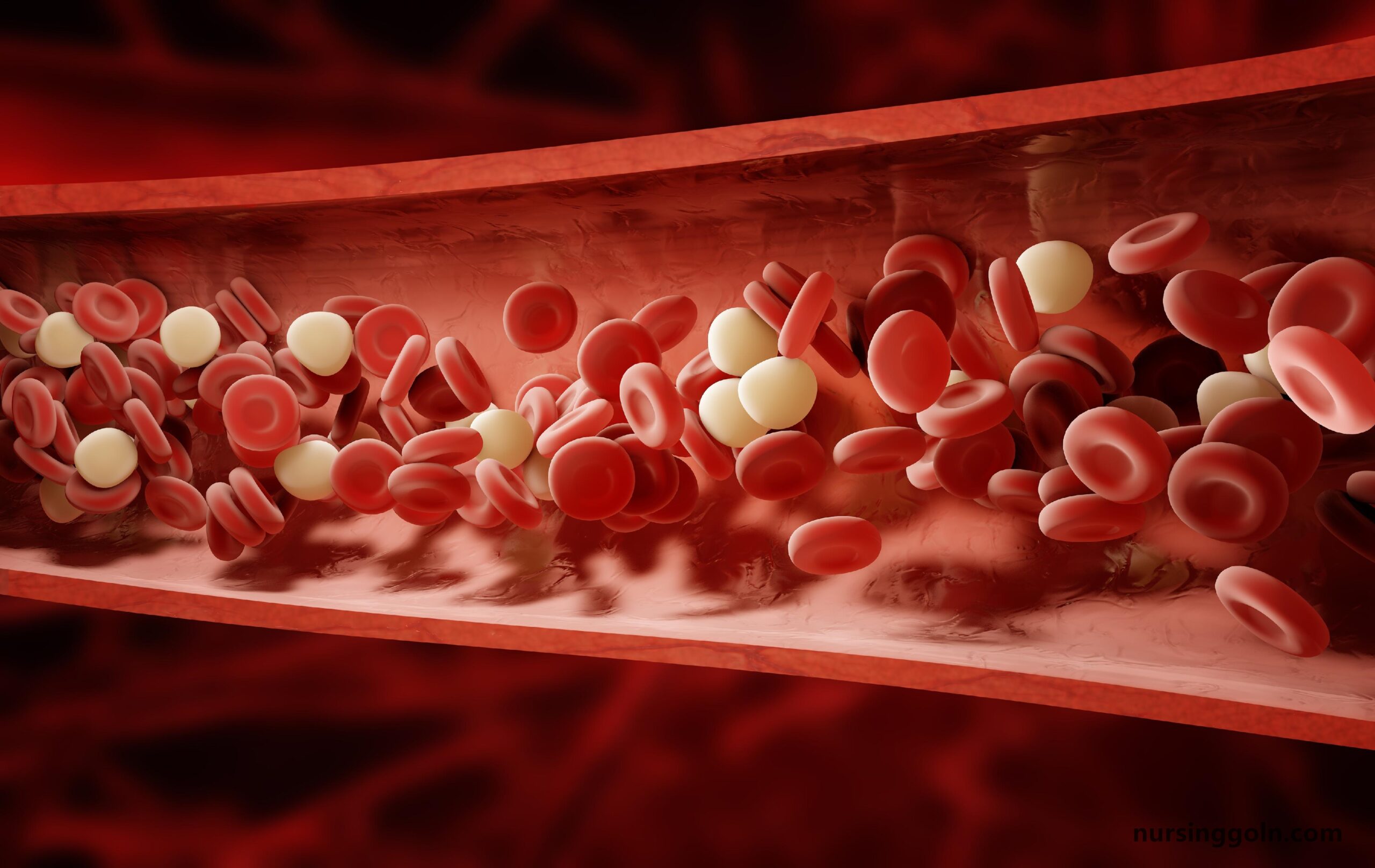
Before diving into blood-typing, understanding the constituents of blood is essential. Comprising erythrocytes (red blood cells), leukocytes (white blood cells), platelets, and plasma, blood serves various roles from oxygen transportation to immunity. But for transfusion compatibility, erythrocytes take center stage due to surface proteins termed as antigens.
2. Blood Typing: The ABO and Rh Systems
a. ABO System: Discovered in the early 20th century by Karl Landsteiner, the ABO system classifies blood into four primary types based on the presence or absence of two antigens (A and B) and their corresponding antibodies.
- Type A: Has A antigens on the erythrocytes and anti-B antibodies in the plasma.
- Type B: Has B antigens and anti-A antibodies.
- Type AB: Contains both A and B antigens but neither anti-A nor anti-B antibodies. Often referred to as the universal recipient.
- Type O: Lacks both A and B antigens but contains both antibodies. Known as the universal donor.
b. Rh System: Apart from the ABO classification, the presence or absence of the Rh factor (D antigen) leads to either a positive (+) or negative (-) designation. For instance, someone with A antigens and the Rh factor would be type A+.

3. The Significance of Blood Typing in Transfusions
Matching the correct blood type is crucial during transfusions to prevent adverse reactions. When incompatible blood types mix:
- The recipient’s antibodies recognize the donor’s erythrocyte antigens as foreign.
- This recognition triggers an immune response, leading to agglutination (clumping) and hemolysis (destruction) of the donor erythrocytes.
- Such reactions can be harmful and sometimes fatal.
4. Blood Typing Procedure
Blood-typing is relatively straightforward:
a. Forward Typing: A sample of blood is mixed separately with anti-A and anti-B sera. Agglutination indicates the presence of corresponding antigens.
b. Reverse Typing: The blood sample is tested against known A and B cells to observe for plasma antibody activity.
c. Rh Typing: Similarly, blood is mixed with anti-Rh serum. Agglutination confirms the presence of the Rh factor.
5. Other Blood Group Systems
While ABO and Rh are the most widely recognized, over 30 blood group systems exist, like Kell, Kidd, and Lewis. Although less frequently encountered, these can be crucial in specific scenarios, especially repeated transfusions or organ transplantation.
6. Blood Typing in Pregnancy
Rh incompatibility between an Rh-negative mother and an Rh-positive fetus can lead to Hemolytic Disease of the Newborn (HDN). The mother’s body might produce anti-Rh antibodies after a sensitizing event, endangering subsequent Rh-positive pregnancies. Prophylactic treatment with Rh immune globulin can prevent sensitization.
7. Modern Medicine and Blood Typing
a. Transfusion Medicine: Ensures safe blood transfusions, organ transplants, and the management of diseases like thalassemia or sickle cell anemia.
b. Genetic Blood Typing: Techniques like PCR allow for precise blood-typing, identifying rare blood types, or resolving ambiguous results from traditional methods.
c. Synthetic Blood: Research into creating universal blood or synthetic substitutes is ongoing, aiming to bypass blood-typing entirely.
8. Cultural and Societal Impacts of Blood Typing
In some cultures, particularly in East Asia, blood types are believed to be linked to personality traits, influencing aspects from career choices to romantic relationships. Though scientifically unproven, it highlights the intriguing place blood holds in the human psyche.
Conclusion
Blood-typing, while seemingly simple, holds profound implications in medicine and beyond. This classification ensures safe blood transfusions, guides pregnancies, and even finds its way into societal beliefs. As we look to the future, advancements might redefine our understanding and application of blood types. Yet, the foundational knowledge of the ABO and Rh systems will remain central to our comprehension of the cardiovascular system’s sanguine component.