Cell Division – Introduction to fundamental concepts of Biological Science including the organization and common characteristics of living matters, cell structures and functions, food production by photosynthesis, harvesting energy, mechanism of cells reproduction, genetics, evolutions, and Human Biology. Introduction to general chemistry including basic concepts about matter, atomic structure, chemical bonds, gases, liquid, and solids, solutions, chemical reactions, acid, bases, and salt;
organic and biochemistry including hydrocarbons and their derivatives, carbohydrates, lipids, proteins, enzymes, vitamins, and minerals, nucleic acids; principles of physics and applications to nursing including gravity and mechanics, pressure, heat and electricity; nuclear chemistry and nuclear physics, effects of radiation on human beings, and protection and disposal. The aim of the course is to acquire knowledge and skills in general biological science, general chemistry and physics.
Cell Organelles
Cell organelles a are living highly specialized microscopic structures embedded in the substance of cytoplasm which appears as translucent & homogenous in the living cell
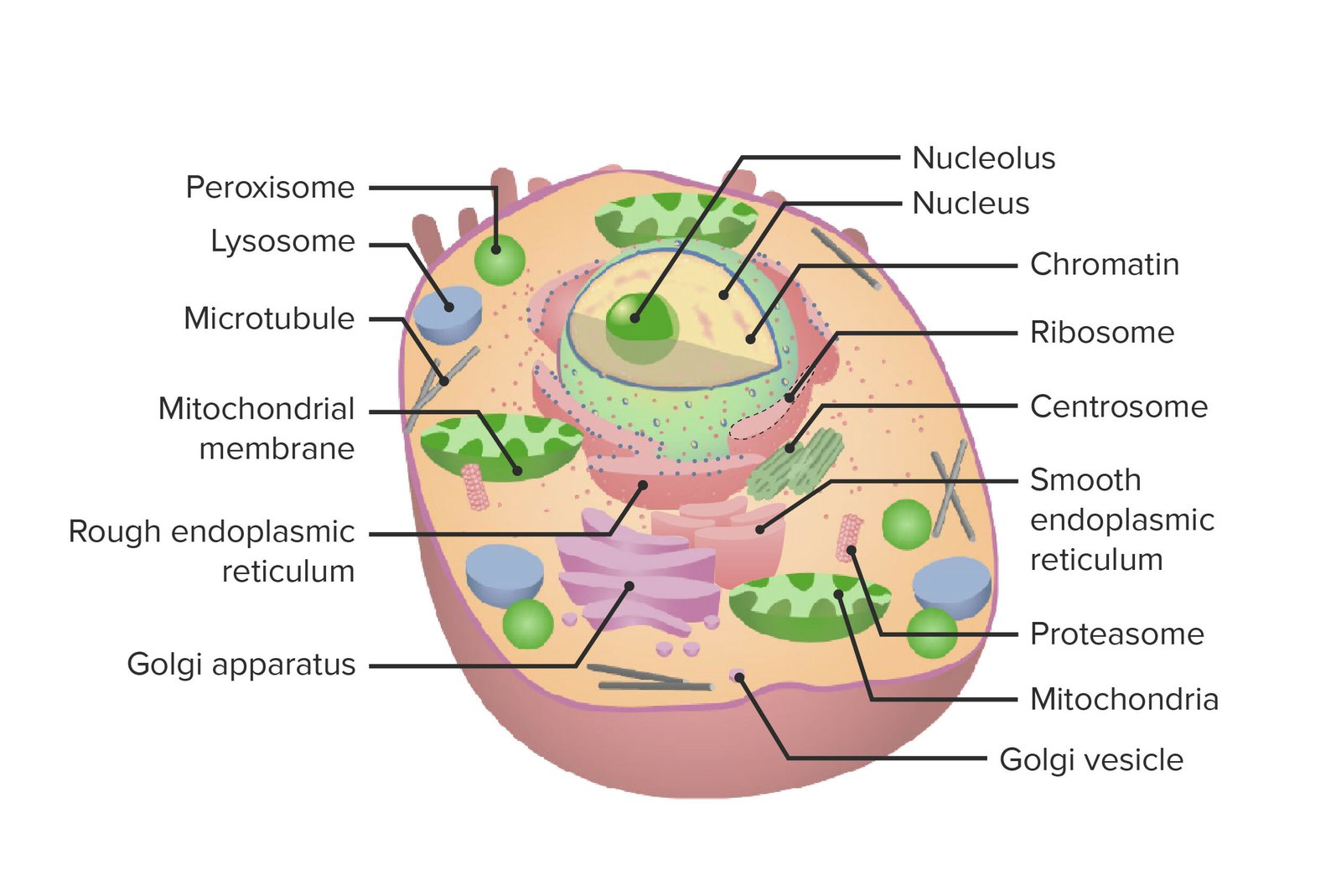
Name of Cell Organelles:
A. Membranous:
- Mitochondria.
- Endoplasmic reticulum.
- Golgi complex
- Peroxisomes
- Lysosomes.
B. Non membranous:
- Ribosomes.
- Centrioles,
- Microfilaments
- Microtubules.
Cell Division
The process by which a cell divides into two daughter cells is called cell- division.
or
Cell division is the process which cells multiply by continuous series for growth and repair of tissues.
Types of Cell Division:
1. Mitosis: By mitosis each cell divides into two daughter cells which are structurally and functionally same. It occurs in somatic cells. Before mitosis begins, replication of genetic material occurs
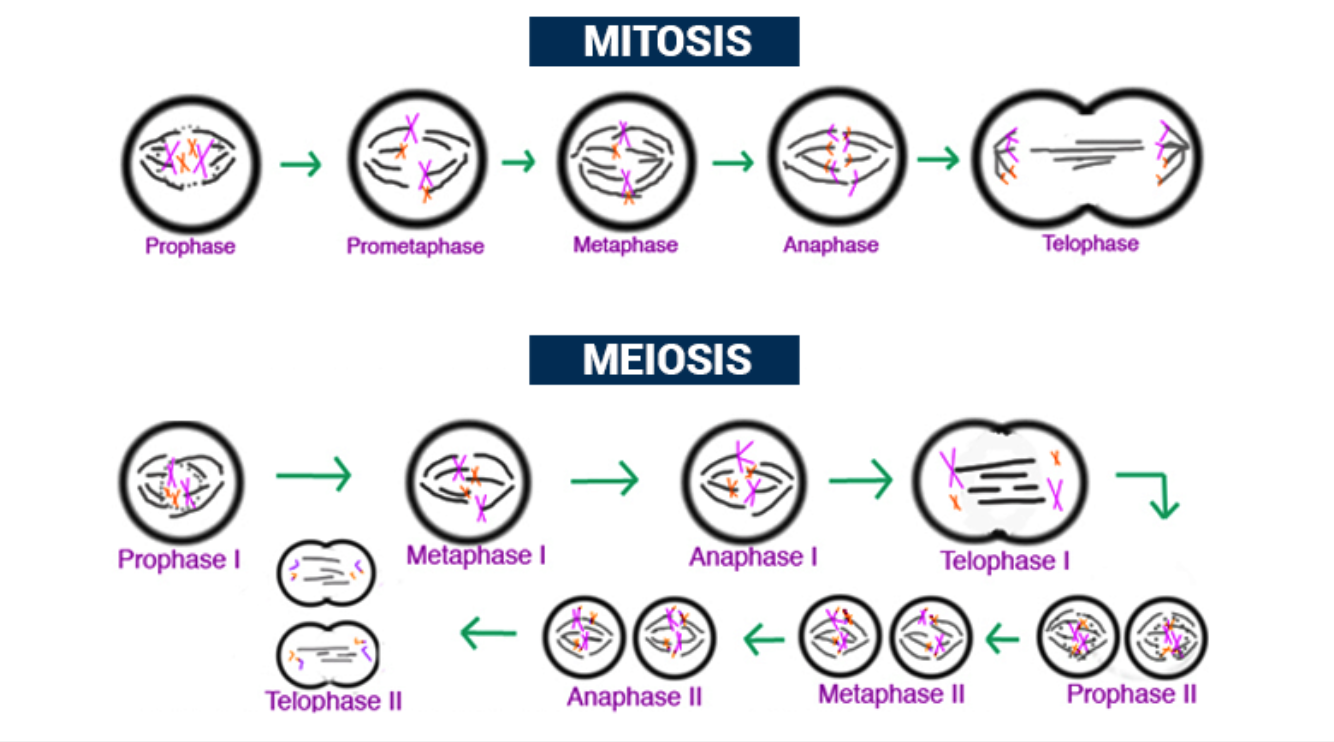
Figure 1.36: Types of Cell Division
2. Meiosis: This type of cell division occurs in germ cells to produce male or female gametes (sperm or ova)
Events of Cell Division:
1. Karyokinesis: Division the nucleus.
2. Cytokinesis: Division of the cytoplasm.