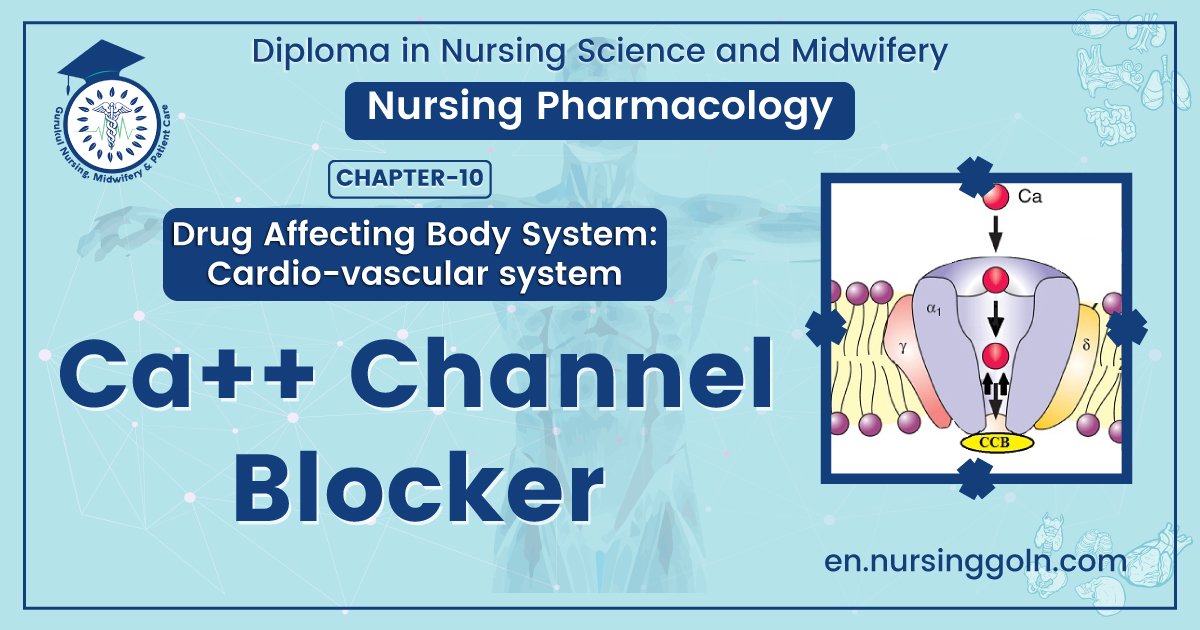
Ca++ Channel Blocker (Ca++ Antagonists) – This book covers the entire syllabus of “Pharmacology” prescribed by BNMC- for diploma in nursing science & midwifery students. We tried to accommodate the latest information and topics. This book is an examination setup according to the teachers’ lectures and examination questions.
At the end of the book, previous questions are given. We hope in touch with the book students’ knowledge will be upgraded and flourish. The unique way of presentation may make your reading of the book a pleasurable experience.
Ca++ Channel Blocker (Ca++ Antagonists)
Ca++ is required for:
- Cardiac contraction.
- Smooth muscle contraction.
- Propagation of cardiac impulse.
Classification of calcium antagonists
1. Dihydropyridine family:
- Nifedipine
- Amlodipine
- Nicardipine
- Isradipine
- Nimodipine
2. Miscellaneous:
- Verapamil
- Diltiazem
- Bepridil
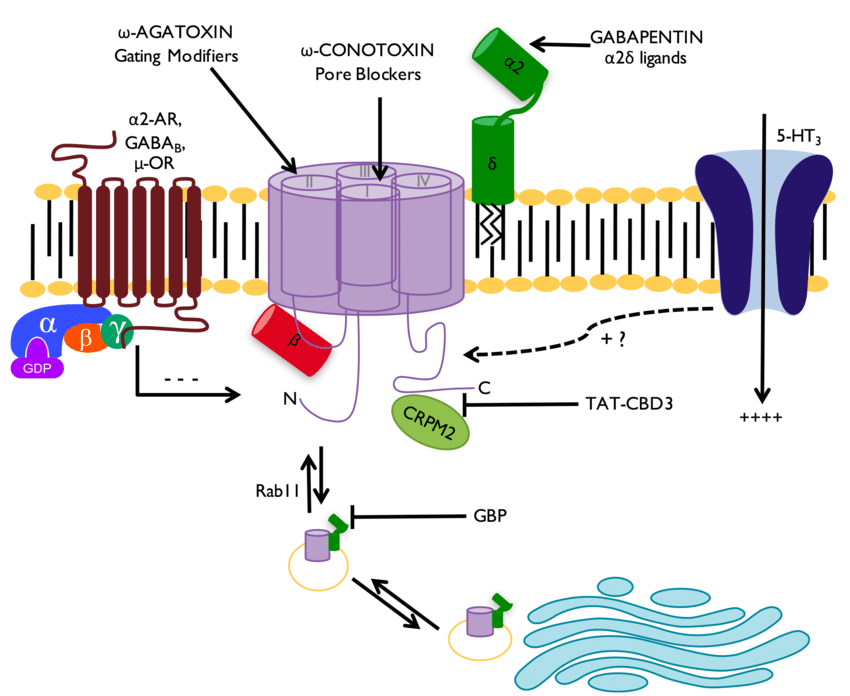
Main Ca++ channel antagonists are:
- Verapamil (relatively cardio selective; 1/2: 6 hrs)
Main action: negative chronotropic and inotropic action. First choice: as anti-arrhythmic agent. - Nifedipine (relative smooth muscle selective; 11/2 :4hrs). Main action: dilates arterioles decrease B.P)
First choice: as anti-hypertensive agent. - Diltiazem (intermediate in action; t1/2 :3-4 hours) Main action: prolongation of A-V conduction. First choice: as anti-anginal agent.
- Nimodipine (vasoselective) Main action: cerebral vasodilatation; prevent cerebral ischaemia after subarachnoid haemorrhage.
Pharmacokinetics of Calcium antagonist
- Routes of administration: oral.
- Highly protein bound.
- Hepatic first pass metabolism (verapamil)
- Renal excretion.
Pharmacological action of calcium channel blockers
1. Cardiovascular system:
- Dilates main coronary vessels: improves myocardial perfusion.
- Negative chronotropic action: cardiac slowing & A-V block. Negative
- inotropic action: Decreases the force of contraction
- Vasodilatation: decreases total peripheral resistance.
So main action:
- Increases myocardial 0, delivery (anti-anginal)
- Decreases blood pressure (anti-hypertensive)
2. Smooth muscle:
- Vascular smooth muscle: generalized vasodilatation; so reduces after load.
- Coronary vasodilatation: antianginal action.
- Visceral smooth muscle: relaxation of biliary tract, uterus and bladder.
Indications of Ca++ Channel Blockers
- Angina pectoris (variant), Hypertension
- Cardiac arrhythmia, Hypertensive cardiomyopathy.
- Prevention of ischemic neurological damage following subarachnoid
- haemorrhage (heart attacks, stroke).
- Raynaud’s disease, Migraine,
- Premature labour.
Contraindication of Ca antagonists
- Heart failure.
- Where there is bradycardia.
- Second or third degree A-V block.
- Sick sinus syndrome (SSS).
- Wolf-Parkinson-white (wpw) syndrome.
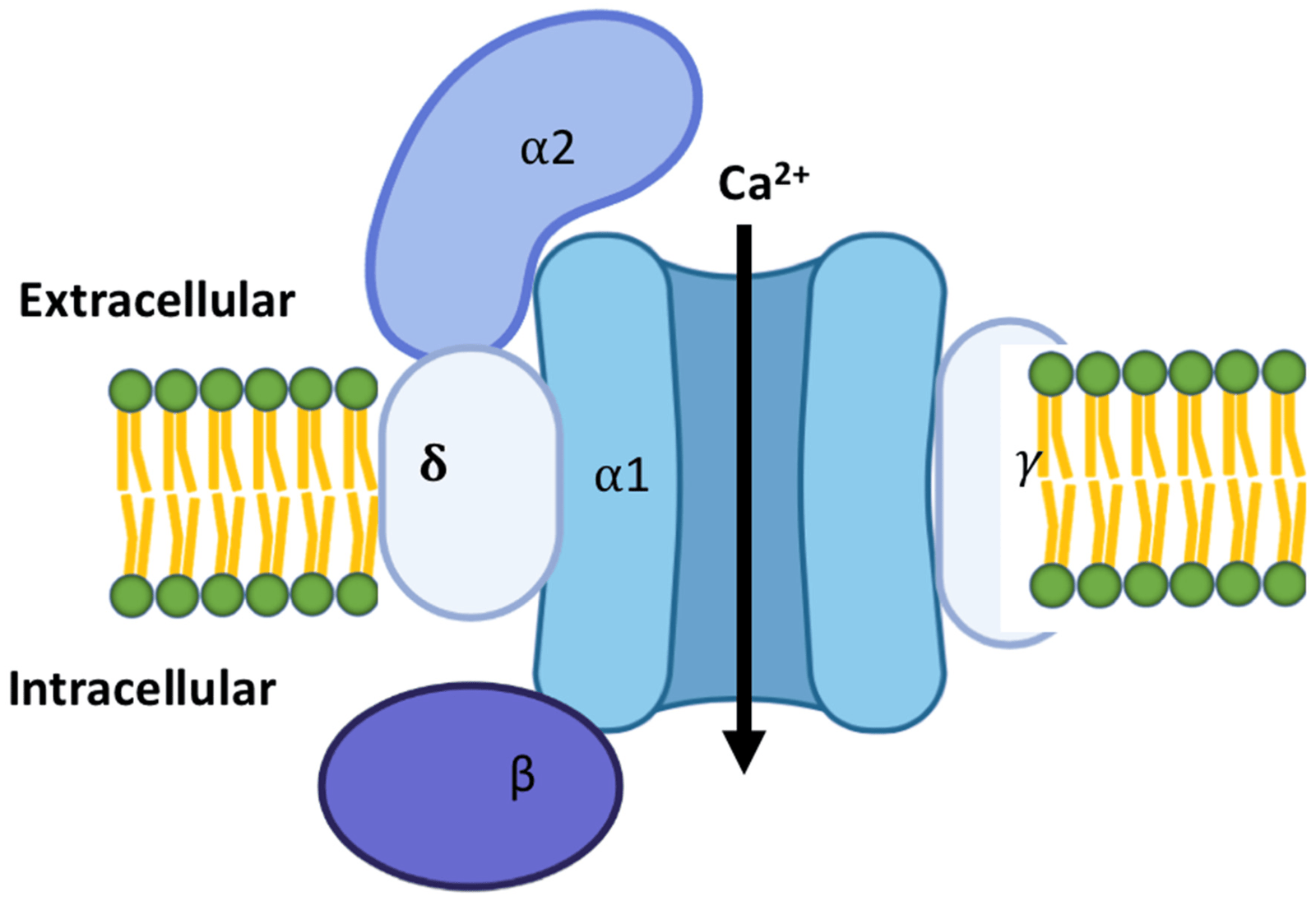
Adverse effects of Calcium Channel Blockers
A) Due to vasodilatation:
- Postural hypotension, reflex tachycardia
- Bradycardia, palpitations
- Headache, flushing, dizziness, ankle oedema.
Comparative study of the calcium channel blockers
| Points | Nifedipine | Verapamil |
| Antihypertensive Antiarrhythmic antianginal | ||
| Reflex tachycardia | Non-specific sym. antagonism | |
| Bradycardia | Vasodilatation | |
| M/C of action | Relatively smooth muscle selective | Decrease force of contraction |
| Specificity | Relatively cardio selective | |
| Flushing, ankle oedema, palpitation | Yes | |
| Combination with beta-blocker | <Imin (I/V) | No |
| Onset of action | 5-20 min (oral) | <1.5min (I/V) 30min (oral) |
| Half life | 4 hr | 6hr |
| Plasma protein bound | About 90% | About 90% |
Comparative study of the calcium channel blockers
| Points | Nifedipine | Verapamil |
| Antihypertensive Antiarrhythmic antianginal | ||
| Reflex tachycardia | Non-Specific | |
| Bradycardia | Vasodilatation | Prolongation of the A-V conduction |
| M/C of action | Relatively smooth muscle selective | Intermediate in action |
| Specificity | ||
| Flushing, ankle oedema, palpitation | Yes | No |
| Combination with beta-blocker | <1min (I/V) | <3min(i/v) |
| Onset of action | 5-20 min (oral) | >30min (oral) |
| Half life | 4 hr | 3-4 hour |
| Plasma protein bound | About 90% | 70-80% |