Characteristics of Living Matters – Introduction to fundamental concepts of Biological Science including the organization and common characteristics of living matters, cell structures and functions, food production by photosynthesis, harvesting energy, mechanism of cells reproduction, genetics, evolutions, and Human Biology. Introduction to general chemistry including basic concepts about matter, atomic structure, chemical bonds, gases, liquid, and solids, solutions, chemical reactions, acid, bases, and salt;
organic and biochemistry including hydrocarbons and their derivatives, carbohydrates, lipids, proteins, enzymes, vitamins, and minerals, nucleic acids; principles of physics and applications to nursing including gravity and mechanics, pressure, heat and electricity; nuclear chemistry and nuclear physics, effects of radiation on human beings, and protection and disposal. The aim of the course is to acquire knowledge and skills in general biological science, general chemistry and physics.
Characteristics of Living Matters
FOR EQ
Complex organization
- Living things have a level of complexity and organization not found in lifeless objects. At its most fundamental level, a living thing is composed of one or more cells.
- These units, generally too small to be seen with the naked eye, are organized into tissues.
- A tissue is a series of cells that accomplish a shared function. Tissues form organs, such as the stomach and kidney.
- A number of organs working together compose an organ system. An organism is a complex series of various organ systems.
Metabolism
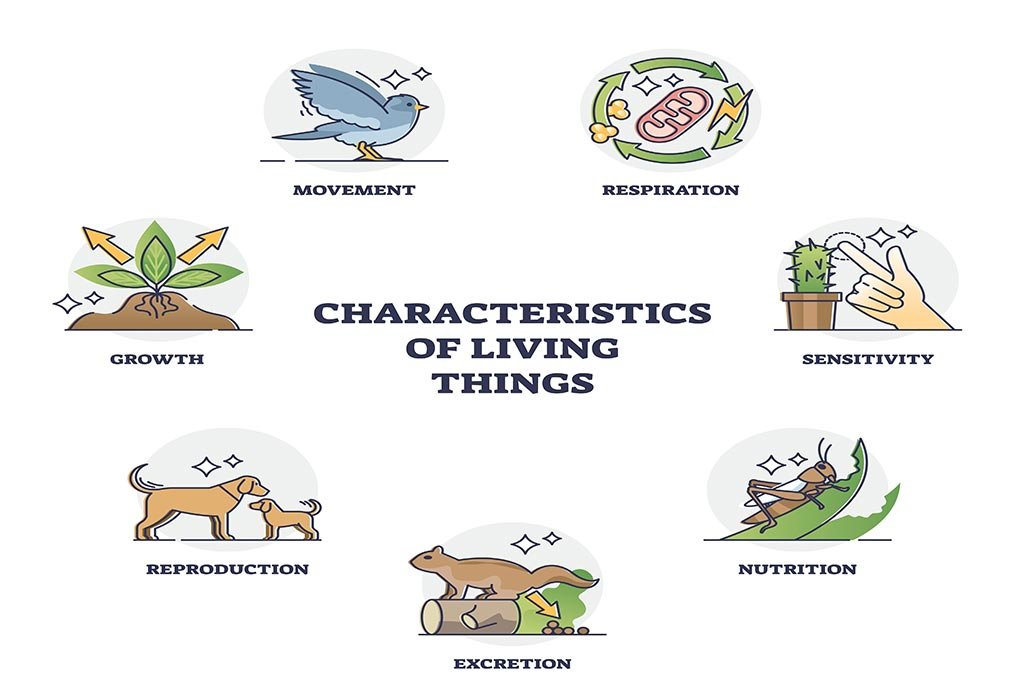
- Living things exhibit a rapid turnover of chemical materials, which is referred to as metabolism.
- Metabolism involves exchanges of chemical matter with the external environment and extensive transformations of organic matter within the cells of a living organism
- Metabolism generally involves the release or use of chemical energy. Nonliving things do not display metabolism.
Responsiveness
- All living things are able to respond to stimuli in the external environment. For example, living things respond to changes in light, heat, sound, and chemical and mechanical contact.
- Organisms change their behavior in response to changes in the surrounding environment
Growth
- Growth requires an organism to take in material from the environment and organize the material into its own structures.
- To accomplish growth, an organism expends some of the energy it acquires during metabolism.
Reproduction
- A living thing has the ability to produce copies of itself by the process known as reproduction.
- More complex organisms engage in a type of reproduction called sexual reproduction, in which two parents contribute to the formation of a new individual.
Evolution
- Living organisms have the ability to adapt to their environment through the process of evolution.
- During evolution, changes occur in populations, and the organisms in the population become better able to metabolize, respond, and reproduce.
- They develop abilities to cope with their environment that their ancestors did not have.
FOR SAQ
- All organisms use energy (metabolism).
- All organisms maintain a stable internal environment (homeostasis),
- All organisms detect and respond to select external stimuli.
- All organisms can engage in movement (which may occur internally, or even at the cellular level).
- All organisms show growth and development; that is, specialization of cells or structures. (Eyen unicellular organisms show a tiny amount of growth, and single cells repair and use materials from the environment to replace internal structures as needed.)
- All organisms reproduce. (Even if an individual can’t reproduce, its species can.) In addition, an individual’s cells are constantly reproducing themselves.
- All organisms have nucleic acid as the hereditary molecule.
- All organisms show adaptation, which occurs at the individual level and is tightly related to homeostasis.
- All organisms are made of one or more cells.
- All organisms exhibit complex organization, grouping molecules together to form cells; at a higher level, cells are organized into tissues, organs, and organ systems.
- All organisms exhibit evolution over time due to mutation and natural selection (which operates at the species level).