The composition of human body-The course is designed for the basic understanding of anatomical structures and physiological functions of human body, musculoskeletal system, digestive system, respiratory system; cardiovascular system; urinary system, endocrine system, reproductive system, nervous system, hematologic system, sensory organs, integumentary system, and immune system. The aim of the course is to acquire knowledge and skills regarding anatomy and physiology.
The composition of human body
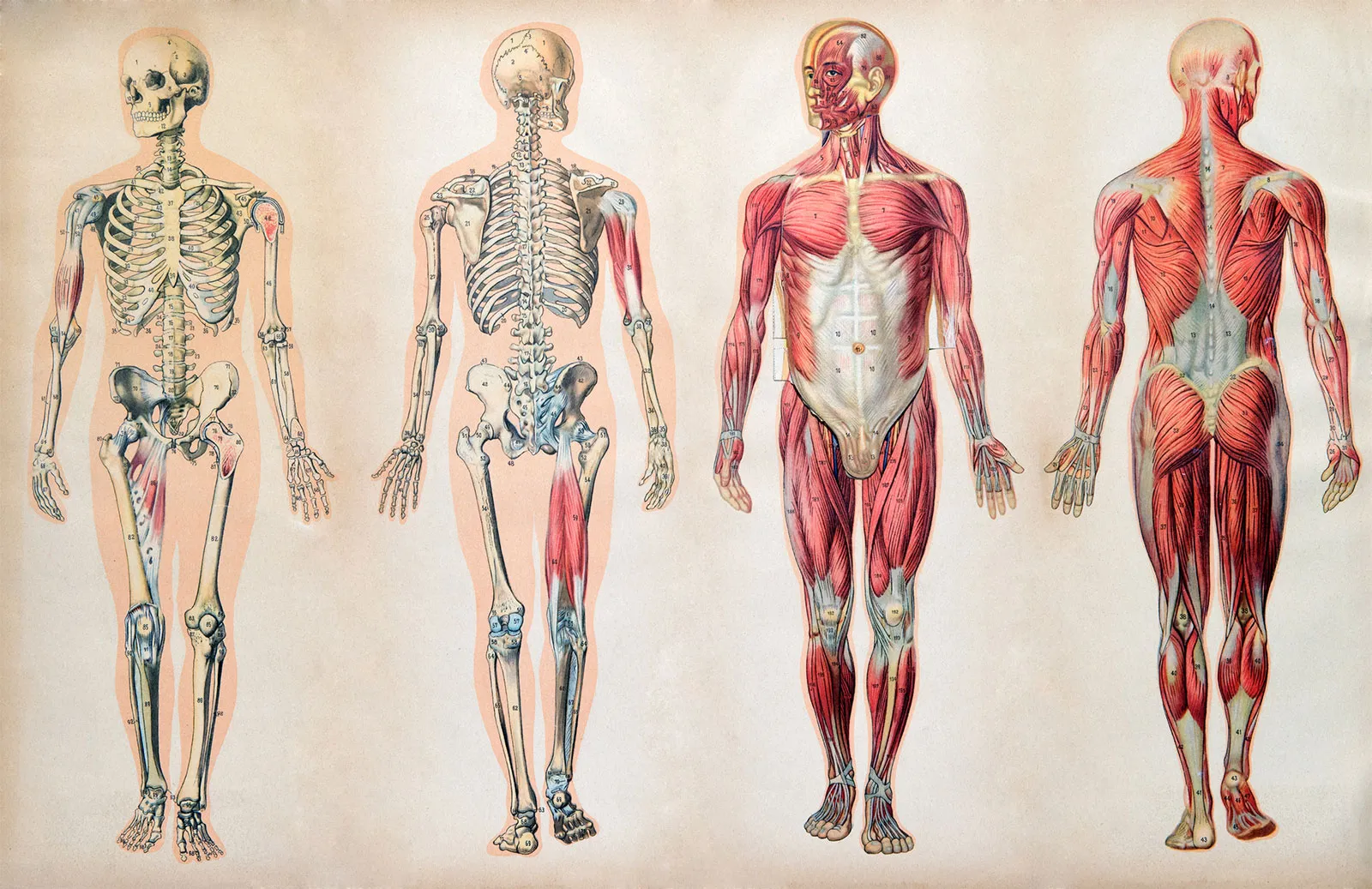
Composition of human body:
A. Chemical composition:
- Body fluid: 60%.
- Protein: 18%.
- Fat 15%
- Carbohydrate: 1.5%.
- Minerals: 5.5%
These values are somewhat lower in female due to more fat.
B. Elementary composition:
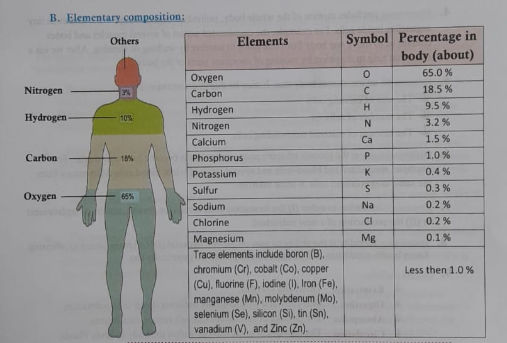
(Reference: H. A. Harper, V. W. Rodwell, P. A. Mayes, Review of Physiological Chemistry, 16th ed., Lange Medical Publications, Los Altos, California Web add: http://www.livescience.com/3505-chemistry-life-human-body.html)
Characteristics of life
All living organisms have certain characteristics that set them apart from nonliving things. The following are six important life processes of humans:
- Homeostasis: regulation of the internal environment to maintain a constant state; for example, sweating to reduce temperature
- Metabolism: is the sum of all the chemical processes that occur in the body. It includes the breakdown of large, complex molecules into smaller, simpler ones and the building up of complex molecules from smaller, simpler ones. For example, proteins in food are split into amino acids.
- Responsiveness:is the body’s ability to detect and respond to changes in its internal (inside the body) or external (outside the body) environment.
- Movement :includes motion of the whole body, individual organs, single cells, and even tiny organelles inside cells. For example, the coordinated action of several muscles and bones enables us to move our body from one place to another by walking or running. After we eat a meal that help to digestion by moving of necessary parts of the body.
- Growth :is an increase in body size. It may be due to an increase in
- The size of existing cells
- The number of cells, or
- The amount of material surrounding cells.
- Differentiation: is the process whereby unspecialized cells become specialized cells. For example, specialized red blood cells and several types of white blood cells differentiate from the same unspecialized cells in bone marrow.
- Reproduction: refers to either (I) the formation of new cells for growth, repair, or replacement or (II) the production of a new individual.
- Heredity: Heredity is the ability to pass on genetic material (DNA) from parent to offspring Some health conditions and diseases can be passed on genetically too.
- Others include:
- Respiration – Obtaining Oxygen.
- Digestion-Chemically and Mechanically breaking down food substances.
- Absorption-The passage of substances through certain membranes.
- Circulation-The movement of substances within the body in Body Fluids.
- Excretion-Removal of wastes that the body produces.