Concept about Chemistry – Introduction to fundamental concepts of Biological Science including the organization and common characteristics of living matters, cell structures and functions, food production by photosynthesis, harvesting energy, mechanism of cells reproduction, genetics, evolutions, and Human Biology. Introduction to general chemistry including basic concepts about matter, atomic structure, chemical bonds, gases, liquid, and solids, solutions, chemical reactions, acid, bases, and salt;
organic and biochemistry including hydrocarbons and their derivatives, carbohydrates, lipids, proteins, enzymes, vitamins, and minerals, nucleic acids; principles of physics and applications to nursing including gravity and mechanics, pressure, heat and electricity; nuclear chemistry and nuclear physics, effects of radiation on human beings, and protection and disposal. The aim of the course is to acquire knowledge and skills in general biological science, general chemistry and physics.
Concept about Chemistry
Chemistry is the study of matter, its properties, how and why substances combine or separate to form other substances, and how substances interact with energy. Many people think of chemists as being white-coated scientists mixing strange liquids in a laboratory, but the truth is we are all chemists. Understanding basic chemistry concepts is important for almost every profession. Chemistry is part of everything in our lives.
Every material in existence is made up of matter even our own bodies. Chemistry is involved in everything we do, from growing and cooking food to cleaning our homes and bodies to launching a space shuttle. Chemistry is one of the physical sciences that help us to describe and explain our world.
Chemistry is the scientific discipline involved with elements and compounds composed of atoms, molecules and ions, their composition, structure, properties, behavior and the changes they undergo during a reaction with other substances.
In the scope of its subject, chemistry occupies an intermediate position between physics and biology. It is sometimes called the central science because it provides a foundation for understanding both basic and applied scientific disciplines at a fundamental level.
For example, chemistry explains aspects of plant chemistry (botany), the formation of igneous rocks (geology), how atmospheric ozone is formed and how environmental pollutants are degraded (ecology), the properties of the soil on the moon (astrophysics), how medications work (pharmacology), and how to collect DNA evidence at a crime sceae (forensics).
Definition of Chemistry:
Chemistry is the scientific study of matter, its properties and interactions with other matter and with energy.
or
Chemistry is a study of the composition of substances and the changes in their composition.
or
Chemistry is the scientific discipline involved with elements and compounds composed of atoms, molecules and ions: their composition, structure, properties, behavior and the changes they undergo during a reaction with, other substances.
Branches of Chemistry:
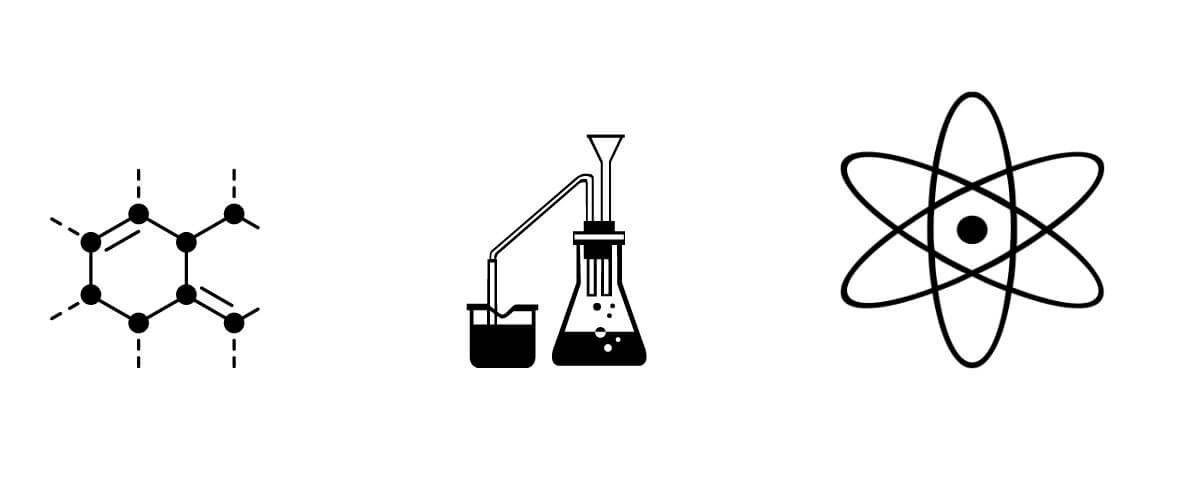
There are five main branches of chemistry, each of which has many areas of study.
1. Analytical chemistry uses qualitative and quantitative observation to identify and measure the physical and chemical properties of substances. In a sense, all chemistry is analytical.
2. Physical chemistry combines chemistry with physics. Physical chemists study how matter and energy interact. Thermodynamics and quantum mechanics are two of the important branches of physical chemistry.
3. Organic chemistry specifically studies compounds that contain the element carbon. Carbon has many unique properties that allow it to form complex chemical bonds and very large molecules. Organic chemistry is known as the “Chemistry of Life” because all of the molecules that make up living tissue have carbon as part of their makeup.
4. Inorganic chemistry studies materials such as metals and gases that do not have carbon as part of their makeup.
5. Biochemistry is the study of chemical processes that occur within living organisms.
Role of Chemistry in Medicine
Chemistry plays an essential role in the field of medicine.
- Most of the drugs used for treatment, cure, and prevention of a disease or disorder are made of some chemical.
- Hence study of chemistry and having knowledge of chemistry is vital for healthcare professionals like a doctor, nurse and also a pharmacist.
- Chemistry is important in aspects of daily life of medical professionals as it is involved in the principles of sterilization, sanitation, diagnosis, drug and also disease.
- It helps them to give proper medical support to the patients without any errors
Importance of Chemistry in Medicine
1. In knowing the actual composition of the drug
2. Understanding the chemical nature of the drug.
3. Predicting the drug interactions
4. For sterilization and sanitation.
5. In the diagnosis of a disease.
6. To regulate the distribution of medicine.
7. Decrease the toxic effect of the drug and enhance tolerability.
8. To discover more new drugs or improve the potency
9. To study the mechanism of disease.
10. To know how the drug acts.
In knowing the actual composition of drug:
- When you see a label on the package of tablets or other medicines, you will notice a few ingredients besides the active drug constituent. Knowledge of chemistry helps the medical personnel to know what the role of that composition is and how the drug should be given or how it acts,
Understanding the chemical nature of the drug:
- Medicines we use have many chemical properties like acidic, alkaline, oil soluble, water soluble, polarity, etc.
- Knowledge of chemistry will help the doctor to guess how the drug is going to act. For example, an acidic drug will be better absorbed in the stomach while the alkaline drugs are well absorbed in the intestine. Also, a lipophilic drug has faster distribution into the brain and deeper tissues than a hydrophilic one. So a doctor can have an idea of how the drug is going to work in the body based on its chemical nature.
In predicting the drug Interactions:
- Most of the time multiple drugs are given to a person as part of treatment. Knowledge of chemistry of the medicine would help the pharmacist to predict if it can lead to any drug interactions. For example, in the case of a gastric ulcer, a doctor may prescribe an antacid like calcium hydroxide and also an antibiotic like tetracycline. In this case, tetracycline will form a complex with calcium and does not show its therapeutic effects.
In sterilization and sanitation:
- Many chemicals like alcohol, phenol, acids, and aldehydes are used for used for sterilization and disinfection. Knowledge of chemistry helps to know how the substance possibly kills the microbes. Hence the personnel can decide which type of sterilization agent can be used for different purposes. See more on uses of alcohol.
In the diagnosis of disease:
- Many diseases or disorders are easily diagnosed by simple biochemical tests. For example blood glucose levels, blood cholesterol levels can be quickly diagnosed by using these chemical tests. Also, they are less expensive than other methods. For example, glucose oxidase method is used for blood glucose estimation.
To regulate the distribution of medicine:
- The absorption, distribution, and excretion of the drug can be controlled by altering the chemistry of the body. For example, if a person has taken a high dose of salicylates or acidic other medicines, their excretion can be enhanced by making the blood alkaline by administering sodium bicarbonate.
Decrease the toxic effect of the drug and enhance tolerability:
- The drug structure is studied as a part of medicinal chemistry. In doing so, the main functional groups responsible for therapeutic effects and toxic property are ascertained. By modifying those functional groups, the toxic effect of the drug can be minimized
To discover more new drugs or improve the potency:
- By taking the chemical structure of lead drugs, they can be further explored by changes in structure for new medicines.
T study the mechanism of disease:
- Most diseases can be explained by some changes in chemistry in the body. For example enhanced hydrochloric acid secretion in gastric acidity, improved iron levels in anemia, etc. This helps us to know the actual mechanism of disease and thereby treating it.
To know how the drug acts:
- Drugs act by a specific mechanism to bring about a cure. This can be studied and also explained well by chemistry.

Role of Chemistry in Nursing:
- To know the chemistry involved in processes of digestion and metabolism which will help the student in selecting and preparing foods in accordance with body requirements, both in health and disease.
- To know the principles involved in energy, digestion, drug, preparation of special diets for first aid treatment, disinfection, the efficient selection and use of chemical products etc. in the home as well as in the hospital.
Importance of Chemistry in Nursing:
- Chemistry focuses on physical science and nursing as a profession derives their practice from physical sciences. Chemistry in nursing is very important because it will guide the nurses in understanding the medications that he/she is administering to his/her patients.
- Having an understanding of chemistry will enable the nurse why medications with the same generic names or within the same classification do not work the same. For example, cephalosporin is one antibiotic classification. Cephalosporin’s are group of antibiotics that treat a variety of bacterial infections in the human body. However, each drug within the group kills specific bacteria. It is therefore vital for nurses to have the knowledge why specific antibiotics are prescribed by the physician to his/her patient.
- Chemistry will also guide the nurse understand the present condition of the patient.
- Understanding the importance of Sodium (Na), Potassium (K), Chloride (CI), Bicarbonate (HCO3), Carbon dioxide (CO2), Oxygen (O) and other electrolytes in the body will guide the nurse to identify if his/her patient is experiencing electrolyte imbalance.
- Nurses must understand how particular medicines will react in different patients. Chemistry helps to avoid wrong combinations of drugs that can lead to adverse effects.
Therefore, chemistry knowledge allows nurses to understand the effects of different medicines when used alone or in combination with others