Concept about Disinfection – Basic microbiology, parasitology, and immunology; nature, reproduction, growth, and transmission of common microorganisms and parasites in Bangladesh; prevention including universal precaution and immunization, control, sterilization, and disinfection; and specimen collections and examination. Students will have an understanding of common organisms and parasites caused human diseases and acquire knowledge about the prevention and control of those organisms.
Concept about Disinfection
Disinfection describes a process that eliminates many or all pathogenic microorganisms, except bacterial spores, on inanimate objects.
Or
Disinfection is the process, which involves the elimination of most pathogenic microorganisms (excluding bacterial spores) on inanimate objects.
Or
Disinfection is the freeing of an article from many, but not all microorganisms.

Activity level of disinfectants
1. High level disinfectants: destroy vegetative bacterial cells including M tuberculosis, bacterial endospores, fungi & viruses
2. Intermediate level: destroy all bacteria, fungi & viruses except bacterial endospores
3. Low level: kill bacterial vegetative cells except M tuberculosis, fungi & medium sized lipid-containing viruses but not bacterial endospores or non-lipid viruses
Disinfectants
Disinfectant (or germicide) is a chemical agent that is applied to inanimate objects to kill microbes capable of producing infection
Or
These are strong chemicals with higher concentration that are used to destroy the vegetative forms of pathogenic organisms from nonliving objects.
Or
Disinfectants are substances that are applied to non-living objects to destroy microorganisms that are living on the objects. Disinfectants are substances that are applied to non-living objects to destroy microorganisms that are living on the objects.
Disinfectant Used in Hospital /Example
According to Disinfected, there are three major types of disinfectants:
1. Alcohols,
- Isopropyl alcohol and
- Ethanol are examples of alcohols used to disinfect surfaces
2. Chlorine and
3. Aldehydes.
4. Acids and alkalis
5. Formaldehyde
Application of Disinfection
- Method of disinfection is applied where sterilization is impracticable and not necessary such as sterilization of bed pans, floor and cooking utensils.
- Disinfection of skin around the site of an invasive procedure.
Difference between Sterilization and Disinfection
| Traits | Sterilization | Disinfection |
| 1. Definition | Sterilization is the absolute freeing of an article from any microbial burden including spores | Disinfection is the freeing of an article from many, but not all, microorganisms |
| 2. Spore | Destroyed in sterilization | Persist in disinfection |
| 3. Microorganism | Absolute clearance occur | Decrease in number that is no longer harmful for health |
Definition of Decontamination
Decontamination is a general term for the treatment used to make equipment safe to handle, and includes microbiological, chemical, radioactive and other contamination.
Mechanism of Action of Disinfectants
- Disruption of the lipid containing cell membrane. (Example- alcohol, detergent, phenol).
- Modification of cellular proteins. (Example: Chlorine, Iodine etc.).
- Modification of nucleic acids. (Example- gentian violet).
- Interference with bacterial cell wall.
- Chemical antagonism.
Disinfections of Skin Before Surgery Can Be Done By the Following Ways
1. Iodophors: using of iodine solution: betadine solution (12+ Povidone iodine). The advantages are-
- They are non-irritant
- They do not stain the skin
2. Ethanol/70% alcohol can be used inwid
3. Iodine in alcoholic solution of 1%-2%
Antisepsis and Antiseptics
Antisepsis
Antisepsis is the process of inhibiting the growth and multiplication of microorganisms
Or
Antisepsis is the process of destruction of all vegetative forms of pathogenic organisms from living surface.
Antiseptic
Antiseptic typically is a chemical agent that is applied to living tissue to kill or inhibit growth of microbes which is less powerful than disinfectants.
Or
Antiseptics are antimicrobial substances that are applied to living tissue/skin to reduce the possibility of infection, sepsis.
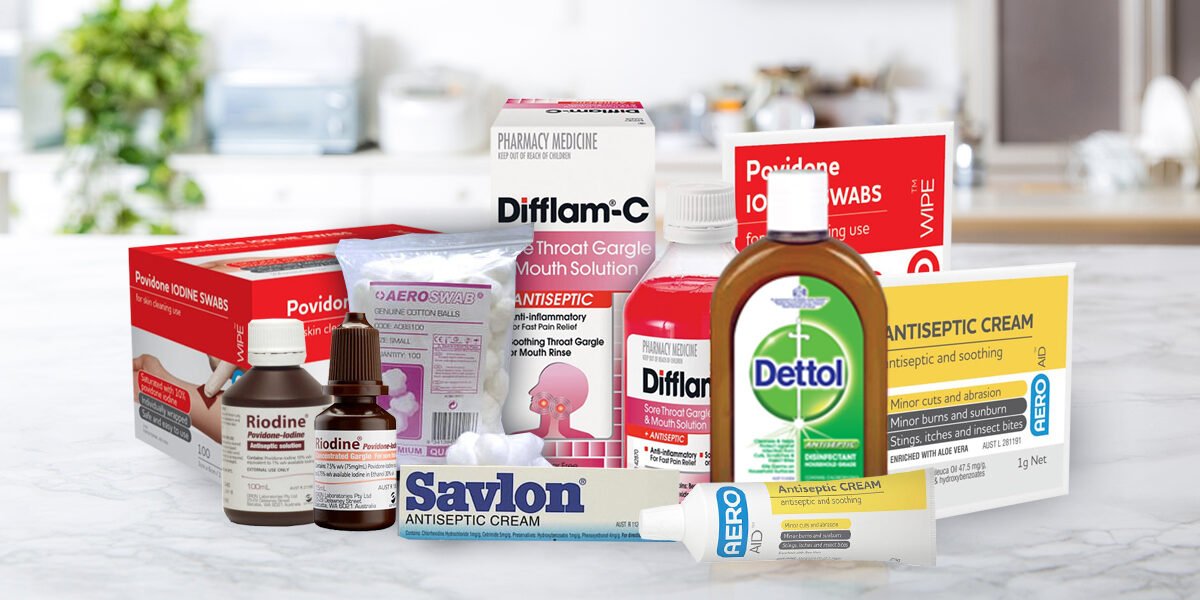
Example:
- Povidone iodine
- Hydrogen peroxide
- Cresol, Lysol
- Chlorhexidine
- Dettol
- Savion
- Ethanol
- Acriflavine
Difference between Antiseptics and Disinfectant
| Traits | Antiseptic | Disinfectant |
| Strength of chemicals | Mild chemicals. Used in loweram concentration. | Strong chemicals. Used in higher concentration |
| Used for | Living surface. Example: Skin and Mucous membrane. | Non-living surface/objects Example: Floor, bed, pan |
| Mode of action | Prevent the growth or kill the microorganisms. | Kill the microorganisms except spore. |
| Irritant or harmful | Not irritant to living surface. It is not harmful to the body-lied | Irritant and injurious to living surfaces. |
| Example | Cresol (Lysol), Chlorhexidine, Dettol, Savlon, Povidone-iodine etc. | Acids & alkalis. Formaldehyde, Gluteraldehyde, Bleaching powder etc |