
Concept about Retina-The course is designed for the basic understanding of anatomical structures and physiological functions of human body, musculoskeletal system, digestive system, respiratory system; cardiovascular system; urinary system, endocrine system, reproductive system, nervous system, hematologic system, sensory organs, integumentary system, and immune system.The aim of the course is to acquire knowledge and skills regarding anatomy and physiology.
Concept about Retina
Retina: The retina is the innermost layer, is a delicate sheet of nervous tissue that forms the photoreceptiors of the eye.
Structure:
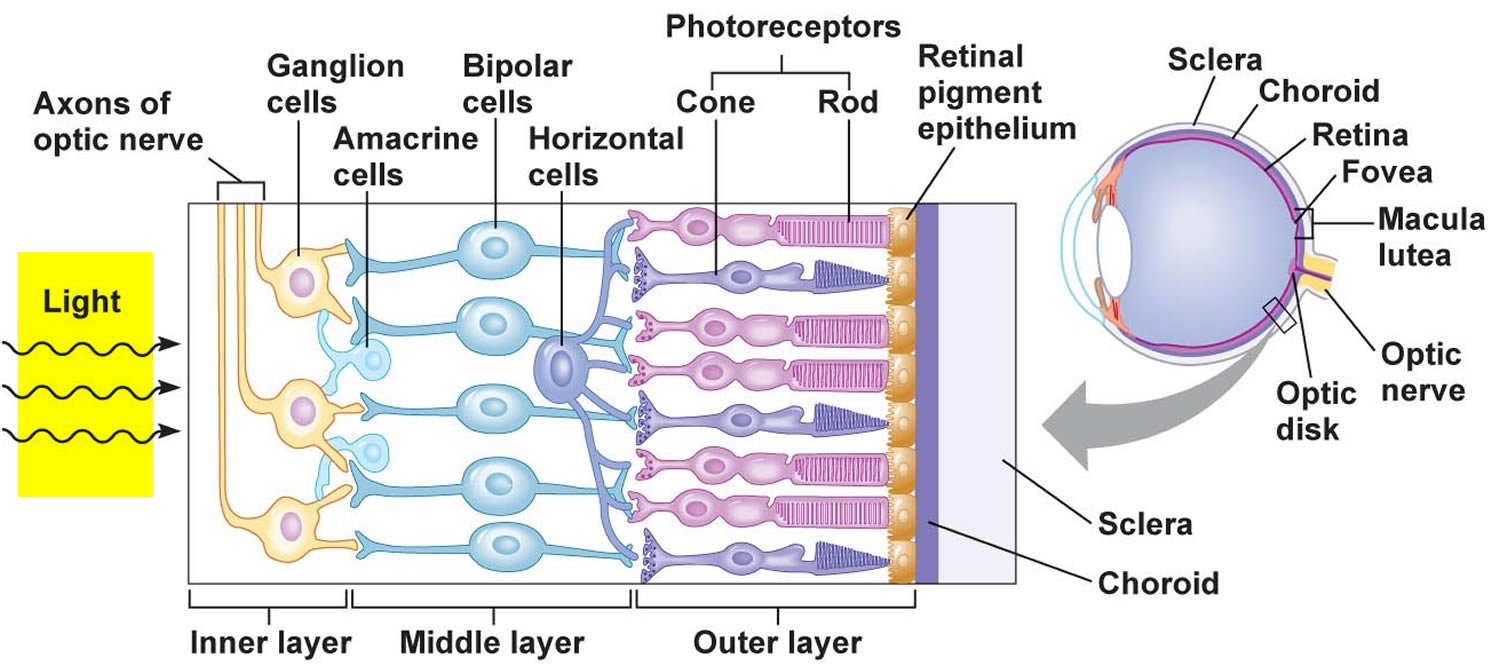
Retina consists of following 10 layers:
- Pigment layer.
- Layers of rods & cones.
- Outer limiting membrane.
- Outer nuclear layer.
- Outer plexiform layer.
- Inner nuclear layer.
- Inner plexiform layer.
- Ganglionic cell layer.
- Layer of optic nerve fibre.
- Inner limiting membrane
Function:
Vision: Retina is responsible for-
- Photopic vision (day light vision)
- Scotopic vision (night/dimlight vision)
- Acuity of vision.
- Colour vision.
- Perception of movement.
Role of vitamin A in vision:
Vitamin A is essential for the formation of the Rhodopsin. Vit-A is converted into Retinal which binds to the scotopsin to form rhodopsin. So, in the deficiency of vit-A, number of rhodopsin is decreased. This results in poor vision in dim light called night blindness.
Pupil
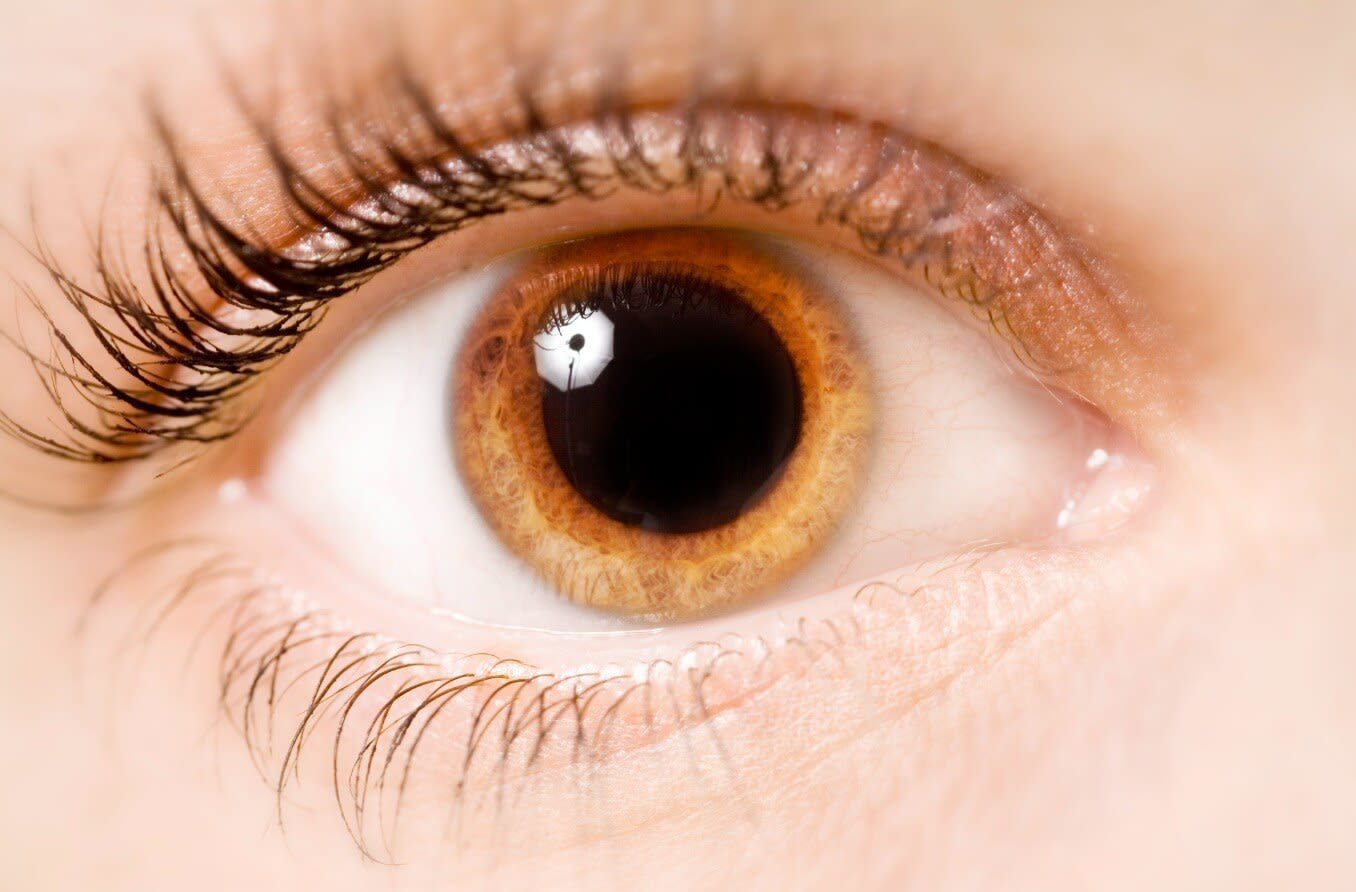
The central opening of the iris that communicates between the anterior and posterior chamber of the eyeball is called pupil. The iris contains two types of muscle fiber that changes the diameter of the pupil. The circular fibers of iris supplied by occulomotor nerve (3rd cranial nerve) causes constriction of pupil and the radial fibers supplied by sympathetic nerves causes dilatation of the pupil.
Functions of Pupil:
- It controls the amount of light entering the eye (to retina) by constriction or dilatation.
- It controls the depth of focus of the optical system of eye. Smaller pupil increases the depth of the focus.
- It gives passage for circulation of aqueous humour.
- Acuity of vision is dependent upon papillary size.