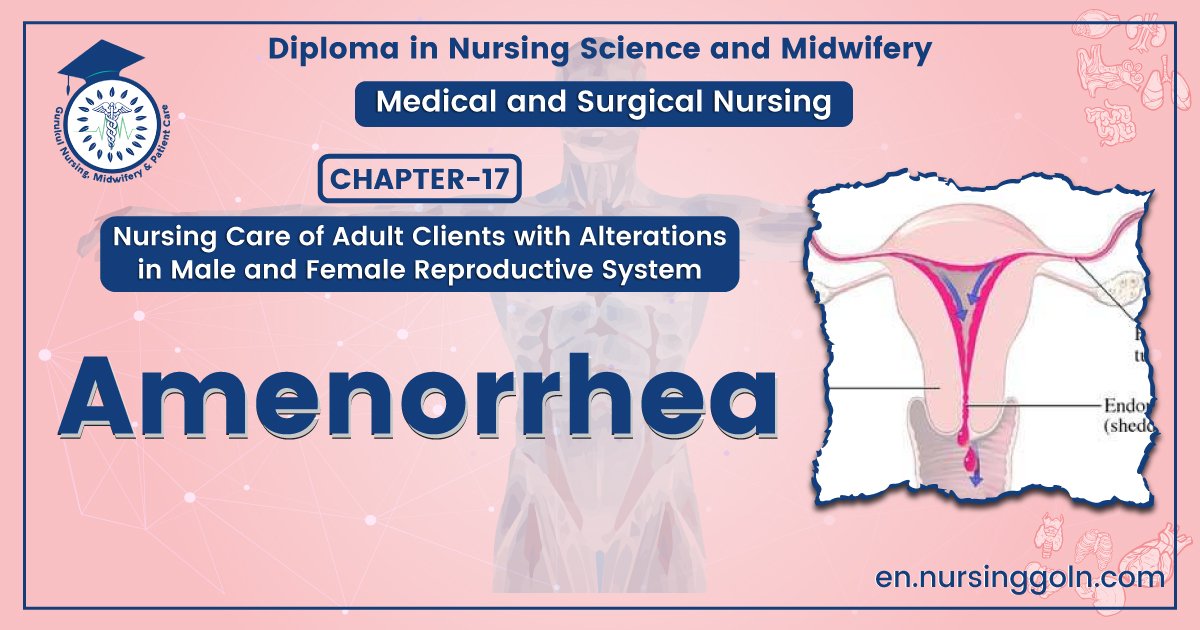
Concept of Amenorrhea – This course is designed to understand the concept of community health nursing: nurses’ roles and interventions in family health, school health, occupational health, environmental health, elderly health care, gender issues, disaster management and principles and terminology of epidemiology. The aim of the course is to acquire knowledge and skills in community health nursing.
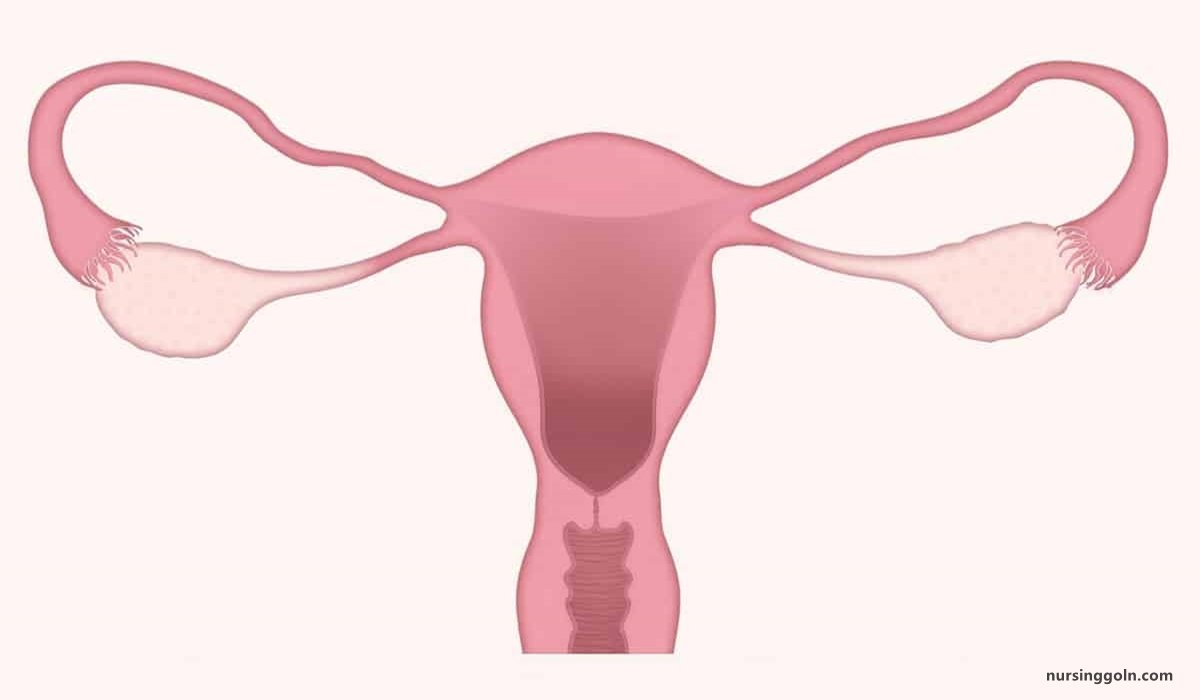
Concept of Amenorrhea
Definition of Amenorrhoea:
Amenorrhea means absence of menstruation. It is a symptom not a disease and is physiological, as in pregnancy.
Or,
Amenorrhea is the absence of a menstrual period in a woman of reproductive age. Physiological states of amenorrhea are seen, most commonly, during pregnancy and lactation (breastfeeding), the latter also forming the basis of a form of contraception known as the lactational amenorrhea method.
Causes of Amenorrhea:
A. Chromosomal abnormality:
- Turners syndrome (45 XO) (gonadal dysgenesis)
- Testicular feminization syndrome (46 XY)
B. Development defect of genital tract:
- Imperforate hymen
- Transverse vaginal septum
- Atresia of vagina or cervix
- Absence of uterus
C. Absence of co-ordinate function of the hypothalamic – pituitary axis
- Hypo-gonadotrophic hypogonadism
- Anorexia nervosa
- Polycystic ovarian syndrome
- Pituitary adenoma
D. Dysfunction of thyroid and adrenal axis:
- Adrenogenital syndrome
- Cretinism
E. Metabolic disorder: Juvenile diabetes
F. Systemic disorder: Anemia, TB, Malnutrition
G. Unresponsive endometrium: Congenital, Uterine synechiae
Types of Amenorrhea:
1. Primary amenorrhea: It refers to patient of any age who has never menstruated
2. Secondary amenorrhea: It refers to cessation of the periods after menstruation has been established. Pregnancy is the commonest cause of secondary amenorrhea.
Diagnosis of Primary Amenorrhea:
A. Patient profile: Age of the patient
B. Presenting complaints:
- Absence of menstruation by 16 years
- Cyclical lower abdominal pain
- Unexplained weight gain, or weight loss
- Absence or growth and development of secondary sex character
C. Family history: DM, TB, Delayed menarche
D. H/O past illness: Diabetes, TB
E. Clinical examination:
i. General examination: Height, Weight, nutrition status, body built, intelligence, hair distribution
ii. Local and systemic examination:
- Breast development, external genitalia
- P/V examination: Hymen, cervix
- Per abdomen: Any lower abdominal mass tenderness
- Chest: Creps and rhonchi
Special investigation:
- Blood for-
✔ TC, DC, ESR, Hb%
✔ Blood sugar
✔ T3, T4, TSH
✔ Serum hydroxyl progesterone
✔ FSH, LH, prolactin
- Urine: Pregnanediol
- USG
- Laparoscopy
- Endometrial biopsy
- Karyotyping
- Mantoux test
- X-ray chest
- X-ray or CT scan of sella turcica
manage a case of primary amenorrhea
(a) General treatment:
- Improvement of general health by proper diet
- Reassurance
- Psychotherapy
(b) Surgical treatment:
- Imperforate hymen or transverse vaginal septum: Cruciate incision of the membrane and drainage of the blood under G/A
- Vaginal agenesis: Vaginal reconstruction surgery
- Bilateral wedge resection of the polycystic ovaries
(c) Diabetes: Anti diabetic therapy
(d) TB: Anti TB chemotherapy with prednisolone
(e) Hormone: Replacement therapy –
- Hypothyroidism: Thyroxin replacement
- Pituitary cause: GnRH and Gonadotrophins
- When the complaint is infertility: Clomiphene, gonadotrophins
Causes of Secondary Amenorrhea:
A. Physiological:
- Pregnancy
- Lactation
- Menopause
B. Pathological:
(a) False: Cryptomenorrhoea
- Cervical stenosis
- Vaginal stenosis
(b) True:
I. Uterine factors:
- Tubercular endometritis
- Synechine
- Post radiation and chemotherapy
- Surgical (Hysterectomy)
ii. Ovarian factors:
- Polycystic ovary syndrome
- Premature ovarian failure
- Hyper estrogenic state
- Musculinizing tumor
- Resistant ovarian syndrome
- Pelvic radiation
iii. Pituitary factors:
- Pituitary adenoma
- Sheehan’s syndrome
iv. Hypothalamic factors:
- Psychogenic shock, stress
- Anorexia nervosa
- Pseudocytosis
v. Adrenal factors:
- Adrenal tumor or hyperplasiad
- Cushing’s syndrome
vi. Thyroid factors: Hypothyroid state
vii. General disease:
- Malnutrition
- TB
- Chronic nephritis
- Diabetes
viii. Iatrogenic:
- Oral contraceptive pills
- Psychotropic drugs (phenothiazine)
- Anti hypertensive drugs (Reserpine, Dopamine)
Diagnosis a case of secondary amenorrhea at the age of 30 years
A. History:
(a) Patient profile: Age, marital status
(b) Presenting complaints
I. Amenorrhea:
- Duration
- It is proceeding by oligomenorrhoea or not
- History of any symptoms of early pregnancy
ii. Abnormal weight gain or weight loss
iii. Hair growth or hair falling
iv. Breast atrophy
V. Visual disturbance
(c) Past history: TB, Pelvic radiation, pelvic surgery
(d) Drug history: OCP, Phenothiazine derivatives
(e) Menstrual history: Age of menarche, cycle, flow, duration
(f) Obstetric history: PPH
B. Clinical examination:
(a) General examination:
- Appearance
- Nutritional status
- Body built
- Height, weight
- Thyroid swelling
- Acne
(b) Local and systemic examination:
- Breast examination: Breast atrophy, signs of early pregnancy
- Per abdominal examination: Presence of striae, a mass in the lower abdomen
- Pelvic examination: Enlargement of clitoris, adnexal mass
- Ophthalmic examination: any visual disturbance
C. Investigation:
(a) General investigation:
- Blood for TC, DC, ESR, Hb%, Blood sugar
- Urine for RME
- CXR (chest X-ray)
- mantoux test
- USG of uterus and adnexae
(b) Special investigation:
- Pregnancy test
- Hormone assay: Thyroid function test (Ta, TSH) Plasma level of FSG, LH and prolactin
- Radiology: Radiological examination of the pituitary fossa, CT scan, MRI, Hysterosalpingography
- Laparoscopy
case of secondary amenorrhea at the age of 30 years
A. General management:
- Improvement of general condition
- Explanation and reassurance
- Psychological support
- Stops drugs which may be related with amenorrhea
B. Hormone replacement therapy (HRT):
- Thyroxin hypothyroidism
- Corticosteroids in Addison’s disease or polycystic ovaries
- Cyclical estrogen and progesterone: Can be given for 3 cycles as a diagnostic measure to test uterine activity.
- Clomiphene: It is indicated when the complaint is infertility
C. Surgery:
- Polycystic ovaries – bilateral wedge resection
- Cushings syndrome – Transphenoidal pituitary microsurgery, adrenalectomy
D. Systemic illness:
- DM: Anti diabetic therapy
- TB: Anti TB chemotherapy