Definition of Nutrition – Nursing is a profession within the healthcare sector focused on the care of individuals, families, and communities so they may attain, maintain, or recover optimal health and quality of life. Nurses may be differentiated from other healthcare providers by their approach to patient care, training, and scope of practice. Nurses practice in many specialisms with differing levels of prescriber authority.
Many nurses provide care within the ordering scope of physicians, and this traditional role has shaped the public image of nurses as care providers. However, nurses are permitted by most jurisdictions to practice independently in a variety of settings depending on training level. In the postwar period, nurse education has undergone a process of diversification towards advanced and specialized credentials, and many of the traditional regulations and provider roles are changing.
Nurses develop a plan of care, working collaboratively with physicians, therapists, the patient, the patient’s family, and other team members, that focus on treating illness to improve quality of life. Nurses may help coordinate the patient care performed by other members of an interdisciplinary healthcare team such as therapists, medical practitioners, and dietitians. Nurses provide care both interdependently, for example, with physicians, and independently as nursing professionals.
Definition of Nutrition
According to WHO (World Health Organization):
Nutrition is the intake of food, considered in relation to the body’s dietary needs. Good nutrition – an adequate, well balanced diet combined with regular physical activity is a cornerstone of good health. Poor nutrition can lead to reduced immunity, increased susceptibility to disease, impaired physical and mental development, and reduced productivity.
or
Nutrition may be defined as the science of food and its relationship to health. It is concerned primarily with the part played by nutrients in body growth, development and maintenance.
or
Nutrition is the science that interprets the interaction of nutrients and other substances in food in relation to maintenance, growth, reproduction, health and disease of an organism. It includes food intake, absorption, assimilation, biosynthesis, catabolism and excretion.
Definition of Nutrients:
Nutrients are the constituents in food that must be supplied to the body in suitable amounts. Nutrients include water, proteins, and amino acids, fats and fatty acids, carbohydrates, minerals and vitamins.
or
Nutrients are molecules in food that all organisms need to make energy, grow, develop, and reproduce. Nutrients are digested and then broken down into basic parts to be used by the organism. There are two main types of nutrients, macronutrients and micronutrients.
Definition of Diet:
In nutrition, diet is the sum of food consumed by a person or other organism. The word diet often implies the use of specific intake of nutrition for health or weight-management reasons (with the two often being related).
or
Diet is the sum of food consumed by a person or other organism.
Purposes of Normal Diet
- To maintain adequate nutrition of the individual.
- To promote optimal nutrition.
- To restore the individual to a satisfactory nutritional status, if his nutritional balance has been disturbed.
Types of Diet:
There are several types of diet.
A. Normal food:
- An average patient whose appetite is normal is given normal food. Fried and highly seasoned foods are not given to patients.
B. High diet:
- It is cooked simply, without fat; gas forming foods are also avoided.
C. Soft diet:
- It contains food which requires little chewing and contains no fibre or no seasoning. These foods are given to people with gastro intestinal disorders.
D. Liquid diet:
Full liquid diet: Soups, puddings, custards, cooked cereals, milk
Clear diet: Water, tea, lemon, coffee, juice and beverage.
Bland diet: Full liquid diet excepting coffee, tea, colas and soups.
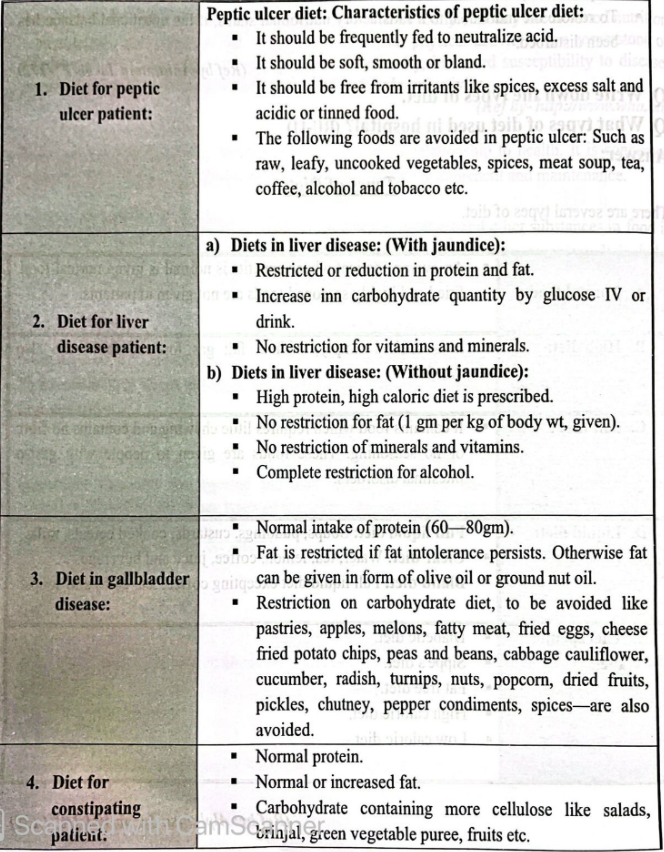
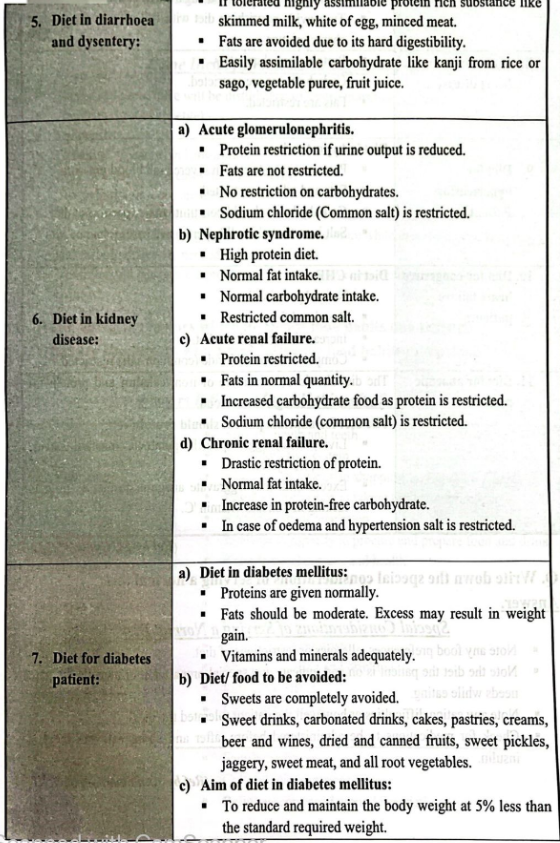
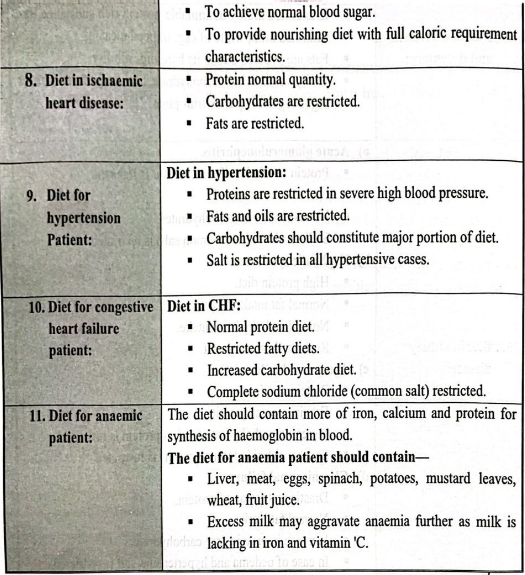
E. Therapeutic diet:
- Diabetic diet.
- Sippe’s diet.
- Fat free diet.
- High caloric diet.
- Low caloric diet.
Special Considerations of Serving a Normal Diet
- Note any food preferences, allergies or restrictions of diet.
- Note the diet the patient is on and indicate any special preparation or utensils the patient needs while eating.
- Note any eating difficulties or how well the patient tolerated the meal.
- Check for medications to be administered before, after and along with the meal, e.g. insulin.
Some Dietary Problems during Sickness:
- During sickness, there will be disturbance of gastro intestinal function.
- Anorexia (loss of appetite).
- Dyspepsia.
- Defective digestion and absorption.
- Lack of exercise decreases need for energy.
- Tissue building foods are needed more.
- The process of anabolism and catabolism are not normal in sickness.
- In some kinds of illness, protein requirements are more while in some others, both protein and carbohydrates are needed in larger amounts.
- Vomiting and diarrhea are problems in which intravenous fluid administration is required.
Factors Influence Food Habits of a Person:
A. Physical:
- State of mouth and teeth.
- Intact digestive system.
- Physical proficiency in shopping for/preparing food.
- Physical proficiency in taking food and drink.
- Appetite/thirst regulation.
B. Psychological;
- Intellectual capacity to procure and prepare food and drink.
- Knowledge about diet and health.
- Weight control.
- Alcoholism.
- Food hygiene.
- Disposal of food waste.
- Attitude to eating and drinking.
- Emotional status.
- Likes and dislikes.
C. Sociocultural:
- Family traditions.
- Cultural idiosyncrasies
- Religious commendations / Restrictions.
D. Environmental:
- Climate and geographical position.
- Facilities for procuring / growing food.
- Distance from home to the shopping area.
- Availability of transport.
- Means of cooking.
- Means of storage
E. Economic:
- Finances available.
- Choice of food and drink.
- Quantity and quality of food and drink.
Procedure of Feeding a Helpless Patient:
A. Articles:
- Tray containing prepared diet.
- Face towel and water.
- Kidney tray.
- Backrest and cardiac table.
- Fork and spoon.
- Feeding cup with water.
B. Procedure:
- Explain procedure to the patient and assess how he can participate.
- Position the patient comfortably, preferably in Fowler’s position.
- Assist the patient to wash his hands and face.
- Place towel over chest and around the neck.
- Make sure that therapeutic restrictions are considered.
- Check the diet and ensure that is the one was ordered.
- Create a pleasant environment.
- Wash hands.
- Sit or stand at the side of patient.
- Consider the patient’ preferences while feeding and encourage his participation to the extent possible.
- Feed the patient in small spoonful’s waiting for him to chew and swallow one mouthful before next.
- Encourage the patient to take all the food several to him, but not force.
- Give water in between if patient prefers water.
- When the patient has eaten food and he feels satisfied, stop feeding and give him a glass of water if he prefers.
- Provide articles for rinsing mouth and encourage patient to do so.
- Dry lips and face with towel. Replace articles and wash hands.
- Record in nurse’s record the type of diet, time of feeding, amount taken and tolerance.
- Record fluid taken, in intake output record.