Dental caries – This course is designed to understand the concept of community health nursing: nurses’ roles and interventions in family health, school health, occupational health, environmental health, elderly health care, gender issues, disaster management and principles and terminology of epidemiology. The aim of the course is to acquire knowledge and skills in community health nursing.
Dental caries
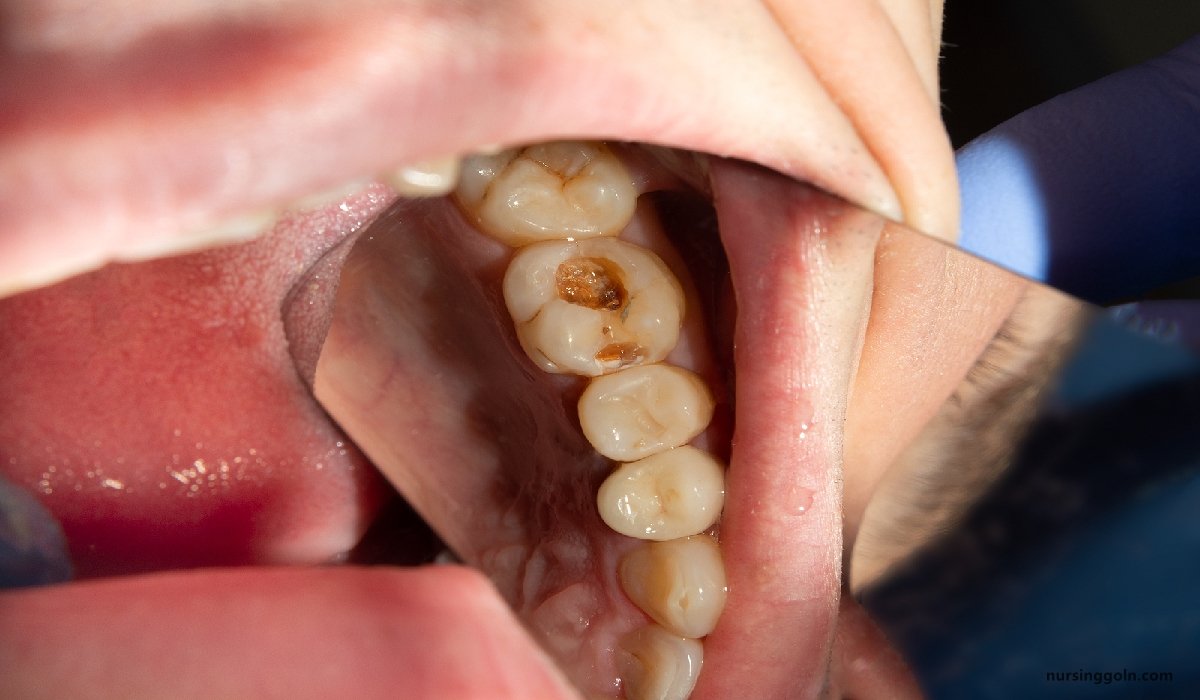
Dental caries is the scientific term for tooth decay or cavities. It is caused by specific types of bacteria. They produce acid that destroys the tooth’s enamel and the layer under it, the dentin.
Many different types of bacteria normally live in the human mouth. They build up on the teeth in a sticky film called plaque. This plaque also contains saliva, bits of food and other natural substances. It forms most easily in certain places. These include:
- Cracks, pits or grooves in the back teeth
- Between teeth
- Around dental fillings or bridgework
- Near the gum line
Definition of Dental caries:
Dental caries is a progressive and destructive process causing decalcification of the tooth enamel, destruction of dentin and cavitation of the teeth. It can spread into the tooth pulp and may cause inflammation and abscess.
(Ref: Paediatrie Nursing, Parul Datta/34/419)
Factors Responsible For Dental Caries:
Many microorganisms can cause dental caries. Streptococci is the main cariogenic organism which produces an extracellular polysaccharide and forms a plaque over the teeth. Gradually tooth decay begins following demineralization of enamel
Destruction of dentin with cavity formation occurs causing inflammation and abscess formation. Biting surfaces and contact surfaces between teeth are most common site of caries.
The factors arc-
- Carbohydrate rich foods, especially chocolate which stick to the teeth and poor oral hygiene with inadequate dental-dare.
- Sleeping with feeding bottle in mouth.
- Use of dummy or pacifiers with honey or some other sweetening agents are also responsible factors of dental caries.
- Long time retention of carbohydrate foods in the mouth is more important as cariogenic factors.
- Faulty salivary gland functions also considered as risk factors of dental caries.
- Deficiency and excess of fluoride are both harmful.
(Ref: Paediatric Nursing, Parul Datta/3/419)
Clinical Features of Dental Caries:
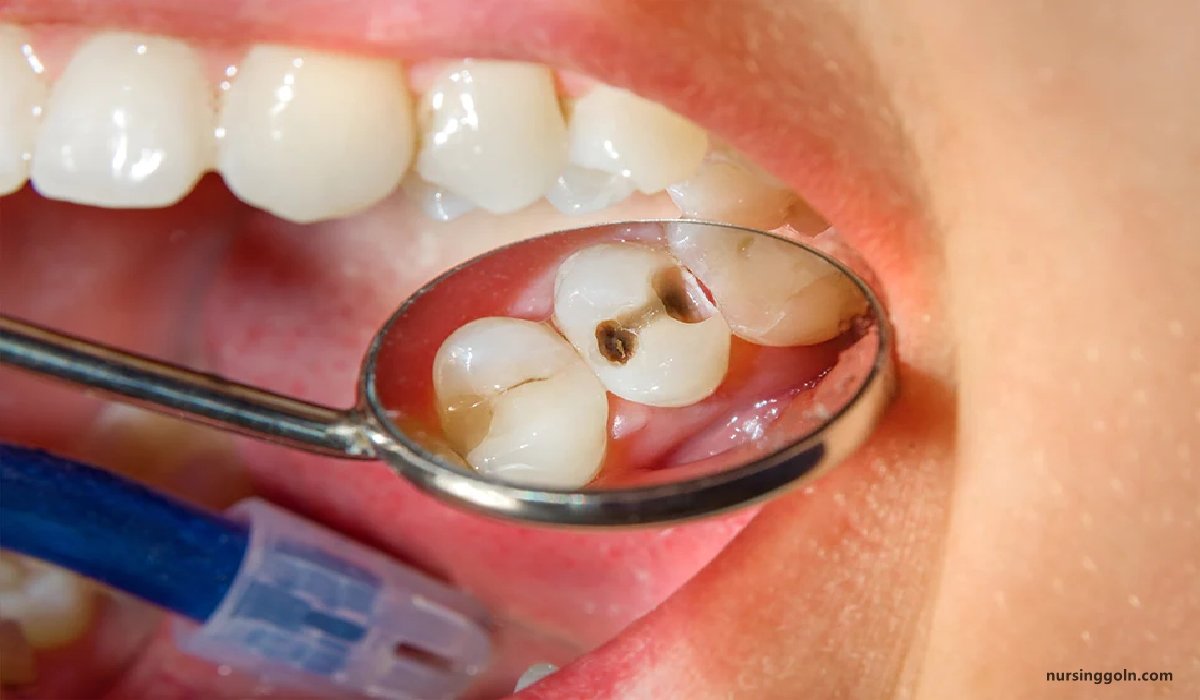
- Dental caries is found as pits and fissures of biting surfaces of teeth, commonly in molars as initial features.
- Cavity formation
- Involvement of pulpPeriapical abscess
Definition of Dental caries:
Dental caries is a progressive and destructive process causing decalcification of the tooth enamel, destruction of dentin and cavitation of the teeth. It can spread into the tooth pulp and may cause inflammation and abscess.
(Ref: Paediatrie Nursing, Parul Datta/34/419)
Factors Responsible For Dental Caries:
Many microorganisms can cause dental caries. Streptococci is the main cariogenic organism which produces an extracellular polysaccharide and forms a plaque over the teeth. Gradually tooth decay begins following demineralization of enamel
Destruction of dentin with cavity formation occurs causing inflammation and abscess formation. Biting surfaces and contact surfaces between teeth are most common site of caries.
The factors arc-
- Carbohydrate rich foods, especially chocolate which stick to the teeth and poor oral hygiene with inadequate dental-dare.
- Sleeping with feeding bottle in mouth.
- Use of dummy or pacifiers with honey or some other sweetening agents are also responsible factors of dental caries.
- Long time retention of carbohydrate foods in the mouth is more important as cariogenic factors.
- Faulty salivary gland functions also considered as risk factors of dental-caries.
- Deficiency and excess of fluoride are both harmful.
(Ref: Paediatric Nursing, Parul Datta/3/419)
Clinical Features of Dental Caries:
- Dental-caries is found as pits and fissures of biting surfaces of teeth, commonly in molars as initial features.
- Cavity formation
- Involvement of pulp
- Periapical abscess
- Dental abscess or sepsis may develop.
- Dental-caries may spread to involve the pulp and contagious tissue which is manifested with significant tooth ache. Pulpitis may be complicated with dental or periapical abscess which is very painful.
(Ref: Paediatric Nursing, Parul Datta/3/420)
Management of Dental Caries:
- Dental-caries should be treated with analgesics to relief pain and tooth extraction or pulpectomy.
- Involvement of tissue outside the dentoalveolar unit requires antibiotics mainly in infection of submandibular space, periorbital space and facial triangle.
- Oral antibiotics are not effective, parenteral administration should be given to prevent complication.
(Ref: Paediatric Nursing, Parul Datta/34/420)
Prevention of Dental Caries:
- Dietary modification by reducing carbohydrate-rich food intake and avoiding oral retaining
- Use of fluoride toothpaste.
- Avoidance of chewing gum, chocolates, bottle feeding, use of pacifiers, etc.
- Good oral and dental hygiene with correct technique of tooth brushing.
- Dental sealants and plastics to be applied to seal the pits and fissures on occlusal surfaces of teeth.
- Mechanical removal of plaque and debris of the teeth are essential.
- Regular dental check-up for early detection of problems and necessary advice.
(Ref: Paediatric Nursing, Parul Datta/3/420)