Edward Lee Thorndike Theory – Behavioral sciences explore the cognitive processes within organisms and the behavioral interactions between organisms in the natural world. It involves the systematic analysis and investigation of human and animal behavior through the study of the past, controlled and naturalistic observation of the present and disciplined scientific experimentation and modeling.
It attempts to accomplish legitimate, objective conclusions through rigorous formulations and observation. Generally, behavior science deals primarily with human action and often seeks to generalize about human behavior as it relates to society.

Edward Lee Thorndike Theory
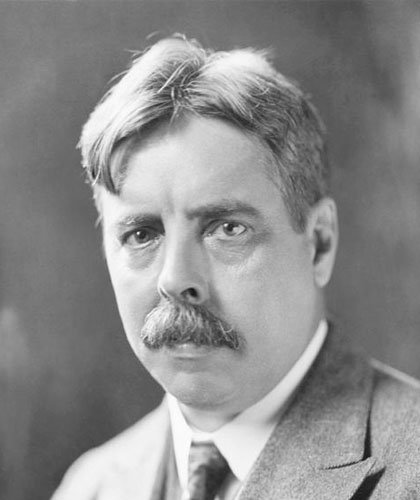
Edward Lee Thorndike (1874-1947), the American psychologist, considered as the father of educational psychology conducted a series of experiments (1911) on trial and error method of learning by animals.
Experiment
A hungry rat was set free at the entrance of a wooden maze which contained many pathways from the entrance to the center! But all the ways except one were blocked somewhere in the middle. A piece of bread was placed in the center of the maze. Seeing the bread, the hungry rat rushed to get it. It happened to enter the wrong path which was obstructed in the middle; Consequently it had to return to the entrance but only to try other paths till it reached the bread.
The next day, it made less errors. The experiment continued for several days till the rat was able to identify the right path at the very first glance without trying out other parts. Thorndike conducted similar experiments on a number of animals, e.g. monkeys, dogs, hens and cats. The errors were reduced as the trials were repeated, i.e. SR connections were made.
From, the rat’s experiment and several other similar experiments. Thorndike formulated certain laws of learning. According to Thorndike all learning is trial and error.