Emergency Neonatal Care (ENC) – This course is designed to understand the care of pregnant women and newborn: antenatal, intra-natal and postnatal; breast feeding, family planning, newborn care and ethical issues, The aim of the course is to acquire knowledge and develop competencies regarding midwifery, complicated labour and newborn care including family planning.
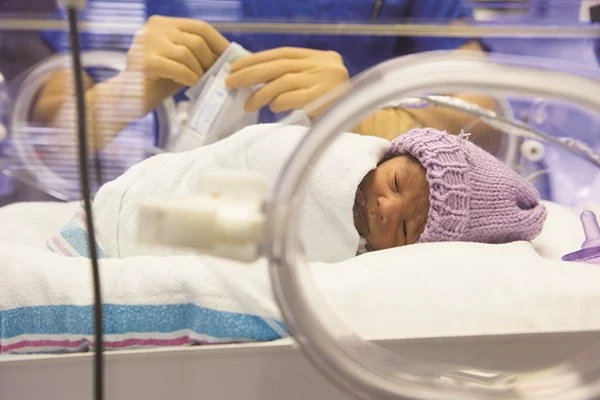
Emergency Neonatal Care (ENC)
Essential newborn care (ENC):
Essential Newborn Care (ENC) is care that every newborn baby needs regardless of where it is born or its size. ENC should be apllied immediately after thebaby is born and continued for at least the first 7 days after birth.
Or
Essential newborn care is a set of preventive measures including hygienic, thermal control (including dying & wrapping, skin to skin & delayed bathing) & early recognition of sick newborns.
Components of essential newborn care:
1. Prevent infection of newborn.
2. Keeping the baby warm.
3. Encourage early & exclusive.
4. Give eye care.
5. Starting immunization schedule.
6. Correct management of newborn illness.
7. Extra care LBW babies.
Purposes of essential newborn care:
These measures are needed-
1. To ensure the survival of all newborns.
2. To assist babies when needed & early recognition of sick newborns.
Objectives of essential newborn care:
1. To provide evidence-based practices to ensure survival of the newborn from birth up to the first 28 days of life.
2. To deliver time-bound core intervention in the immediate period after the delivery of the
newborn
3. To strengthen health facility environment for breastfeeding initiation to take place and for breastfeeding to be continued from discharge up to 2 years of life
4. To provide appropriate and timely emergency newborn care to newborns in need of resuscitation
5. To ensure access of newborns to affordable life-saving medicines to reduce deaths and morbidity from leading causes of newborn conditions
6. To ensure inclusion of newborn care in the overall approach to the Maternal, Newborn, Child Health and Nutrition Strategy
Basic principles of essential newborn care:
1. To ensure adequate oxygenation through clear airways and proper breathing’
2. To prevent hypothermia in the neonates!
3.To encourage early and exclusive breastfeeding for healthy neonates or suitable method of providing nutrition to weak and sick babies who cannot feed on breast and get adequate nutrition.
4. Suitable measures to prevent neonatal infections’
5. Early identification, of at-risk newborn, offer suitable initial management and stabilization of the baby if possible or arrange for safe transfer to suitable advanced neonatal care center.
Essential Newborn Care: 4 Core Steps
➤ Immediate & thorough drying.
➤ Early skin to skin contact (SSC).
➤ Properly-Timed cord clamping.
➤ Non-Separation of mother & newborn for early Breastfeeding.
Some essential newborn care:
◆ Cleaning airway and stimulating crying.
◆ Drying the baby with a clean, dry cloth, covering the head, without wiping the vernix caseosa, and refraining from bathing the baby for 24 hours.
◆ Immediate warming by placing baby in skin-to-skin contact with mother (use KMC for LBW baby).
◆ Cleaning umbilical cord and wiping eyes with a clean cloth.
◆ Immediate and exclusive breast-feeding.
◆ Recognition and care-seeking for special care
Eight steps of essential newborn care:
1. Warm the delivery room.
2. Immediate drying.
3. Skin-to-skin contact at birth.
4. Breastfeeding.
5. Bathing and weighing postponed.
6. Appropriate clothing/bedding.
7. Mother and baby together.
8. Warm transportation for a baby that needs referral.
Short description
Step 1 Deliver the baby onto the mother’s abdomen or a dry warm surface close to the mother. Continue to support and reassure the mother. Tell her the sex of the baby and congratulate her.
Step 2 Dry the baby’s body with a dry warm towel as you try to stimulate breathing. Wrap the baby with another dry warm cloth and cover the head.
Dry the baby well, including the head, immediately and then discard the wet cloth. Wipe the baby’s eyes. Rub up and down the baby’s back, using a clean, warm cloth. Drying often provides sufficient stimulation for breathing to start in mildly depressed newborn babies.
Do your best not to remove the vernix (the creamy, white substance which may be on the skin) as it protects the skin and may help prevent infection. Then wrap the baby with another dry cloth and cover the head.
Step 3 Assess breathing and colour; if not breathing, gasping or there are less than 30 breaths per minute, then resuscitate.
check if the baby is:
✓ Breathing normally
✓ Having trouble breathing
✓Breathing less than 30 breaths per minute, or
✓Not breathing at all.
Step 4 Tie the cord two fingers’ length from the baby’s abdomen and make another tie two fingers from the first one. Cut the cord between the first and second tie. If the baby needs resuscitation, cut the cord immediately. If not, wait for 7-3 minutes before cutting the cord.
1. Tie the cord securely in two places:
✓ Tie the first one two fingers away from the baby’s abdomen.
✓ Tie the second one four fingers away from the baby’s abdomen.
✓ Make sure that tie is well secured; the thread you use to tie the cord must be clean.
2. Cut the cord between the ties:
✓ Use a new razor blade, or a boiled one if it has been used before, or sterile scissors.
✓ Use a small piece of cloth or gauze to cover the part of the cord you are cutting so no blood splashes on you or on others.
✓ Be careful not to cut or injure the baby. Either cut away from the baby or place your hand between the cutting instrument and the baby.
3. Do not put anything on the cord stump.
Step 5 Place the baby in skin-to-skin contact with the mother, cover with a warm cloth and initiate breastfeeding.
The newborn loses heat in four ways:
- Evaporation: when amniotic fluid evaporates from the skin.
- Conduction: when the baby is placed naked on a cooler surface, such as the floor, table, weighing scales, cold bed.
- Convection: when the baby is exposed to cool surrounding air or to a draught from open doors and windows or a fan.
- Radiation: when the baby is near cool objects, walls, tables, cabinets, without actually being in contact with them.
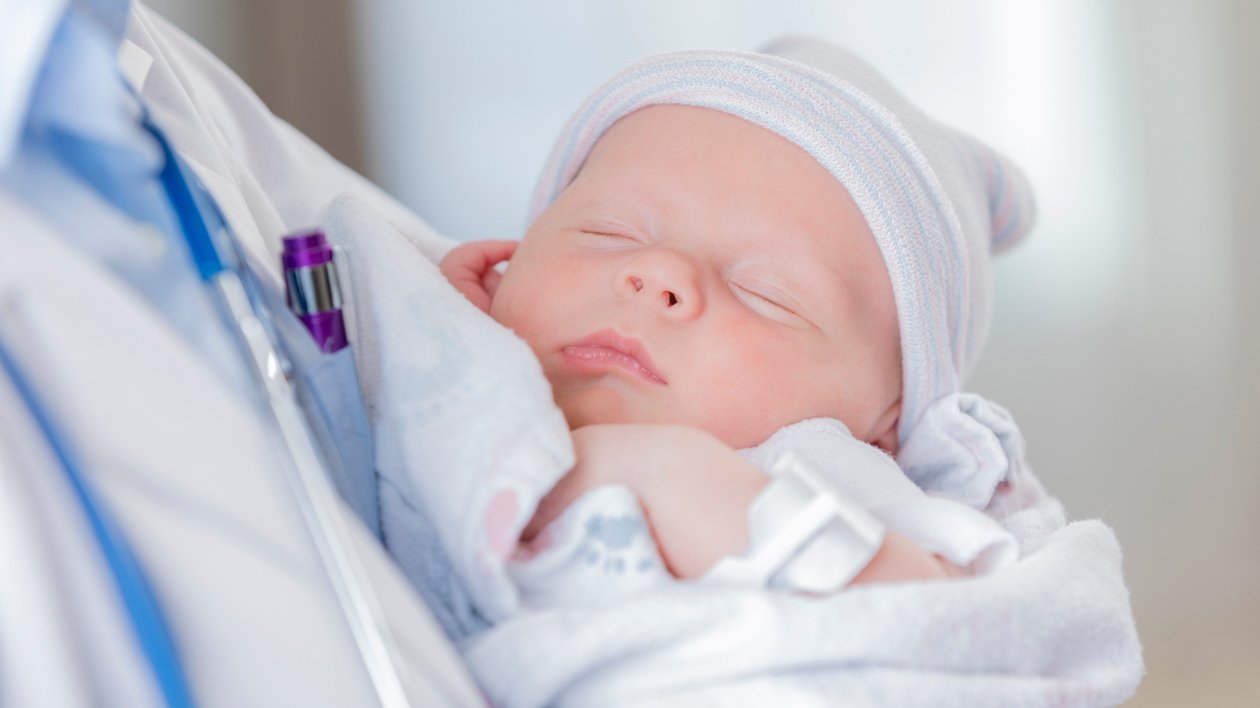
Step 6 Give eye care (while the baby is held by its mother).
The steps for giving the baby eye care are these:
First, wash your hands, and then using tetracycline 1% eye ointment:
1. Hold one eye open and apply a rice grain size of ointment along the inside of the lower eyelid. Make sure not to let the medicine dropper or tube touch the baby’s eye or anything else (see Figure 2.5).
2. Repeat this step to put medication into the other eye.
3. Do not rinse out the eye medication.
4. Wash your hands again.
Step 7 Give the baby vitamin K, 1 mg by intramuscular injection (IM) on the outside of the upper thigh (while the baby is held by its mother).
After following correct infection prevention steps, with the other hand stretch the skin on either side of the injection site and place the needle straight into the outside of the baby’s upper thigh (perpendicular to the skin).
Then press the plunger to inject the medicine. You will be learning more about safe injection techniques in your practical skills training sessions. There is also a study session on routes of injection in the Immunization Module.
Step 8 Weigh the baby.
Weigh the baby an hour after birth or after the first breastfeed. If the baby weighs less than 1,500 gm you must refer the mother and baby urgently.