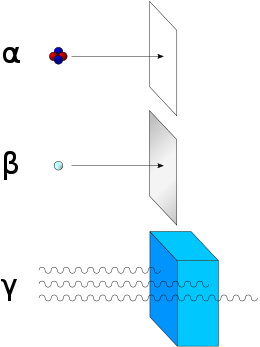
Gamma y rays – Introduction to fundamental concepts of Biological Science including the organization and common characteristics of living matters, cell structures and functions, food production by photosynthesis, harvesting energy, mechanism of cells reproduction, genetics, evolutions, and Human Biology. Introduction to general chemistry including basic concepts about matter, atomic structure, chemical bonds, gases, liquid, and solids, solutions, chemical reactions, acid, bases, and salt;
organic and biochemistry including hydrocarbons and their derivatives, carbohydrates, lipids, proteins, enzymes, vitamins, and minerals, nucleic acids; principles of physics and applications to nursing including gravity and mechanics, pressure, heat and electricity; nuclear chemistry and nuclear physics, effects of radiation on human beings, and protection and disposal. The aim of the course is to acquire knowledge and skills in general biological science, general chemistry and physics.
Gamma y rays
Definition of Gamma Rays:
A gamma ray or gamma radiation is a penetrating electromagnetic radiation arising from the radioactive decay of atomic nuclei.
Or
Gamma rays are electromagnetic radiation like X-rays, but they have higher energy. Gamma rays are energetic photons or a light wave in the same electromagnetic family as light and x-rays, but much more energetic and so, potentially harmful.

Importance of Gamma Rays in Clinical Medicine
- The fact that gamma rays kill any living organism is an advantage to the medical field, especially the field of oncology.
- High doses of gamma rays can kill cancerous cells in a process called radiation therapy (lower doses could lead to cells becoming cancerous).
- The process of radiation therapy kills the DNA of cancerous cells, preventing growth or division with the use of a machine called an accelerator or radioactive sources placed inside the patient.
- The main focus of the radiation oncologist is to target the dose of radiation to the cancer as much as possible to avoid side effects. Side effects depend on the area of treatment.
- Gamma rays are also used for sterilization of medical equipment. Gamma -rays easily pass through the packaging of medical equipment (can only be stopped by thick lead) and kill living tissue such as viruses and bacteria.
Uses of Gamma Rays
Gamma rays are widely used in medicine and specifically in the area of oncology to treat malignant and cancerous tumors during a process called gamma knife surgery. In this type of treatment, concentrated beams of gamma rays are directed at tumors in order to kill cancerous cells.
- These high energy rays ionize water in the cancerous cell, producing H and OH free radicals. The free radicals are highly reactive and therefore interact and damage chromosomes in the cell. Some of the radiation directed at the tumor interacts and directly damages chromosomes without the use of free radicals.
- Gamma- rays are also used for imaging techniques in nuclear medicine for diagnostic purposes, for example in the use of “PET Scan” and “Gamma Cameras’.
Side Effects of Gamma Rays
There are many side effects attributed to the use of gamma rays for treatment of cancers. These side effects are classified according to the region in the body that is affected
| Region | Side Effects |
| Head and Neck | Dry mouth, mouth and gum sores, difficulty swallowing, jaw stiffness, lymphedema, or tooth decay |
| Thorax | Shortness of breath, breast or nipple soreness, shoulder stiffness, cough, fever, or radiation pneumonia |
| Stomach and Abdomen | Nausea, vomiting, or diarrhea |
| Pelvis | Diarrhea, rectal bleeding, bladder irritation and sexual problems in both men and women. May cause permanent infertility |