Today our topic of discussion is ” Leukocytes and Platelets “. The cardiovascular system is a vast network that ensures the continuous circulation of blood throughout the body, supplying essential nutrients and removing waste products. While erythrocytes or red blood cells often garner attention for their oxygen-carrying capabilities, the significance of leukocytes (white blood cells) and platelets cannot be understated. Together, they play crucial roles in immunity and hemostasis.

Leukocytes and Platelets – The Cardiovascular System: Blood
1. Leukocytes: The Body’s Defenders
Leukocytes, or white blood cells (WBCs), form an essential part of our immune system. Unlike erythrocytes, they are fewer in number but large in diversity and function.
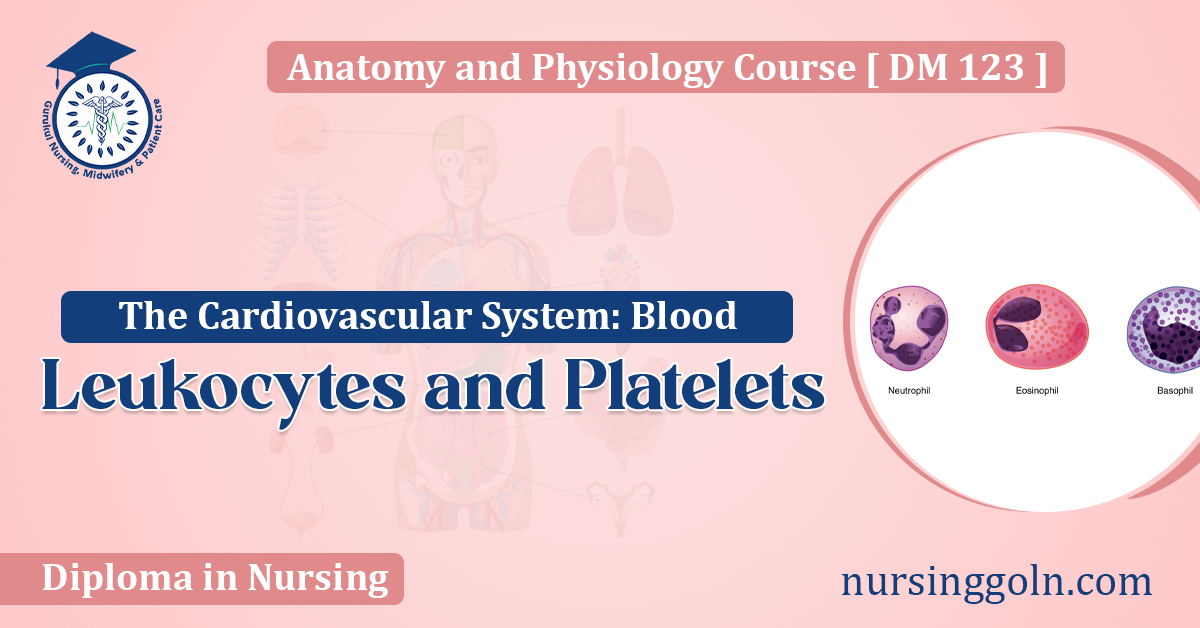
Types of Leukocytes: There are five primary types: a. Neutrophils: These cells are the body’s first responders to bacterial infection. b. Lymphocytes: Subtypes include B cells, T cells, and natural killer cells, vital for both the innate and adaptive immune responses. c. Monocytes: These cells differentiate into macrophages and dendritic cells, playing a role in phagocytosis and antigen presentation. d. Eosinophils: These cells defend against parasitic infections and play a role in allergic reactions. e. Basophils: They release histamine and other chemicals, initiating inflammatory responses.
Function: Leukocytes detect and neutralize foreign invaders like bacteria, viruses, fungi, and parasites. They also remove dead cells and participate in immune responses.
Formation: Produced in the bone marrow, the formation of leukocytes is regulated by several cytokines and growth factors, ensuring a balanced immune response.

2. Platelets: Essential for Blood Clotting
Platelets, or thrombocytes, are small, anucleate cell fragments derived from large cells called megakaryocytes.
Function: Platelets play a central role in hemostasis, ensuring that blood maintains its fluid state while also preventing excessive bleeding by forming clots.
Clotting Process: The clotting process involves several steps: a. Vasoconstriction: Blood vessels constrict to reduce blood flow. b. Platelet Plug Formation: Platelets adhere to exposed collagen in damaged vessels, releasing substances that attract even more platelets to the site. c. Coagulation: Fibrinogen, a soluble plasma protein, is converted into fibrin threads that weave through the platelet plug, solidifying and stabilizing the clot.
Life Cycle: Platelets have a lifespan of about 7-10 days and are removed by the spleen when they age or become damaged.
3. Disorders of Leukocytes and Platelets
Leukocytosis and Leukopenia: An abnormal increase in WBCs is leukocytosis, often seen during infections. In contrast, leukopenia, a decrease, makes an individual more susceptible to infections.
Leukemias: These are cancers of white blood cells, where immature WBCs proliferate uncontrollably.
Thrombocytosis and Thrombocytopenia: An abnormally high platelet count is thrombocytosis, which can increase the risk of clotting. Thrombocytopenia, a low platelet count, can lead to easy bruising and bleeding.
Hemophilia: This inherited disorder impairs the body’s ability to make blood clots, leading to excessive bleeding.
4. Leukocytes, Platelets, and Modern Medicine
Transfusions: While whole blood transfusions are common, sometimes, only platelets or WBCs are transfused, especially for patients with cancers affecting bone marrow.
Diagnostics: Changes in the number or function of leukocytes and platelets can be indicators of various conditions, from infections to cancers.
Therapeutics: Targeted therapies, especially in cancer treatment, are designed to specifically act on WBCs or their functions. Similarly, anti-platelet drugs, like aspirin, help prevent clot formation in cardiovascular diseases.
5. Current Research and Future Perspectives
Recent advancements in cellular biology and genetics have led to a surge in research related to leukocytes and platelets. Potential therapies using modified T-cells to target cancer cells are being explored. Similarly, the understanding of platelet function can lead to novel treatments for clotting disorders.
Conclusion
While they might not carry oxygen or provide the iconic red hue to our blood, leukocytes and platelets are undeniably essential for our survival. The complexities of the immune response and the intricacies of blood clotting are facilitated by these cellular components. As we advance in our understanding, the potential for therapeutic interventions continues to expand, emphasizing the critical role leukocytes and platelets play in health and disease within the cardiovascular system.