Microorganisms and Human Diseases – Introduction to fundamental concepts of Biological Science including the organization and common characteristics of living matters, cell structures and functions, food production by photosynthesis, harvesting energy, mechanism of cells reproduction, genetics, evolutions, and Human Biology. Introduction to general chemistry including basic concepts about matter, atomic structure, chemical bonds, gases, liquid, and solids, solutions, chemical reactions, acid, bases, and salt;
organic and biochemistry including hydrocarbons and their derivatives, carbohydrates, lipids, proteins, enzymes, vitamins, and minerals, nucleic acids; principles of physics and applications to nursing including gravity and mechanics, pressure, heat and electricity; nuclear chemistry and nuclear physics, effects of radiation on human beings, and protection and disposal. The aim of the course is to acquire knowledge and skills in general biological science, general chemistry and physics.
Microorganisms and Human Diseases
Definition of Microbe:
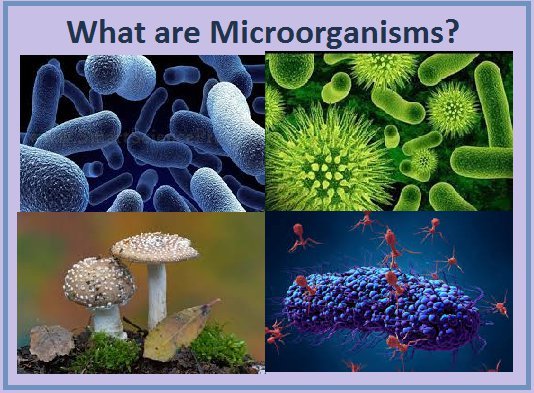
Microbe is a minute organism typically visible under a microscope. Microbes include bacteria, fungi, and protozoan parasites.
Definition of Microorganism
An organism that is microscopic or submicroscopic, which means it is too small to be seen by the unaided human eye.
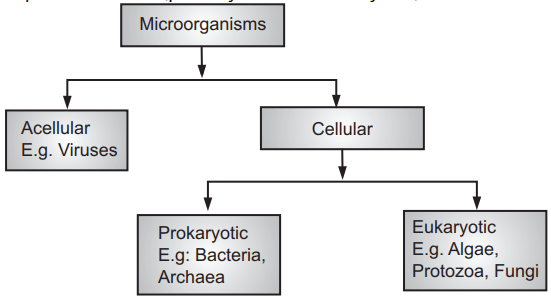
Examples of microorganisms include bacteria, fungi, archaea, and protists.
Classification of Microorganism
Infectious Diseases
Definition of Infectious Disease:
According to WHO (World Health Organization):
Infectious diseases are caused by pathogenic microorganisms, such as bacteria, viruses, parasites or fungi; the diseases can be spread, directly or indirectly, from one person to another.
or
Infectious diseases are disorders caused by organisms – such as bacteria, viruses, fungi or parasites. Many organisms live in and on our bodies. They’re normally harmless or even helpful. But under certain conditions, some organisms may cause disease.
or
Infectious diseases are illnesses caused by the spread of microorganisms (bacteria, viruses, fungi or parasites) or prions to humans from other humans, animals or the environment, including food and water.

Causes of Infectious Disease:
Infectious diseases can be caused by:
1. Bacteria: These one-cell organisms are responsible for illnesses such as strep throat, urinary tract infections and tuberculosis.
2. Viruses: Even smaller than bacteria, viruses cause a multitude of diseases ranging from the common cold to AIDS.
3. Fungi: Many skin diseases, such as ringworm and athlete’s foot, are caused by fungi. Other types of fungi can infect your lungs or nervous system.
4. Parasites: Malaria is caused by a tiny parasite that is transmitted by a mosquito bite. Other parasites may be transmitted to humans from animal feces.
Name of Infectious Diseases
- Anthrax
- Bacterial vaginosis
- Bird Flu (avian influenza)
- Chickenpox and shingles
- Chlamydia (genital)
- Cholera
- Common cold
- Conjunctivitis
- Dengue fever
- Diphtheria
- Ebola virus disease
- Gonorrhoea
- Hepatitis
- Human immunodeficiency virus infection (HIV and AIDS)
- Leprosy
- Malaria
- Measles
- Mumps
- Plague
- Pneumococcal infection
- Rubella
- Salmonella infection
- Smallpox
- Syphilis
- Tetanus
- Tuberculosis
- Typhoid and paratyphoid
- Urinary tract infection
- Viral gastroenteritis
- Viral meningitis
- Warts
- Whooping cough
- Worms
- Yellow fever
- Zika virus infection
Stages of infectious disease:
1. Incubation period: No symptoms.
2. Prodromal period: Mild and generalized symptoms (fever, weakness, headache).
3. Invasive stage: Symptoms specific to the disease.
4. Decline stage: Symptoms subside.
5. Convalescence: No symptoms, health returns to normal.
Definition of Infection:
Infection is the invasion and multiplication of microorganisms such as bacteria, viruses, and parasites that are not normally present within the body. An infection may cause no symptoms and be subclinical, or it may cause symptoms and be clinically apparent.
or
Infection is the invasion of body tissues by disease-causing agents, their multiplication, and the reaction of host-tissues to the infectious agents and the toxins they produce.
Classifications of Infection;
1. Primary infection; Initial infection with organism in host constitutes primary infection.
2. Reinfection; Subsequent infection by same organism in a host is called reinfection.
3. Secondary infection; When in a host whose resistance is lowered by preexisting infectious disease, a new organism may set-up an infection.
4. Focal infection: It is a condition where due to infection at localized sites like appendix and tonsil, general effects are produced.
5. Cross infection; When a patient suffering from a disease and new infection is set-up from another host or external source.
6. Nosocomial infection: Cross infection occurring in hospital is called nosocomial infection.
7. Subclinical infection: It is one where clinical affects are not apparent.
Sources of Infection in Man:
| Man | Man is himself a common source of infection from a patient or carrier. Healthy carrier is a person harboring pathogenic organism without causing any disease to him. A convalescent carrier is one who has recovered from disease but continues to harbor the pathogen in his body. |
| Animals | Infectious diseases transmitted from animals to man are called zoonosis. Zoonosis may be bacterial (e.g. plague from rat), rickettsial (e.g. murine typhus from rodent), viral (e.g. rabies from dogs), protozoal (e.g. leishmaniasis from dogs), helminthic (e.g. hydatid cyst from dogs), and fungal (zoophilic dermatophytes from cats and dogs). |
| Insects | The diseases caused by insects are called arthropod borne disease. Insects like mosquitoes, fleas, lice that transmit infection are called vector. Transmission may be mechanical (transmission of dysentery or typhoid bacilli by housefly) and these are called mechanical vector. They are called biological vector if pathogen multiplies in the body of vector, e.g. anopheles mosquito in malaria. Some vectors may act as reservoir host (e.g. ticks in relapsing fever and spotted fever). |
| Soil | Soil may serve as source of parasiting infection like wound worm and hook worm. Spores of tetanus bacilli remain viable in soil for a long time, fungi like Histoplasma capsulatum and higher bacteria like Nocardia asteroids also survive in soil and cause human infection. |
| Water | Vibrio cholera, infective hepatitis virus (Hepatitis-A), guinea worm may be found in water. |
| Food | Contaminated food may be source of infection Presence of pathogens in food may be due to external contamination (e.g. food poisoning by Staphylococcus). |
Methods of Transmission of Infection:
- Contact: Syphilis, gonorrhea, trachoma.
- Inhalation: Influenza, tuberculosis, smallpox, measles, mumps etc.
- Infection: Cholera (water), food poisoning (food), and dysentery (hand borne)
- Inoculation: Tetanus (infection), rabies (dog), arbovirus (insect) and serum hepatitis, i.e. Hepatitis-B (infection).
- Insects: They at as mechanical vector (dysentery and typhoid by housefly) or biological vector (malaria) of infectious disease.
- Congenital: Congenital syphilis, rubella, Listeria monocytogenes, toxoplasma and cytomegalic inclusion disease.
- Laboratory infection: Infection may be transmitted during procedures like, injection, lumber puncture, catheterization, etc if proper care is not taken.
Definition of Disease:
Disease is any harmful deviation from the normal structural or functional state of an organism, generally associated with certain signs and symptoms and differing in nature from physical injury.
or
A disease is a particular abnormal condition that negatively affects the structure or function of part or all of an organism, and that is not due to any external injury. Diseases are often constructed as medical conditions that are associated with specific symptoms and signs.
Definition of Human disease:
Human disease is an impairment of the normal state of a human being that interrupts or modifies its vital functions.
or
In humans, disease is often used more broadly to refer to any condition that causes pain, dysfunction, distress, social problems or death to the person afflicted or similar problems for those in contact with the person.
Ways of Transmission of Disease:
A chain of events is necessary for transmission of infectious disease. They are:
1. A causative agent: Invading organism, which may be bacterial, viral, rickettsial, protozoal, fungal or helminthic.
2. Reservoir: A place for invading agent to multiply in human, animal or non-animal.
3. Susceptible host.
4. Portal of entry: The organism into the human body.
5. A mode of transmission: Which may be direct (direct contact) or indirect through animals and vectors including inanimate fomites.
6. A portal of exit: From the reservoir such as respiratory tract or digestive tract.
Portal of Entry of Disease:
Most of the pathogenic organisms can cause disease only if they enter through their particula portal of entry, e.g. if dysentery bacilli are rubbed into a wound on the skin, they may not caus any trouble, but if the same organisms are swallowed they cause dysentery
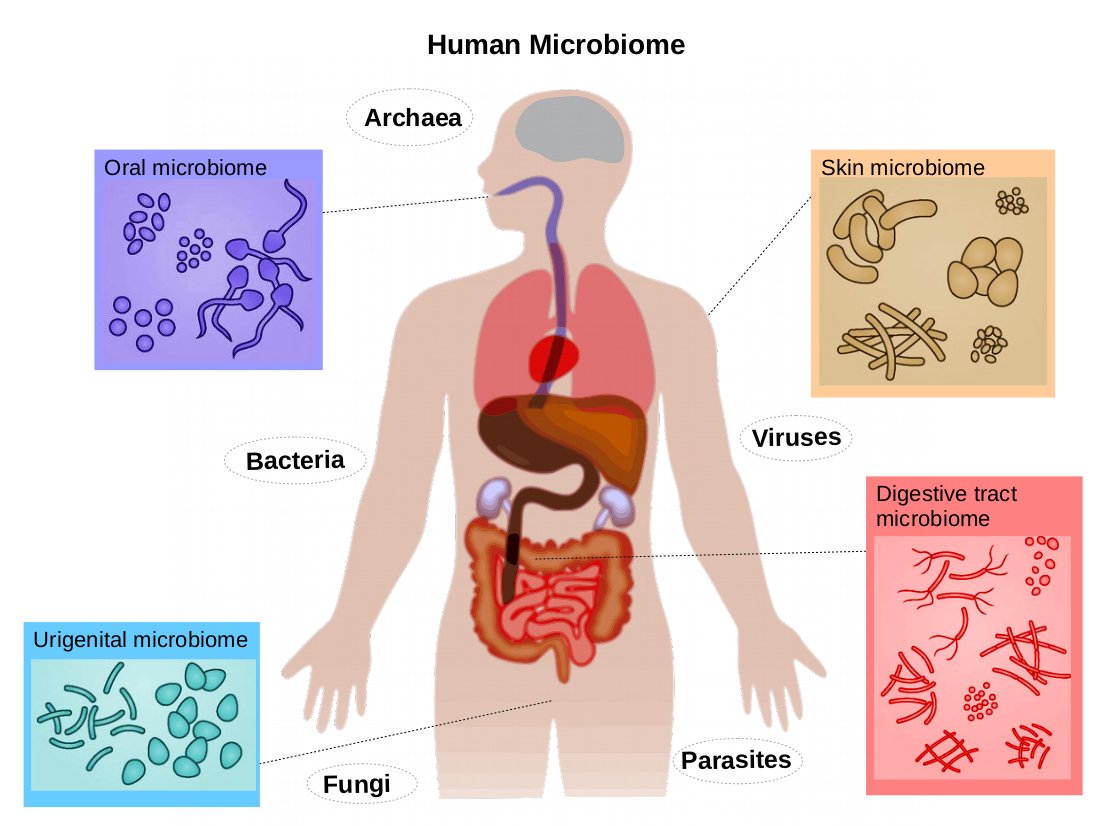
1. Skin: A large number of organisms are always present on the skin, but most of them do not penetrate the unbroken skin. Staphylococci and some fungi are able to penetrate under certain conditions and cause disease in the deeper tissues.
2. Respiratory tract: The air around us contains microorganisms, which have been spread
widely during talking, coughing and sneezing. These enter into the respiratory tract with air inhaled, e.g. organisms causing colds, pneumonia and pulmonary tuberculosis.
3. Digestive tract: Microorganism, enter the body along with food and water, e.g. organisms causing typhoid, dysentery and cholera.
4. Genitourinary tract: Urinary tract infections (UTI) are caused by bacteria from urethra, perineum etc. traveling upwards (ascending infection) and sometimes introduced through catheterization. UTI can also be through blood. Venereal diseases of genitourinary system are acquired through sexual contact.
Modes of Transmission of Diseases:
Direct Transmission:
➤ Direct contact: Infection may be transmitted by direct contract from skin to skin, mucosa to mucosa or mucosa to skin of the same or another person.
✓ Example: STD and AIDS, leprosy, skin & eye infection.
➤ Droplet infection: This is the direct projection of a spray of droplets of saliva and nasopharyngeal secretions during coughing, scenting or speaking and spitting. The sizes of the particles are less than 5 mm and spread is limited to a distance of 30-60 cm between source and host.
✓ Example: Common cold, diphtheria, whooping cough.
➤ Contact with soil: The disease agent may be acquired by direct exposure to the disease agent in soil, compost or clearing vegetable matter.
✓ Example: Hookworm, larval, tetanus, mycosis etc.
➤ Inoculation into skin or mucosa: The disease agent may be included directly into the skin or mucosa.
✓ Example: Rabies virus by dog bite, hepatitis B virus through needles and syringes.
➤ Transplancental or vertical: Diseases transmitted through placenta.
✓ Example: Syphilis, Toxoplasma gondii, Rubella virus, Cytomegalovirus, Herpes virus, Varicella virus, Syphilis, Hepatitis B, Coxsacki-B, AIDS etc.
Indirect Transmission:
Mainly by 5 ‘F’ (flies, fingers, fomites, food & fluid).
➤ Vehicle bore:
- Water & food borne: Acute diarrhoea, typhoid fever, cholera, polio, hepatitis A, food poisoning.
- Blood borne: Hepatitis B, Malaria, syphilis.
- Organ transplantation: Cytomegalovirus infection.
➤ Vector bone:
- Mechanical transmission: Diarrhoea.
- Biological transmission: Plague, malaria.
➤ Air borne:
- Droplet nuclei: They are tiny particles (1-10 microns range) with represent the dried residue of droplets. They may be formed by i) evaporation of droplets coughed or sneezed into air or ii) generated by atomizing devices (aerosols).
✓ Example: TB, influenza, chicken pox, measles. - Dust: They are larger droplets settle down by their sheer weight on the floor, carpet, clothes and become part of the dust.
✓ Example: TB, pneumonia, Q-fever etc. - From soil by wind: e.g. fungal spore.
➤ Fomite borne: Fomites are inanimate articles or substances other than water or food contaminated by the infectious discharges from a patient. Fomites include soiled clothes, towels linen, cups, spoons etc.
✓ Example: Diphtheria, typhoid fever, bacillary dysentery etc.
➤ Unclean hands and fingers: The transmission takes place both directly and indirectly.
✓ Example: Typhoid fever, dysentery, hepatitis A and intestinal parasites.