Nature vs Nurture – Behavioral sciences explore the cognitive processes within organisms and the behavioral interactions between organisms in the natural world. It involves the systematic analysis and investigation of human and animal behavior through the study of the past, controlled and naturalistic observation of the present and disciplined scientific experimentation and modeling.
It attempts to accomplish legitimate, objective conclusions through rigorous formulations and observation. Generally, behavior science deals primarily with human action and often seeks to generalize about human behavior as it relates to society.
Nature vs Nurture
The debate over the relative contributions of inheritance and the environment usually referred to as the nature versus nurture debate is one of the oldest issues in both philosophy and psychology.
Philosophers such as Plato and Descartes supported the idea that some ideas are inhorn. On the other hand, thinkers such as John Locke argued for the concept of tabula rasa a belief that the mind is a blank slate at birth, with experience determining our knowledge.
Today, most paychologists believe that it is an interaction between these two forces dhe causes development. Some aspects of development are distinctly biological, such as puben
However, the onset of puberty can he affected by environmental factors such as diet and
nutrition.
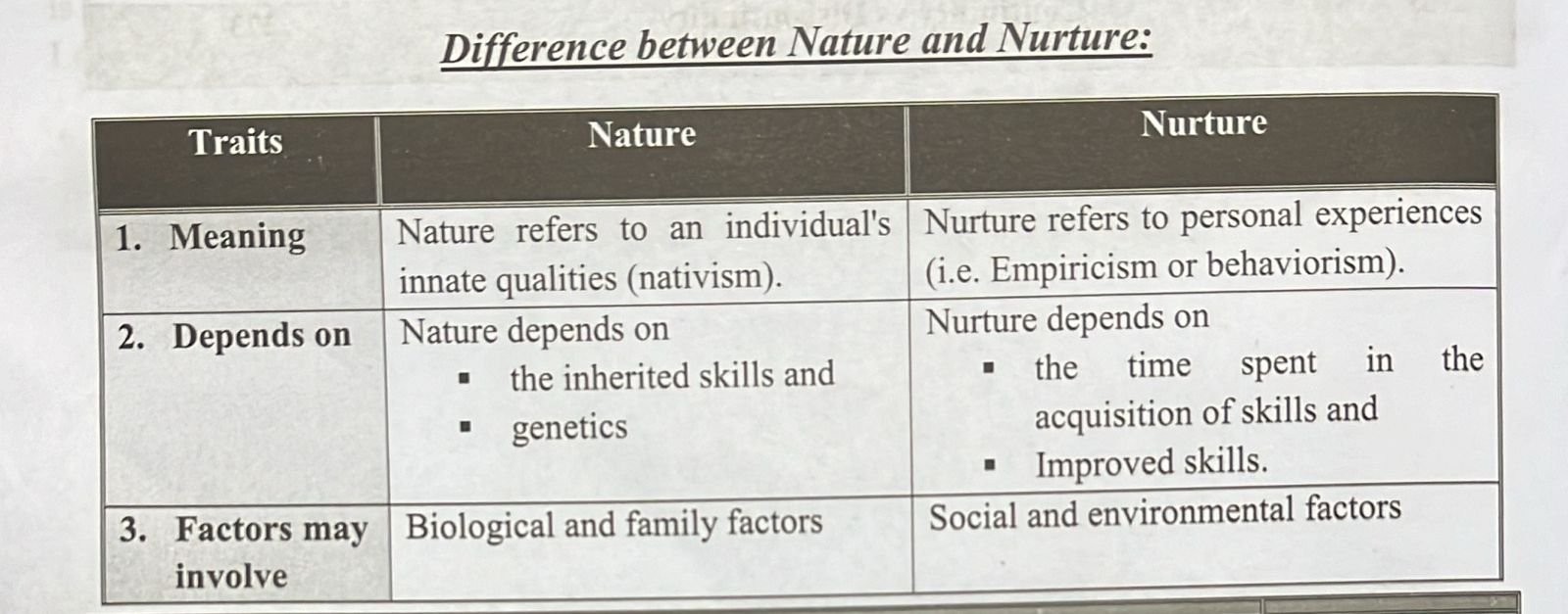
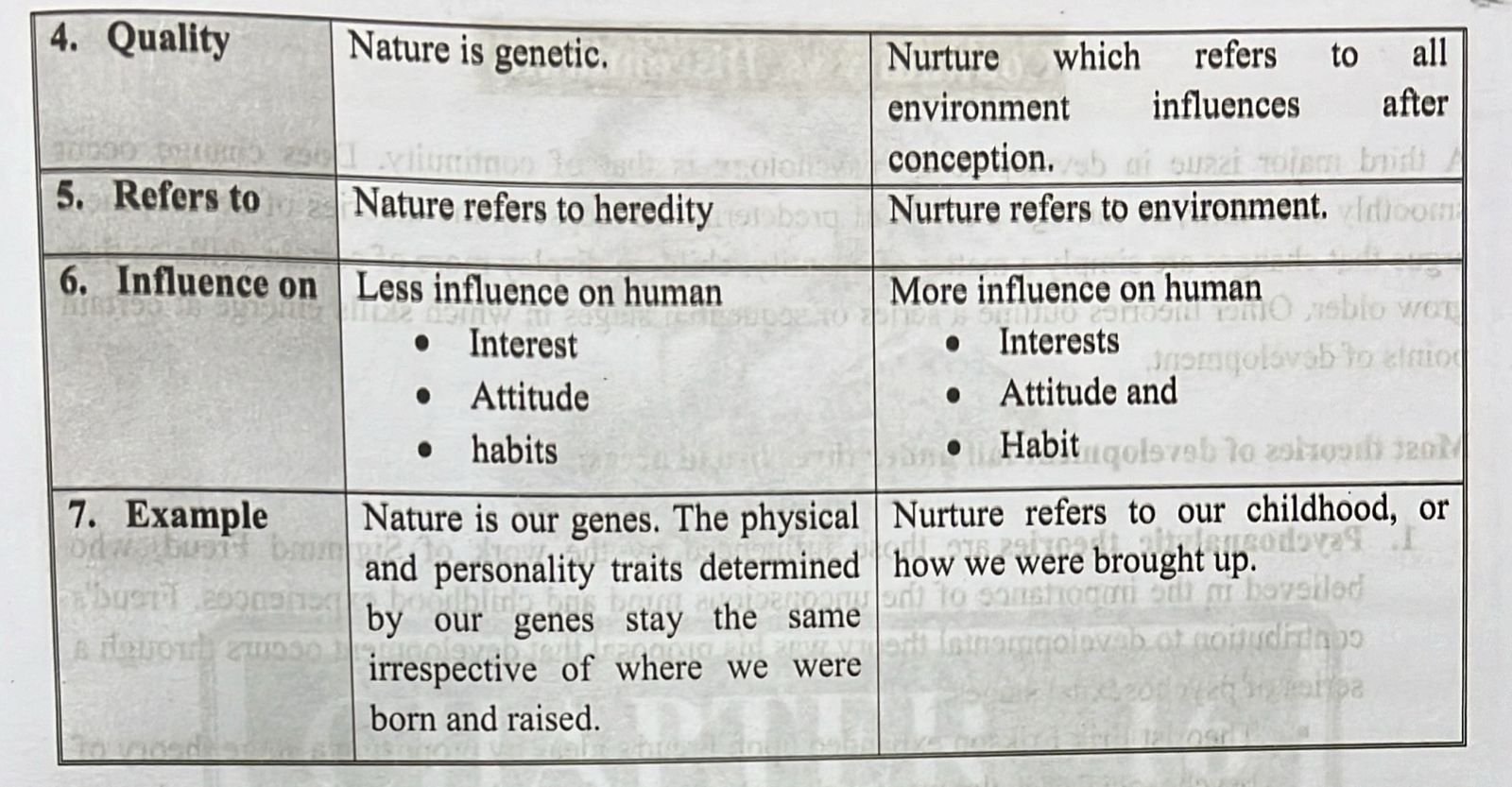
Nature refers to the process of biological maturation inheritance and maturation. One of the reasons why the development of human beings is so similar is because our common specifies heredity (DNA) guides all of us through many of the same developmental changes at about the
same points in our lives
Nurture refers to the impact of the environment, which involves the process of learning through experiences.
Difference between Nature and Nurture: