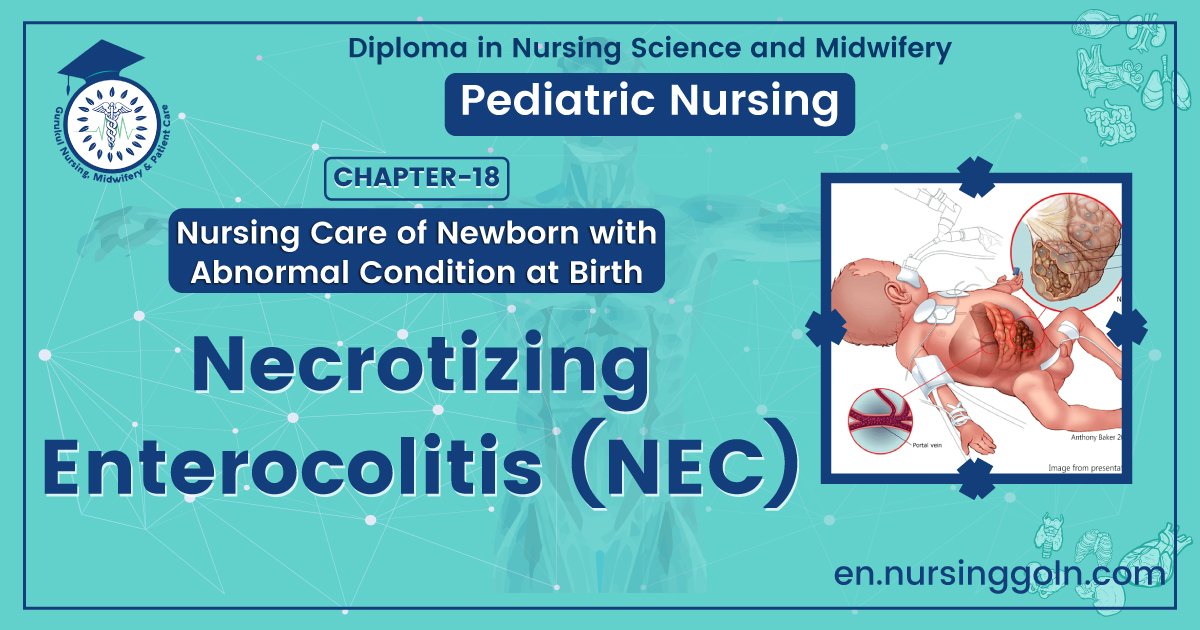
Necrotizing Enterocolitis (NEC) – Health of the children has been considered as the vital importance to all societies because children are the basic resource for the future of humankind. Nursing care of children is concerned for both the health of the children and for the illnesses that affect their growth and development. The increasing complexity of medical and nursing science has created a need for special area of child care, i.e. pediatric nursing.
Pediatric nursing is the specialized area of nursing practice concerning the care of children during wellness and illness. It includes preventive, promotive, curative and rehabilitative care of children. It emphasizes on all round development of body, mind and spirit of the growing individual. Thus, pediatric nursing involves in giving assistance, care and support to the growing and developing children to achieve their individual potential for functioning with fullest capacity.
Necrotizing Enterocolitis (NEC)
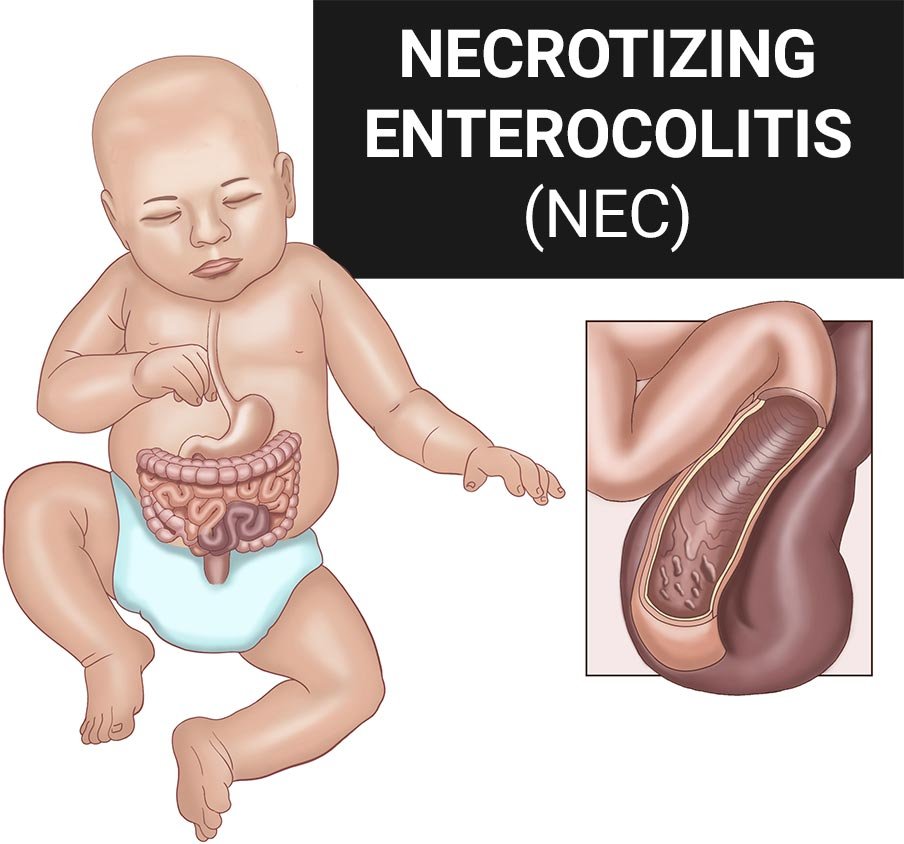
Necrotizing enterocolitis (NEC) is a severe inflammatory condition and damage of intestinal mucosa affecting small and large bowel of preterm infants due to ischemia resulting from asphyxia or prolonged hypoxia.
or
Necrotizing enterocolitis (NEC) is a disease that develops when the tissue in the inner lining of the small or large intestine becomes damaged and begins to die. This causes the intestine to become inflamed.
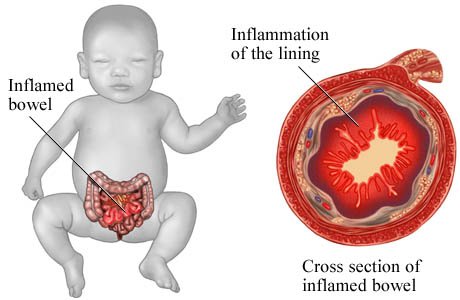
Etiologies of neonatal enterocolitis:
The condition is encoufltered usually in low birth weight babies born before term. It may however, occasionally, develop even in normal fullterm babies. Predisposing factors include-
1. Maternal fever.
2. Amnionitis.
3. Sepsis.
4. Respiratory distress syndrome (usually of mild type) exchange transfusion &
5. Oral feeding with high osmolar (hypertonic) stuff.
Clinical features of neonatal enterocolitis:
1. Stage I or suspected NEC: Neonates usually present with-
- Lethargy.
- Abdominal distension.
- Vomiting.
- Blood in stool.
- Instability of body temperature
- Bradycardia
- Apnea
- Cyanosis
- X-ray abdomen shows mild intestinal distension
2. Stage II: In this stage, neonates present with features of stage I along with-
- Diminished bowel sound
- Metabolic acidosis
- Mild thrombocytopenia
- X-ray abdomen shows gas in the intestine (Pneumatosis intestinalis)
- Dilatation of intestine
3. Stage III: In this stage of NEC, neonates present with all features of stage I and II along with-
- Low blood Pressure
- Disseminated intravascular coagulation
- Anuria.
- Peritonitis.
Management of neonatal enterocolitis baby:
1. Warmth.
2. Fluid therapy for maintenance of fluid and électrolyte balance
3. Management of shock with fluid resuscitation and vasopressors.
4. No oral feeding.
5. Insertion of gastric tube to relieve abdominal distension and to aspirate gastric contents and continuous monitoring should be provided.
6. Parenteral nutrition to maintain nutritional requirement.
7. Plasma and platelets transfusion for bleeding.
8. Antibiotic therapy may be needed in some neonates.
9. Surgical intervention is required in case of intestinal perforation.
10. Surgery is done after initial stabilization of the sick neonate.
11. Supportive nursing care is important with need based individualized approach.
Or (Another answer)
Management:
A. The initial course of treatment consists of the following:
- Stop enteral feedings
- Perform nasogastric decompression
- Initiate broad-spectrum antibiotics (eg, ampicillin, gentamicin, and clindamycin or metronidazole)
B. Bell stages IA and IB – suspected disease
- NPO diet and antibiotics for 3 days
- IV fluids, including total parenteral nutrition (TPN)
C. Bell stages IIA and IIB – definite disease
Support for respiratory and cardiovascular failure, including fluid resuscitation
- NPO diet and antibiotics for 14 days
- Consider surgical consultation
- After stabilization, provide TPN while the infant is NPO
D. Bell stage IIIA – advanced disease
- NPO for 14 days
- Fluid resuscitation
- Inotropic support
- Ventilator support
- Obtain surgical consultation
- Provide TPN during the period of NPO
- Surgical intervention
E. Surgery
The principal indication for operative intervention in NEC is perforated or necrotic intestine, which is most compellingly predicted by pneumoperitoneum. Other indications include the following:
- Erythema in the abdominal wall
- Gas in the portal vein
- Positive paracentesis
- Clinical deterioration
Preventive measures of neonatal enterocolitis in newborn:
1. Reducing incidence of asphyxia.
2. Quick management of hypoxia.
3. Early initiation of feeding with breast milk.
4. Avoidance of formula feeding.
5. Meticulous infection control measures with continuous monitoring of preterm neonates.