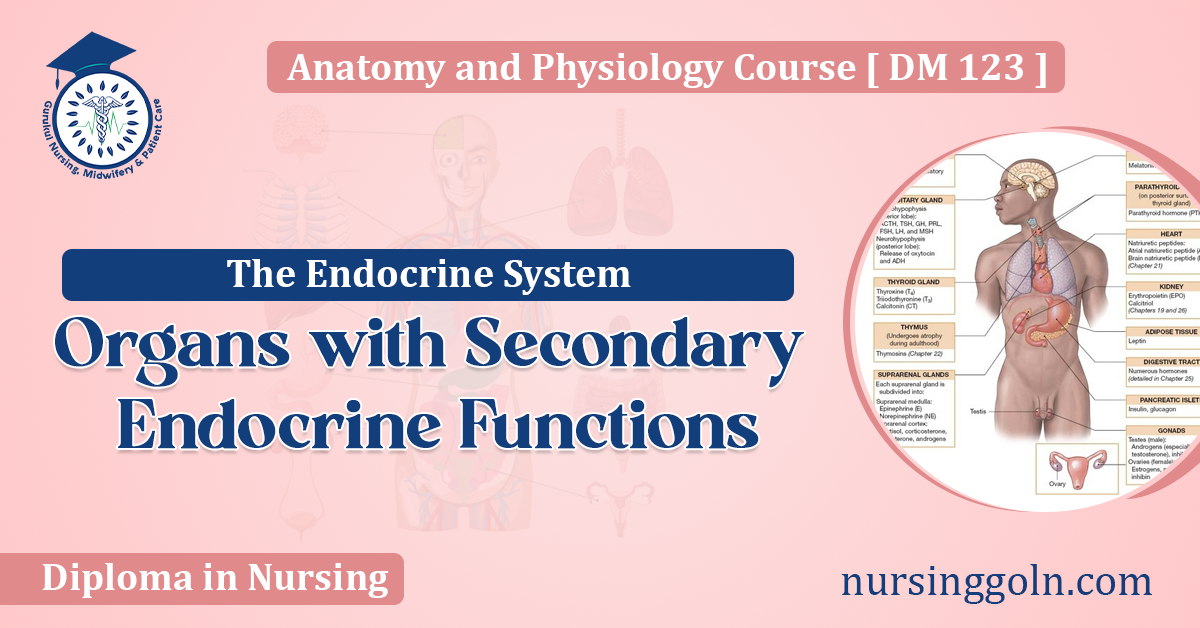
Today our topic of discussion is ” Organs with Secondary Endocrine Functions “. The endocrine system, recognized for its intricate network of hormone-releasing glands, is a marvel in physiological regulation. While primary endocrine organs like the pituitary, thyroid, and adrenal glands often capture the spotlight, several organs with primarily non-endocrine roles play a pivotal part in hormone production and regulation. These organs, having secondary endocrine functions, often go overlooked despite their significance.
In this article, we’ll explore these unsung heroes of the endocrine system, shedding light on their multifaceted roles and contributions to human health.
Organs with Secondary Endocrine Functions: The Endocrine System
1. Introduction: Redefining the Endocrine Landscape
Traditionally, endocrinology has revolved around primary endocrine organs. However, a comprehensive understanding requires us to appreciate organs that, beyond their primary roles, secrete hormones crucial for our well-being.
2. The Heart: Beyond Beating
2.1 Atrial Natriuretic Peptide (ANP) and B-type Natriuretic Peptide (BNP)
- Function: Both hormones are involved in blood pressure regulation. Released in response to high blood pressure, they promote sodium excretion and vasodilation, lowering blood pressure.
- Significance: They offer a counter-mechanism to the renin-angiotensin system, which elevates blood pressure.
3. The Liver: Metabolic Maestro
3.1 Insulin-like Growth Factor-1 (IGF-1)
- Function: Produced in response to growth hormone from the pituitary, IGF-1 promotes cell growth and multiplication.
- Significance: IGF-1 is central to the growth-promoting effects of growth hormone.
3.2 Angiotensinogen
- Function: A precursor to angiotensin II, a potent vasoconstrictor, which increases blood pressure.
- Significance: It’s integral to the renin-angiotensin system, a primary blood pressure regulation mechanism.
4. The Kidneys: Filters with Flair
4.1 Erythropoietin (EPO)
- Function: Stimulates bone marrow to produce red blood cells in response to low oxygen levels.
- Significance: EPO helps maintain optimal oxygen transport in the body, especially during times of decreased oxygen availability.
4.2 Renin
- Function: Converts angiotensinogen from the liver to angiotensin I, leading to the formation of angiotensin II.
- Significance: It’s the initiating step in the renin-angiotensin system, crucial for blood pressure regulation.
5. The Stomach and Intestines: Digesting Hormones
The gastrointestinal tract, besides digestion, secretes several hormones:
5.1 Gastrin
- Function: Stimulates stomach acid secretion.
- Significance: Ensures optimal acidic environment for digestion.
5.2 Secretin
- Function: Stimulates bicarbonate secretion from the pancreas.
- Significance: Neutralizes stomach acid, protecting the intestines and aiding digestion.
5.3 Cholecystokinin (CCK)
- Function: Stimulates pancreatic enzyme secretion and gallbladder contraction.
- Significance: Facilitates fat digestion and absorption.
5.4 Ghrelin
- Function: Often termed the “hunger hormone,” it stimulates appetite.
- Significance: Plays a role in energy balance and body weight regulation.
6. The Skin: More Than a Protective Barrier
6.1 Vitamin D
- Function: Upon exposure to sunlight, skin cells produce a precursor to Vitamin D, which, after further modifications in the liver and kidneys, becomes active.
- Significance: Vitamin D is crucial for calcium homeostasis, bone health, and immune function.

7. Adipose Tissue: Not Just Fat Storage
7.1 Leptin
- Function: Produced by fat cells, it suppresses appetite.
- Significance: Regulates energy balance and body weight.
7.2 Adiponectin
- Function: Enhances insulin sensitivity and has anti-inflammatory effects.
- Significance: Plays a role in metabolic health and may protect against type 2 diabetes.
8. The Placenta: Sustaining Life
Beyond its vital role in nurturing the fetus, the placenta secretes several hormones, including human chorionic gonadotropin (hCG), progesterone, and estrogens. These ensure the uterus remains conducive to the developing fetus and modulate the mother’s metabolism to support fetal growth.
9. Conclusion: A Symphony of Roles
The endocrine system, in its vastness, comprises more than just the primary glands. Organs with secondary endocrine functions enrich this system, ensuring our physiological processes remain harmonized. Their roles, often overshadowed, are foundational to our understanding of endocrinology and, more broadly, human health. Recognizing and appreciating these roles can pave the way for novel therapeutic approaches and a deeper understanding of human physiology.