
Oxygen administration is a fundamental intervention in clinical practice, aimed at correcting hypoxaemia and supporting patients whose respiratory or circulatory function is compromised. Oxygen, an odourless and colourless gas that constitutes approximately 21% of atmospheric air, is essential for cellular metabolism. In therapeutic settings, it is delivered at concentrations higher than ambient air to alleviate tissue hypoxia, thereby preventing organ dysfunction and supporting recovery.
Classed as a medicinal gas and prescribed drug, oxygen must be administered with precision, adhering strictly to medical orders regarding flow rate and concentration. Incorrect dosing can lead to serious complications, including oxygen toxicity or suppression of respiratory drive in patients with chronic hypercapnia, such as those with advanced chronic obstructive pulmonary disease (COPD). Furthermore, whilst oxygen itself is not flammable, it vigorously supports combustion, significantly increasing fire risk in clinical environments. Patients, relatives, and staff must therefore be educated on stringent safety precautions, including the prohibition of smoking and open flames in the vicinity of oxygen equipment.
The indications for oxygen therapy are diverse, encompassing acute conditions such as myocardial infarction, pulmonary embolism, and severe asthma, as well as chronic states like COPD and heart failure. It is also employed perioperatively, in shock, and in cases of carbon monoxide poisoning. The primary objectives are to restore adequate tissue oxygenation, reduce the work of breathing, and mitigate the detrimental effects of hypoxaemia on vital organs.
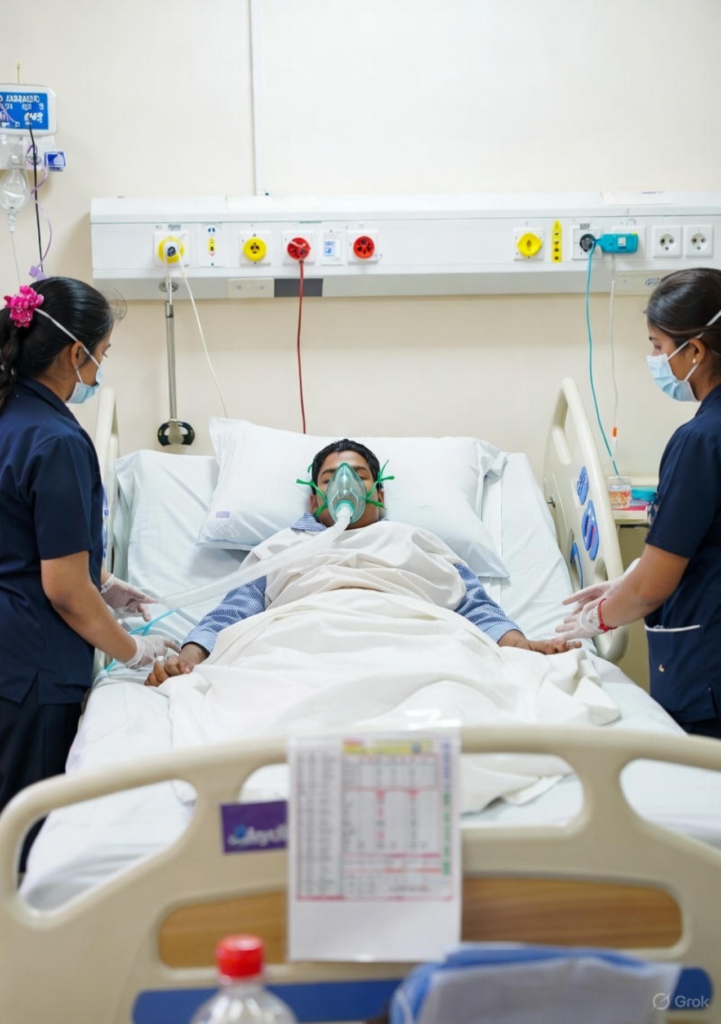
Oxygen delivery systems are broadly categorised into low-flow and high-flow devices, each suited to specific clinical needs. Low-flow systems, such as nasal cannulae and simple face masks, are comfortable for long-term use but provide variable inspired oxygen concentrations. High-flow systems, including Venturi masks and high-flow nasal cannulae, deliver precise fractions of inspired oxygen (FiO₂) and are preferred in acute respiratory failure.
Nurses play a pivotal role in oxygen therapy, from assessment and administration to ongoing monitoring and patient education. This includes vigilant observation for signs of improvement or deterioration, ensuring equipment safety, and preventing complications such as drying of mucous membranes or retinopathy of prematurity in neonates.
In contemporary practice, oxygen administration is guided by evidence-based protocols, pulse oximetry, and arterial blood gas analysis to achieve targeted saturation levels whilst minimising risks. As healthcare evolves, nurses must remain adept in both traditional methods and emerging technologies, ensuring safe, effective, and patient-centred care.
This article explores the definitions, indications, classifications, procedures, and considerations of oxygen administration, equipping nursing professionals with the knowledge required for competent practice.

Oxygen Administration Definition of Terms
Introduction to Oxygen Administration Definition of Terms
Oxygen (O) is administered as a corrective treatment for conditions resulting in hypoxia (low level of oxygen in the blood). Oxygen is classed as a medication and must be prescribed by a doctor and administered correctly to prevent over- or under-oxygenation.
Remember oxygen is Not flammable, but it does aid combustion. Patients and visitors should therefore be educated about the increased risk of fire and the precautions necessary to reduce this risk when supplementary oxygen is in use.
Oxygen must only be administered at the rate and percentage prescribed, as over-oxygenation can be dangerous for some individuals, particularly those with chronic lung disease who are retaining carbon dioxide, and infants, where there is also a risk of retinopathy.
Indications of Oxygen Administration
INDICATIONS
- Breathlessness due to asthma, pulmonary embolism, emphysema, cardiac insufficiencies, etc.
- Obstructed airway due to growth, enlarged thyroid
- Cyanosis.
- Shock and circulatory failure.
- After severe hemorrhage.
- Anemia.
- Patients under anesthesia.
- Asphyxia due to any reason, e.g. drowning, inhalation of poisonous gases, hanging, etc.
- Poisoning with chemicals that alter the tissues ability to utilize oxygen, e.g. cyanide poisoning.
- Carbon monoxide poisoning.
- Postoperative chest surgery and thyroidectomies.
- Insufficient oxygen in atmosphere.
- Air hunger.
PURPOSE
- To supply O, in conditions when there is interference with normal oxygenation of blood To reduce the effects of anoxemia
- To maintain healthy level is tissue oxygenation.

Classifications of Oxygen Administration
CLASSIFICATIONS
Oxygen is administered by either low flow or high flow systems. Low flow administration devices include nasal cannula, oxygen mask, oxygen tent, etc. High flow administration devices include venturi mask some devices. can be used for both low and high flow administration, e.g. oxygen hood incubator, etc.
Nasal Cannula
It is the most important low flow device used to administer oxygen of a rubber or plastic tube that extends around the face with 6-1. Curved prongs that fit into the nostrils. One side of the tube connects to oxygen tubing and oxygen supply. The cannula is often held in place by an elastic band that fits around the clients head or under the chin.
The nasal cannula is easy to apply and does not interfere with client’s ability to eat or talk. It is very comfortable and permits some freedom of movement. Oxygen is delivered via the cannula with a flow rate of up to 4 L/min. Higher flow rates dry air mucous and do not further increases inspired oxygen concentrations .
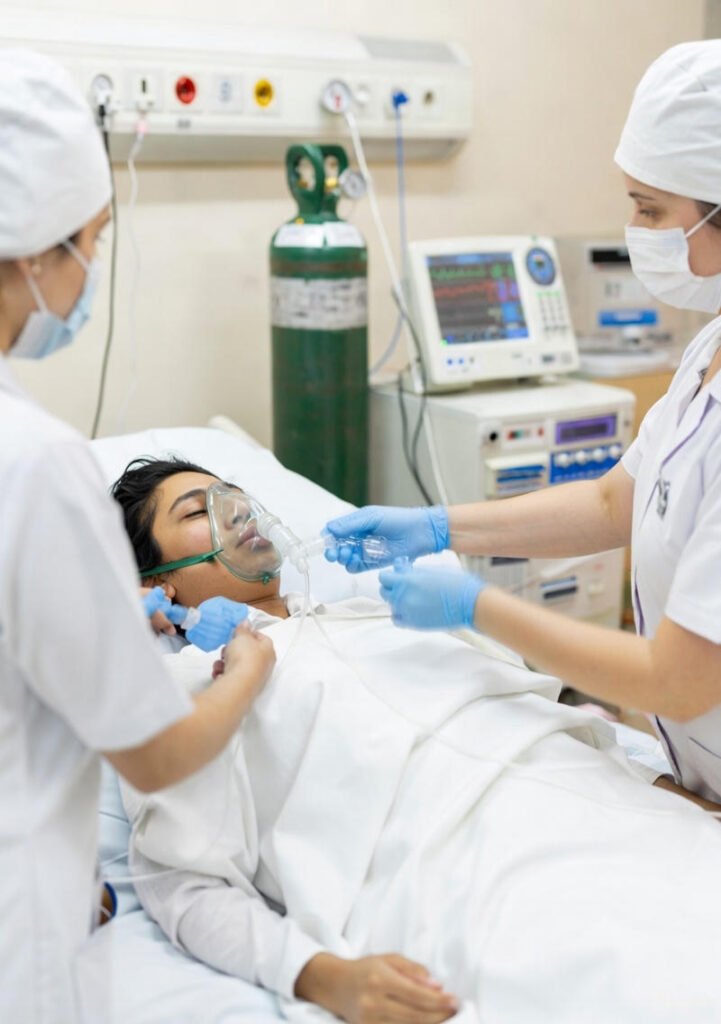
Equipment
- Oxygen supply with a flow meter
- Humidifier with sterile distilled water
- Nasal cannula and tubing
- Tape if needed to secure the cannula in place
- Gauze to pad the tubing over the cheek.
Procedure
- Determine the need for oxygen therapy and the physicians order
- Assist the client to a semi-Fowler’s position as possible.
- It permits easier chest expansion easier breathing .
- Explain about the procedure and inform the client and support persons about safety precautions connected with oxygen use.
- Set-up the oxygen equipment and humidified
- Turn on the oxygen at the prescribed rate and ensure proper functioning
- Put the cannula over the clients face
- If the cannula will not stay in place tape if at sides of face
- Slip gauze pads under the tubing over the check bones to prevent skin irritation as necessary.
- Assess the client regularly.
- Assess the vital sings, color, breathing pattern and chest movement.
- Check the equipment are working regularly Make sure that safety precautions are being followed.
- Record initiation of therapy and all nursing assessments.
Nasal Catheter
Nasal catheters are used infrequently, but they are not absolute. The procedure involves inserting an oxygen catheter into the nose to the nasopharynx. Because securing the catheter must be changed at least every 8 hours and inserted into the other nostril, for this reason, the nasal catheter is a less described method because the client may have pain when the catheter is passed into nasopharynx and because trauma can occur to the nasal mucosa. The nasal catheter permits free movements for the patent and nursing care may be given with much more ease .
General Instruction of Oxygen Administration
General Instructions
- Since oxygen acts as a drug. It must be prescribed and administered in specific dose in order to avoid oxygen toxicity. The dosage of O, is started in terms of concentration and rate of flow.
- When using are oxygen cylinder use a regulator and humidifiers. The purpose of the regulator is the reduce the pressure of the O, in the cylinder to a safer level. The humidifier helps to saturate the oxygen with water vapor to prevent the drying of the mucus membranes of respiratory tract .
- The glass tube should be summered under the water so that oxygen is bubbled through the water.
- Every water of the apparatus should be clean to preventinfection.
- Use disposable nasal catheters or sterilized rubbed catheters.
- Change the nasal catheters at least every 8 hours or more often .
- Lubricate the nasal catheter sparingly while the O, is flowing. Then hold tip of the catheter in a glass of HO to make sure that the terminal holes are not plugged with lubricant .
- During the administration of O, the valve controlling the rate of flow should not be handled if any alteration is to be made in the flow of O, first take out the catheter from the nose and then adjust the valve
- Oxygen administration must never be stopped until the factors that caused hypoxia are reversed
- When oxygen therapy is discontinued, it should be done gradually. The patient is weaned from dependence on oxygen by reducing the dosage and then administrating it intermittently
- For all patients receiving oxygen inhalation, the temperature should be taken rectally to get an accurate record of body temperature
- When the nurse leaves the patient even for a short period, she should leave a calling signal near the patient
- Pay attention to conditions that can interfere with the flow of oxygen from the source to the patient. This may include kinks in the tubing loose connection and faulty humidifying apparatus. Remember that it is not unusual therapy is generally getting less oxygen than he would get under normal circumstances
- To prevent the deprivation of oxygen resulting from the depletion of oxygen from the cylinder the nurse should get a new one ready at hand when the gauge shows about 1/4 level in the pressure
- For fear of retrolental fibroplasia the premature babies are given uxygen inhalation only for a short period at a very low concentration
- Watch the patients receiving oxygen therapy continuously to detect the early signs of oxygen toxicity .
- When oxygen is administrated through the nasal catheters, the catheter is not directed distension of abdomen.
- Since oxygen supports combustion, fire precautions are to be taken when the oxygen is a flow.

Procedure of Oxygen Administration
Procedure
- Explain the procedures to the patient and relatives to get the cooperation and win the confidence. What you are going to do and reassure him. Explain the purpose of procedure.
- Put the instructions regarding the fire precautions in the ward or unit. Instruct the relatives or visitors regarding safety measures required during the oxygen inhalation Observe vital signs and breathing pattern
- Collect the necessary articles at the bedside.
- Give comfortable position to the patient.
- Screen the bed of the patient.
- Wash hands to prevent cross-infection.
- Measure catheter from the tip of the nose to ear label for distance to enter, mark the length with ink Check the apparatus for working condition.
- Open the main valve in an anti-clockwise direction.
- Observe for pressure reading on the gauge. Open the wheel valve on the regulator and see the reading on the meter adjust the flow of O, 2-4 1. for adults or as desired.
- When the wheel valve is opened the oxygen will start bubbling through the water in the Wolf’s bottle.
- Attach the catheter to the connecting tube oxygen will start bubbling through the water in the Wolf’s bottle.
- Attach the catheter to the connecting tube and check the flow of O, through the catheter to prevent by dipping it under the water in the bowl
- Lubricate the tip of catheter with water soluble jelly
- Bring catheter across cheek and scope securely with adhesive tape.
After Care of the Patient
- Be with the patient fill he is at case
- Keep the patient warm and comfortable
- Observe the patient’s progress by assessing vital signs and color
- Observe patient’s progress at specified intervals to make sure that the state of anoxemia is treated.
- When the O, is discontinued. Unscrew regulator he the liter flow disconnect the catheter and put it in kidney tray
- Clean the catheter, first with cold water, then with warm soapy water and finally with clears water bill it for, 3-5 minutes, dry it and store in a cool dry place
- All other articles must be cleaned with soap and clean water dried and then replaced to their usual places
- Wash hands.
Patient Education
- Educate the client and visitors about the hazard of smoking with oxygen in use
- Request other clients in the room and visitors to smoke in areas provided elsewhere in the hospitals.
- Educate the patients about the short-circuit spark of electrical equipment
- Educate the patient, about safety precautions.
Complications
- The use of contaminated equipment can spread infection in the patient
- Fire is a potential hazard when oxygen is administered
- If there is no sufficient humidity, there is a chance of drying and irritation of mucus membrane.
- Prolonged exposure to a high concentration causes damage to the lung tissue and atelectasis
- If there are increased oxygen concentrations in inspired air, there is a chance of collapse of alveoli
- The oxygen therapy may affect eyes.
- Ulceration, edema and visual impairment, etc. result from the toxic effects of O, on the cornea and lens of adult.

Considerations of Oxygen Administration
CONSIDERATIONS
- Supplemental oxygen relieves hypoxemia but does not improve ventilation or treat the underlying cause of the hypoxemia. Monitoring of SpO, indicates oxygenation not ventilation. Therefore, beware the use of high FiO₂ in the presence of reduced minute ventilation.
- Many children in the recovery phase of acute respiratory illnesses are characterized by ventilation/perfusion mismatch (e.g. asthma, bronchiolitis, and pneumonia) and can be managed with SpO, in the low 90’s as long as they are clinically improving, feeding well and do not have obvious respiratory distress.
- Normal Spo, values may be found despite rising blood carbon dioxide levels (hypercapnia). High oxygen concentrations have the potential to mask signs and symptoms of hypercapnia Oxygen therapy should be closely monitored and assessed at regular intervals. Therapeutic procedures and handling may increase the child’s oxygen consumption and lead to worsening hypoxemia .
- Children with cyanotic congenital heart disease normally have Sp0, between 60-90% in room air. Increasing SpO, >90% with supplemental oxygen is not recommended due to risk of over circulation to the pulmonary system while adversely decreasing systemic circulation. However, in emergency situations with increasing cyanosis supplemental oxygen should be administered to maintain their normal level of Spo2.

Conclusion of Oxygen Administration
Oxygen, the life-sustaining gas that is crucial for the survival of aerobic organisms, plays a pivotal role in clinical medicine. Oxygen therapy, which refers to the provision of oxygen at concentrations higher than that of room air, has become a mainstay in the management of various medical conditions. Yet, like any other medical intervention, it’s essential to appreciate the rationale, benefits, and potential complications to administer it safely and effectively.
Oxygen therapy can be lifesaving, but nurses must know how it works, when to use it, and how to correctly assess and evaluate a patient’s treatment. The need for oxygen therapy arises when oxygen transport to the tissues is insufficient due to a breakdown in either the respiratory or circulatory systems.
The aim of oxygen therapy is to maintain tissue oxygenation at a functional level, to eliminate detrimental compensatory responses to hypoxemia, which may cause serious or irreparable damage to vital organs and tissues. Oxygen is considered a drug and must, therefore, be prescribed by an appropriate clinician.
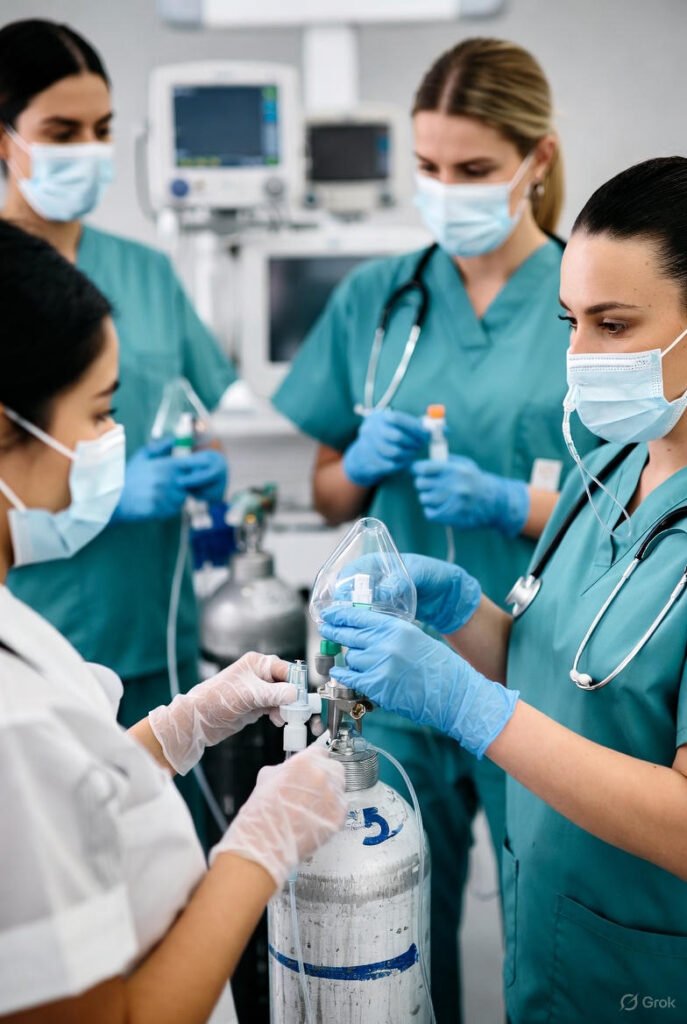
This would normally take the form of a formal prescription by a doctor, but may, in emergency lifesaving situations be administered by nurses operating oxygen system. Oxygen is a very combustible material, so it is important that correct guidelines are followed when storing or transporting oxygen cylinders.
Rationale for Oxygen Administration
The primary reason to administer supplemental oxygen is to treat or prevent hypoxemia, a condition characterized by reduced levels of oxygen in the blood. Inadequate oxygenation can adversely affect the function of vital organs such as the brain, heart, and kidneys. Ensuring optimal oxygen levels helps to maintain the function of these organs and, in many situations, can be life-saving.
Indications for Oxygen Therapy
Oxygen therapy is indicated in various clinical scenarios:
- Acute scenarios: Conditions like acute myocardial infarction (heart attack), stroke, shock, severe trauma, pulmonary embolism, and acute respiratory distress syndrome (ARDS).
- Chronic conditions: Chronic obstructive pulmonary disease (COPD), cystic fibrosis, interstitial lung disease, and severe heart failure.
- Preventative situations: During surgeries and to prevent the descent of oxygen levels during sleep in conditions like obstructive sleep apnea.
Modes of Oxygen Administration
Oxygen can be delivered in various ways:
- Nasal Cannula: Suitable for patients requiring low to medium levels of supplemental oxygen. It’s comfortable and allows for eating and talking.
- Face Masks: These can deliver higher oxygen concentrations. There are simple face masks, venturi masks, and non-rebreather masks.
- High-flow nasal cannula (HFNC): Delivers warmed and humidified oxygen at high flow rates, beneficial for patients with acute respiratory failure.
- Mechanical Ventilation: For patients who cannot breathe on their own. It can be invasive (endotracheal intubation) or non-invasive (like CPAP and BiPAP).
Benefits of Oxygen Therapy
- Improved Oxygenation: The most apparent benefit is the increase in blood oxygen levels, ensuring that organs receive the necessary oxygen for proper function.
- Reduced Work of Breathing: In conditions like COPD, where patients struggle to breathe, supplemental oxygen can reduce the effort required for each breath.
- Decreased Strain on the Heart: The heart doesn’t have to work as hard to deliver oxygen to the tissues, reducing the risk of complications like myocardial infarction.
Potential Complications and Their Prevention
Like any therapeutic intervention, oxygen therapy is not devoid of risks:
- Oxygen Toxicity: Breathing high concentrations of oxygen for prolonged periods can lead to lung complications, including inflammation and scarring.
- Hyperoxia: Excessive oxygen levels can lead to constriction of the cerebral blood vessels, potentially leading to decreased brain perfusion.
- CO2 Retention: In some COPD patients, high oxygen levels can suppress the drive to breathe, leading to carbon dioxide accumulation, a condition termed as hypercapnia.
To prevent these complications:
- Monitor: Continuous monitoring of oxygen saturation and blood gases is crucial. It ensures that the patient is receiving the right amount of oxygen.
- Titrate: Oxygen should be given at the lowest effective dose. Once the patient’s condition stabilizes, the amount of supplemental oxygen should be gradually reduced.
- Patient Education: Informing patients about the potential risks and benefits allows them to report any discomfort or potential side effects promptly.
Recent Advancements in Oxygen Therapy
Modern medicine has seen significant advancements in how we deliver and monitor oxygen therapy:
- Pulse Oximetry: A non-invasive method to continuously monitor oxygen levels in the blood.
- Portable Oxygen Concentrators: Allow patients with chronic conditions to remain mobile and active, improving their quality of life.
- Liquid Oxygen Systems: These systems offer a longer duration of oxygen supply and are more compact than traditional compressed gas systems.
Future of Oxygen Therapy
The field of oxygen therapy is ripe for innovation. With advances in technology, we might see:
- Smart Systems: Integration of AI and machine learning to adjust and deliver the exact amount of oxygen needed by the patient in real-time.
- Improved Interfaces: Masks and cannulas that are more comfortable, adaptable, and less obtrusive.
- Telemedicine: Remote monitoring of patients on oxygen therapy, ensuring timely intervention if problems arise.

Oxygen therapy, when appropriately administered, is a powerful tool in the armamentarium of healthcare providers. Its role in alleviating symptoms, improving organ function, and saving lives is undeniable. However, it is a double-edged sword. While it offers life-saving benefits, it comes with potential complications. The onus is on clinicians to strike the right balance—ensuring that patients receive the benefits of oxygen therapy without facing its potential adverse effects.
The evolution of oxygen administration methods and monitoring tools has dramatically enhanced our ability to provide optimal care. Yet, the foundation remains rooted in a thorough understanding of the therapy’s principles, vigilant monitoring, and a patient-centric approach. As we look forward, the horizon of oxygen therapy promises even more refined tools and methodologies, further enhancing our capability to deliver precise, effective, and safe care to those in need.