Personal protective techniques – Nursing is a profession within the healthcare sector focused on the care of individuals, families, and communities so they may attain, maintain, or recover optimal health and quality of life. Nurses may be differentiated from other healthcare providers by their approach to patient care, training, and scope of practice. Nurses practice in many specialisms with differing levels of prescriber authority.
Many nurses provide care within the ordering scope of physicians, and this traditional role has shaped the public image of nurses as care providers. However, nurses are permitted by most jurisdictions to practice independently in a variety of settings depending on training level. In the postwar period, nurse education has undergone a process of diversification towards advanced and specialized credentials, and many of the traditional regulations and provider roles are changing.
Nurses develop a plan of care, working collaboratively with physicians, therapists, the patient, the patient’s family, and other team members, that focus on treating illness to improve quality of life. Nurses may help coordinate the patient care performed by other members of an interdisciplinary healthcare team such as therapists, medical practitioners, and dietitians. Nurses provide care both interdependently, for example, with physicians, and independently as nursing professionals.
Personal protective techniques
Personal Protective Equipment (PPE)
PPE is equipment that will protect the user against health or safety risks at work. It can include items such as safety helmets, gloves, eye protection, high-visibility clothing, safety footwear and safety harnesses. It also includes respiratory protective equipment (RPE).
Personal protective equipment for health staff handling coronavirus patients
Full protective gear given to staff carrying out procedures likely to generate airborne droplets from mouth, throat or lungs
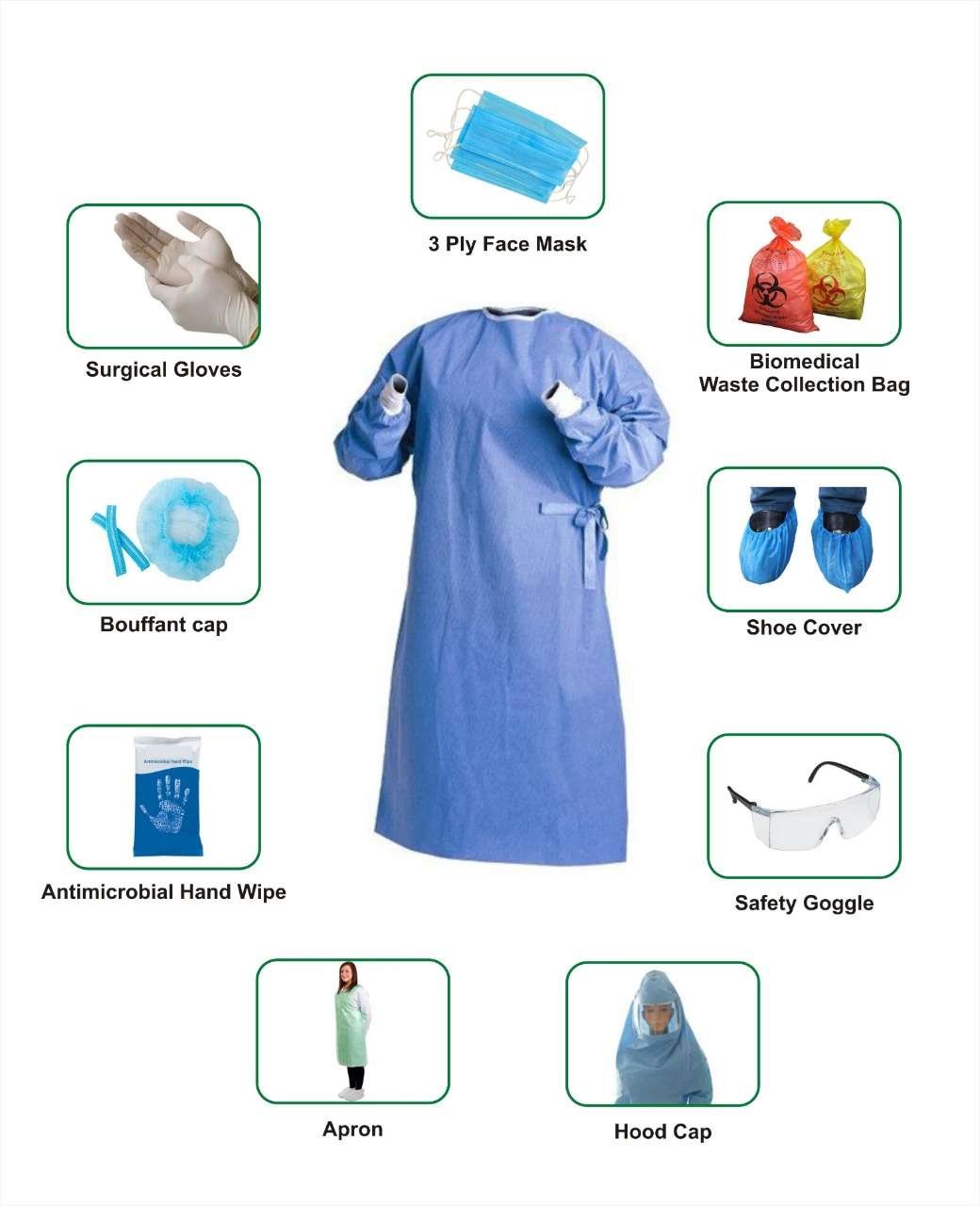
PPE Types
The different types of personal protective equipment are:
- Face Shields
- Gloves
- Goggles and Glasses
- Gowns
- Head Covers
- Masks
- Respirators
- Shoe Covers
Personal Protective Equipment (PPE) use in Standard Infection Control Precautions
- Gloves, aprons, long sleeved gowns, surgical masks, eye goggles, face visors and respirator masks are all examples of PPE that may be worn in the provision of healthcare.
- PPE is used in healthcare settings to create a barrier between healthcare workers and an infectious agent from the patient and to reduce the risk of transmitting micro-organisms from healthcare workers to patient(s). In addition PPE may sometimes be used by the patient’s family visitors, particularly if they are providing direct patient care e.g. assisting patient with toileting. In these circumstances carers must be fully inducted in the use of PPE and Hand Hygiene.
- The choice of PPE should be based on a risk assessment of potential exposure to blood/ body fluids/infectious agents.
- PPE should be available at the point of use in both community and acute healthcare settings and staff should receive training on the correct use and disposal of PPE.
- If used inappropriately PPE can increase the risk of transmitting infections and put people at risk of acquiring an infection