Radioactive isotope – Introduction to fundamental concepts of Biological Science including the organization and common characteristics of living matters, cell structures and functions, food production by photosynthesis, harvesting energy, mechanism of cells reproduction, genetics, evolutions, and Human Biology. Introduction to general chemistry including basic concepts about matter, atomic structure, chemical bonds, gases, liquid, and solids, solutions, chemical reactions, acid, bases, and salt;
organic and biochemistry including hydrocarbons and their derivatives, carbohydrates, lipids, proteins, enzymes, vitamins, and minerals, nucleic acids; principles of physics and applications to nursing including gravity and mechanics, pressure, heat and electricity; nuclear chemistry and nuclear physics, effects of radiation on human beings, and protection and disposal. The aim of the course is to acquire knowledge and skills in general biological science, general chemistry and physics.
Radioactive isotope
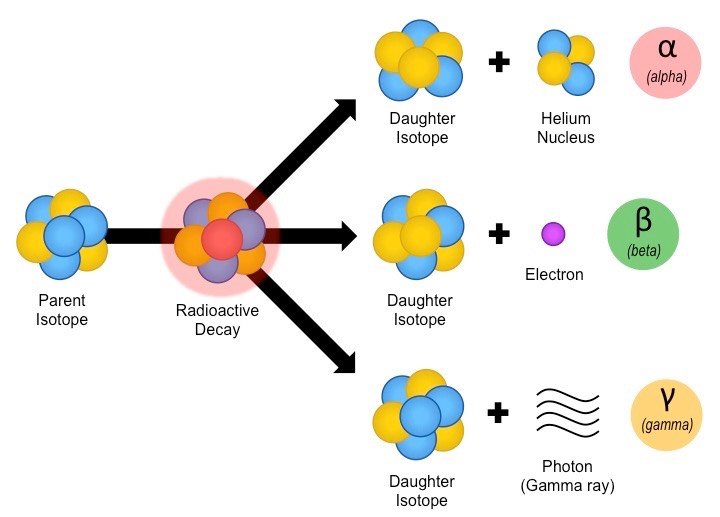
A version of a chemical element that has an unstable nucleus and emits radiation during its decay to a stable form. Radioisotopes have important uses in medical diagnosis, treatment, and research.
or
Radioactive isotope, also called radioisotope, radionuclide, or radioactive nuclide, any of several species of the same chemical element with different masses whose nuclei are unstable and dissipate excess energy by spontaneously emitting radiation in the form of alpha, beta, and gamma rays
Clinical Use of Radioactive Isotopes
- Radioactive isotopes have many useful applications. In particular, they are central to the fields of nuclear medicine and radiotherapy.
- In nuclear medicine, tracer radioisotopes may be taken orally or be injected or inhaled into the body.
- The radioisotope circulates through the body or is taken up only by certain tissues. Its distribution can be tracked according to the radiation it gives off.
- In radiotherapy, radioisotopes typically are employed to destroy diseased cells. Radiotherapy commonly is used to treat cancer and other conditions involving abnormal tissue growth, such as hyperthyroidism.
- Beams of subatomic particles, such as protons, neutrons, or alpha or beta particles, directed toward diseased tissues can disrupt the atomic or molecular structure of abnormal cells, causing them to die.
- Medical applications use artificial radioisotopes that have been produced from stable isotopes bombarded with neutrons.