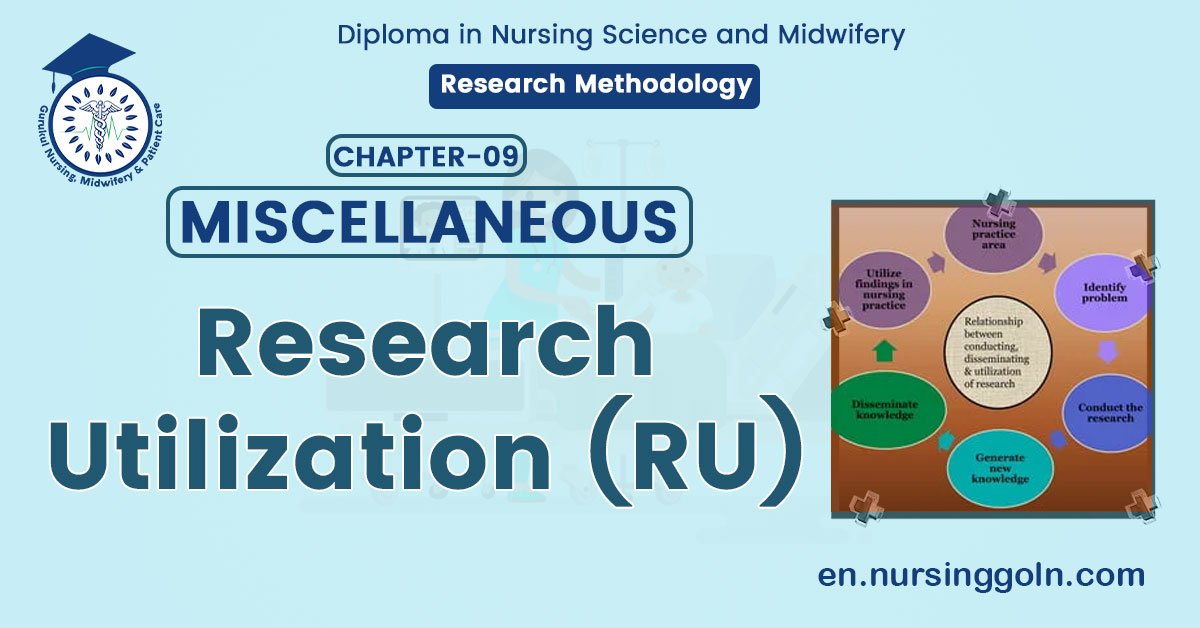
Research Utilization (RU) – In its most common sense, methodology is the study of research methods. However, the term can also refer to the methods themselves or to the philosophical discussion of associated background assumptions. A method is a structured procedure for bringing about a certain goal, like acquiring knowledge or verifying knowledge claims. This normally involves various steps, like choosing a sample, collecting data from this sample, and interpreting the data. The study of methods concerns a detailed description and analysis of these processes. It includes evaluative aspects by comparing different methods.
In this way, their benefits and drawbacks are evaluated, as well as the research goals for which they may be used. These descriptions and evaluations are predicated on philosophical background assumptions; examples include how to conceptualize the phenomena under study and what constitutes evidence in favor of or against them. In its broadest sense, methodology encompasses the discussion of these more abstract issues.

Research Utilization (RU)
Definition of Research Utilization (RU)
According to Nancy Burns:
It is the process of communicating and using research generated knowledge to make an impact or a change in the existing practices of health care system.
Or
Research utilization is the process of synthesizing, disseminating, and using research generated knowledge to make an impact on or change in the existing nursing practice.
Or
Research Utilization (RU) as part of evidence-based practice is strongly emphasized in today’s nursing education and clinical practice. The primary aim of RU is to provide high-quality. nursing care to patients.
(Ref by-Nirmala V/ Research Methodology in Nursing /1st/178 and handout)
Types of Research Utilization:
The three different types of research utilization are:
1. Indirect research utilization
2. Direct research utilization
3. Persuasive research utilization
Indirect research utilization:
- It promotes cumulative awareness, under-standing or enlightenment. It helps to change nurse thinking.
Direct research utilizations:
- It involves the direct use of findings in giving patients care.
Persuasive research utilization:
- It involves the use of findings to persuade others typically those in decision making to make changes in policies or practices relevant to nursing care.
(Ref by-Nirmala V/ Research Methodology in Nursing/1st/178)
Stages in Research Utilization
The stages of research utilization are:
1. Preparatory stage
2. Decision making stage
3. Implementation
4. Evaluation stage.
| Preparatory stage | Select a topic or problem that is of relevance to practice and in need of immediate solution. The problems which are encountered by numerous nurses are likely to gain staff support. |
| Decision making stage | After collecting comprehensive information of the topic, weigh every pieces of information on the topic. Integrate information to draw conclusions about the stage of preparation, consistency of findings, quality of the study, the use of findings in clinical setting and cost- effectiveness |
| Implementation stage | The innovation is actually put into use during the implementation stage to confirm whether the findings will be utilized formally or informally. |
| Evaluation stage | After putting the findings into practice, the usefulness and its effectiveness need to be judged. Develop an evaluation plan, identify the outcomes to be achieved, collect baseline data related to outcome and judge the effectiveness in terms of client outcomes and cost effectiveness. |
(Ref by-Nirmala V/ Research Methodology in Nursing /178)
Barriers of Research Utilization:
1. Characteristics of the Nurse
2. Characteristics of the Setting
3. Characteristics of the Research
4. Characteristics of the Innovation
| Barriers: Nurse |
|
| Barriers: Setting |
|
| Barriers: Research |
|
| Barriers: Innovation |
|
Way to Overcome the Barrier of Research Utilization:
| Strategies to overcome Barriers Relating to Research |
|
| Strategies to overcome personal Barrier |
|
| Strategies to overcome administration Barriers: |
|
(Ref by-Nirmala v/ Research Methodology in Nursing /178)
Importance of Research Utilization
1. Importance of Research Utilization to the Researcher
- Promotes critical thinking and reflective practice
- Enhances professional self-concept
- Ensures provision of safe and effective care
- Practice is based on current, scientifically sound knowledge
- Self-confidence of the nurse is enhanced
- Validates the efforts of the researcher
- Motivates scholars to continue to discover new knowledge
- Reinforces professional accountability
- Helps discover new clinical problems for investigation
2. Importance of RU in health care:
- Cost-effective nursing care
- High-quality care
- Improved client outcomes
- Retention and recruitment tools
- Professionally satisfied and stimulated nursing staff
3. Importance of RU in profession:
- Enhanced autonomy of practice
- Positive professional image
- Strengthen professional status
- Expand the field of nursing’s scientific knowledge base

Utilization of Nursing Research:
- Promote health, wellbeing and ability to provide care for oneself among all age, social and cultural group.
- Minimize or prevent behaviorally and environmentally induced health problems.
- Minimize the negative effects of new health technologies on adaptive abilities of individual and families experiencing acute and chronic health problem. Ensure the care needs by particularly vulnerable groups are met in effective and acceptable way.
- Classify nursing practice phenomenon.
- Ensure that the principles of nursing ethics guide the nursing research properly.
- Develop the instruments that would be used to measure nursing outcome.
- Develop integrative methodologies for the holistic study of human beings as they related to their families and lifestyle.
- Evaluate the effectiveness of alternative approaches to education for the kind of practice that requires broad education for the kind of practice that requires broad knowledge, skills, and for the kind of practice that requires specialized knowledge and focused set of skills.