Snake bite – Nursing is a profession within the healthcare sector focused on the care of individuals, families, and communities so they may attain, maintain, or recover optimal health and quality of life. Nurses may be differentiated from other healthcare providers by their approach to patient care, training, and scope of practice. Nurses practice in many specialisms with differing levels of prescriber authority.
Many nurses provide care within the ordering scope of physicians, and this traditional role has shaped the public image of nurses as care providers. However, nurses are permitted by most jurisdictions to practice independently in a variety of settings depending on training level. In the postwar period, nurse education has undergone a process of diversification towards advanced and specialized credentials, and many of the traditional regulations and provider roles are changing.
Snake bite
Definition of Snake Bite
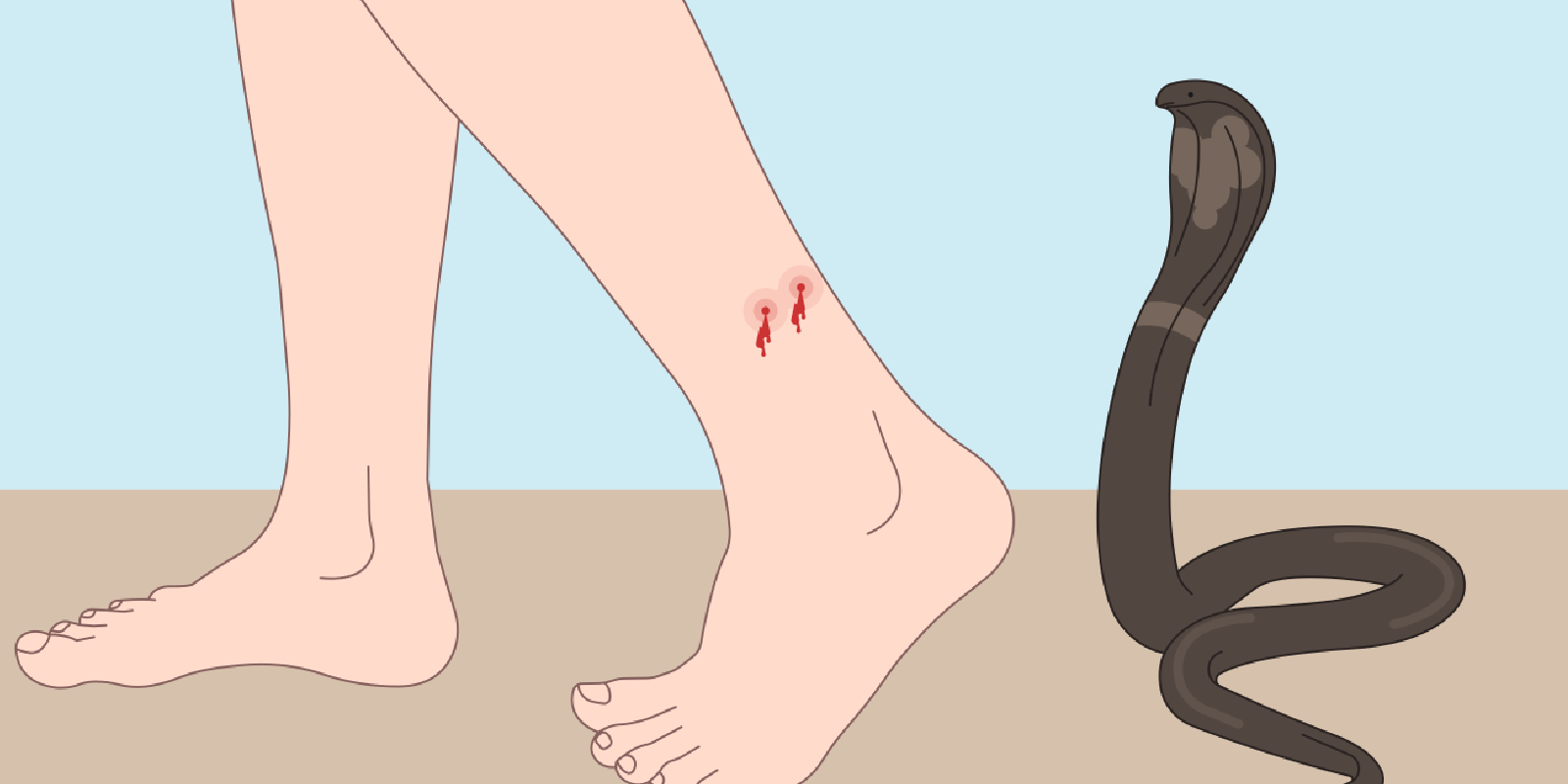
Snakebite is an injury caused by the bite of a snake. It often results in two puncture wounds from the animal’s fangs. Sometimes poisoning from the bite may occur. This may result in redness, swelling, and severe pain at the area, which may take up to an hour to appear.
(Ref by-en.wikipedia.org)
Snake bites occur when a snake bites the skin. It is a medical emergency if the snake is venomous,
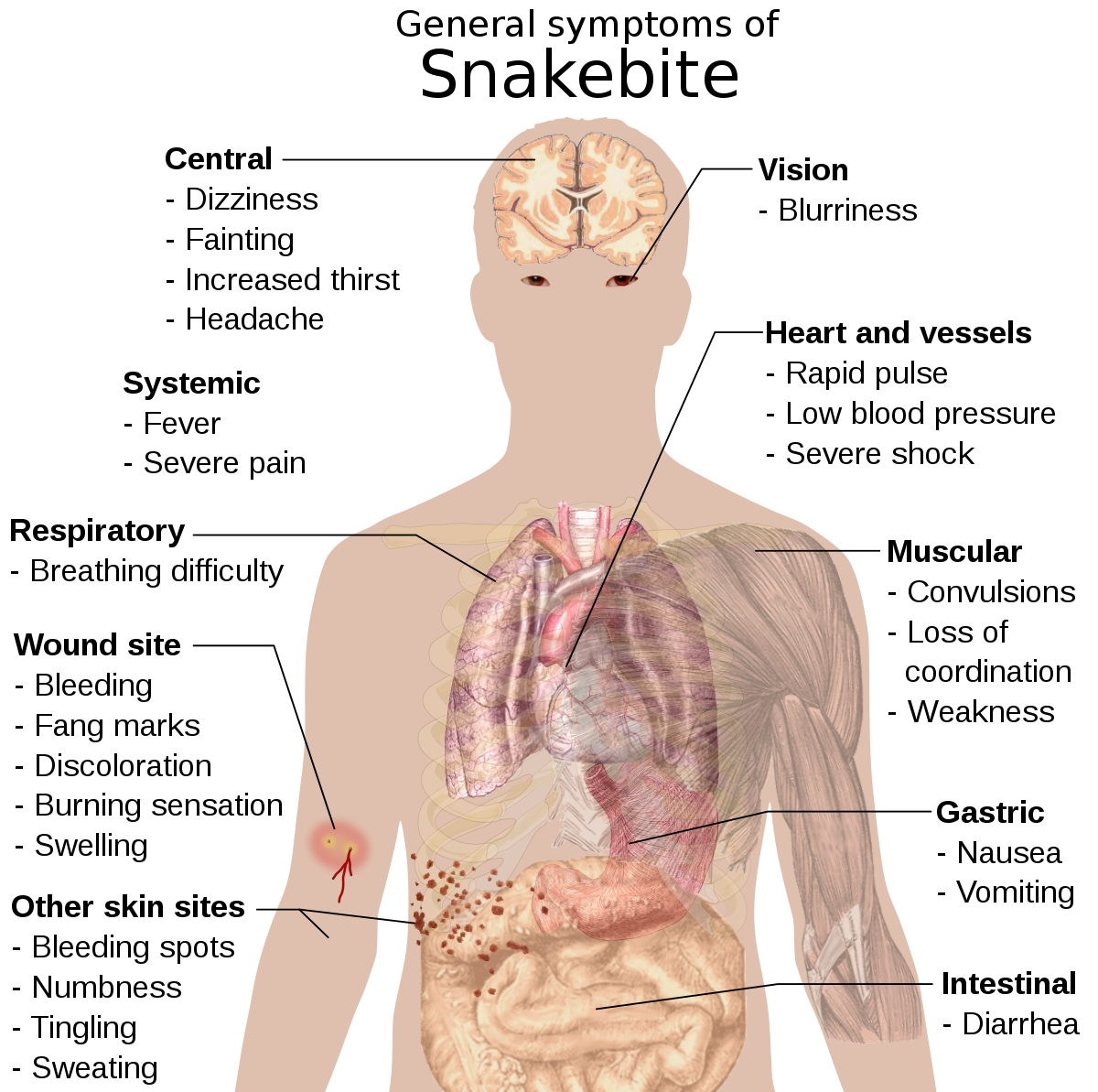
Sign and Symptoms of Snake Bite:
Causes of Snake Bite
Most species of snake are harmless and their bites are not life threatening
Venomous snake bites include bites by any of the following
- Cobra
- Copperhead
- Cottonmouth (water moccasin)
- Rattlesnake
- Various snakes found at zoos
Most snakes will avoid people if possible, but all snakes will bite as a last resort when threatened
or
surprised. If you are bitten by any snake, treat it seriously.
Diagnosis of Snake Bite:
1. Site may show one or more puncture, a small abrasion and perhaps a liner laceration.
2. In nonpoisonus snack bite semicircular row of teeth marks may be seen.
3. Local swelling appearing within few minutes after bite is sign of poisonus snack bite.
4. Respiratory symptoms.
5. Paralysis.
First Aid Treatment of Snake Bite
1. Keep the person in calm and put in lying position.
2. Complete rest and reassure.
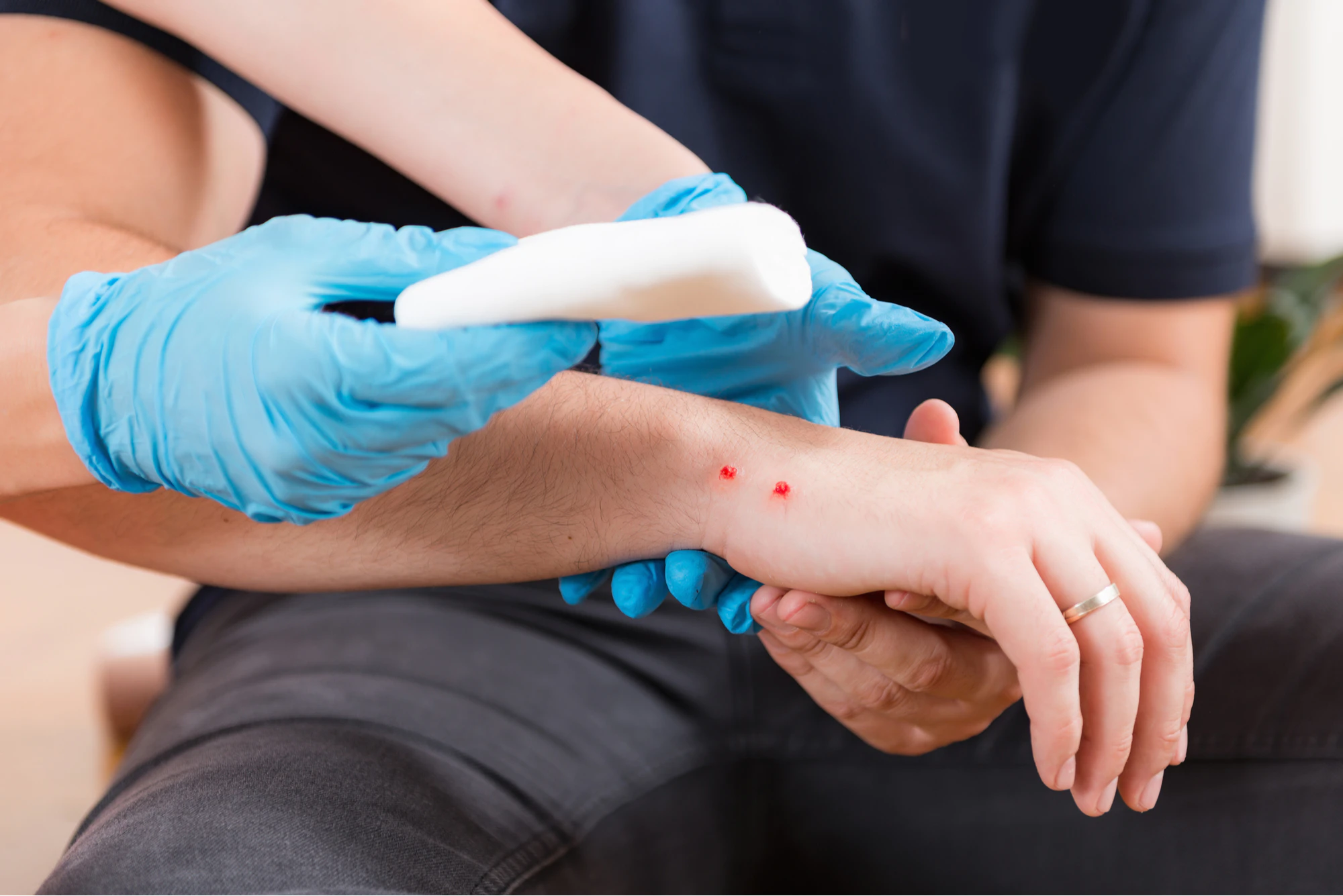
3. Give dressing to area of bite.
4. Stop the muscular activity at once.
5. Do not make him to walk. Tie a tight bandage or tourniquet immediate just above the bite or apply tourniquet between bite on arm or leg.
6. Ice pack can be applied on the wound.
7. Alcohol stimulants must not be taken and nothing should be done to increase circulation.
8. Make a little cross incision on the affected area about 1″ to come out the poisonous blood.
9. Apply potassium permanganate in the wound for disinfection.
10. Treat for shock.
11. Resuscitation, if there is difficulty in breathing.
12. Send or shift the patient to hospital immediately or as quickly as possible.
13. Take the killed snake if available for identification. This will help the doctors for proper dideab management.
14. Usually injection “antivenom” is given subcutaneously around the umbilicus for 14 days
(Ref by- Lecture)
1. Do not allow the person to become over-exerted. If necessary, carry the person to safety.
2. Do not apply a tourniquet.
3. Do not apply cold compresses to a snake bite.
4. Do not cut into a snake bite with a knife or razor.
5. Do not try to suck out the venom by mouth.
6. Do not give the person stimulants or pain medicines unless a doctor tells you to do so.
7. Do not give the person anything by mouth.
8. Do not raise the site of the bite above the level of the person’s heart
(Ref by-medlineplus.gov)
Prevention of Snake Bite:
To prevent snake bites:
- Avoid areas where snakes may be hiding, such as under rocks and logs.irit ad dirt.
- Even though most snakes are not venomous, avoid picking up or playing with any snake unless you have been properly trained.
- Don’t provoke a snake. That is when many serious snake bites occur.
- Tap ahead of you with a walking stick before entering an area where you can’t see your feet Snakes will try to avoid you if given enough warning
When hiking in an area known to have snakes, wear long pants and boots if possible.
(Ref by-medlineplus.gov)