Supervision and advocacy – Nursing is a profession within the healthcare sector focused on the care of individuals, families, and communities so they may attain, maintain, or recover optimal health and quality of life. Nurses may be differentiated from other healthcare providers by their approach to patient care, training, and scope of practice. Nurses practice in many specialisms with differing levels of prescriber authority.
Many nurses provide care within the ordering scope of physicians, and this traditional role has shaped the public image of nurses as care providers. However, nurses are permitted by most jurisdictions to practice independently in a variety of settings depending on training level. In the postwar period, nurse education has undergone a process of diversification towards advanced and specialized credentials, and many of the traditional regulations and provider roles are changing.
Nurses develop a plan of care, working collaboratively with physicians, therapists, the patient, the patient’s family, and other team members, that focus on treating illness to improve quality of life. Nurses may help coordinate the patient care performed by other members of an interdisciplinary healthcare team such as therapists, medical practitioners, and dietitians. Nurses provide care both interdependently, for example, with physicians, and independently as nursing professionals.
Supervision and advocacy
Supervision is working together to achieve the organizational goals and help the subordinates who are helped according to their immediate superiors to make the best use of their knowledge and skill. The supervisor will further facilitate the subordinates to help them enhancing their abilities to deliver a more efficient and effective work.
Definition of Supervision:
Supervision means guiding and directing efforts of employees and other resources to accomplish stated work aspects.
Or,
Supervision means overseeing the employees at work. It has been defined as the authoritative direction of the work of ones subordinates.
Or,
Supervision is an act or instance of directing, managing, or oversight.
Or,
Supervision the action or process of watching and directing what someone does or how something is done.

Characteristics of good supervision:
1. Good supervision is based on the needs of the individual.
2. Supervision of graduate staff nurse differs from that of students in one general aspect. When supervising a student, the supervisor has to help in self-development to act as a nurse whereas in case of when supervising a graduate nurse, the aim is to give to high quality of nursing care of the patient.
3. The graduate nurse has developed desirable skills, attitudes and abilities but she has to improve then b practice to become a good nurse.
4. Supervision is well planned where objectives, methods of supervision and criteria for evaluation are established. The plan is based on the needs of the individuals.
5. Good supervisor helps to attain the objectives. It stimulates individual’s interest and effort for his/her development.
6. Good supervision continuous as an endless process.
7. Good supervision respects individual’s personality.
8. Good supervision is person oriented and not task oriented.
9. Good supervision encourages people to be innovative, come up with ideas and make efforts for effectiveness.
10. In good supervision shortcomings and errors are analyzed tactfully.
11. Good supervision establishes good interpersonal relationship between co-workers, superiors and the subordinates and members of the organization and the general public as a whole.
Qualities of a good Supervision
1. Forcefulness, integrity and firmness.
2. Full awareness of the job and the rules and regulation.
3. Full awareness of existing situations.
4. Intelligence and willingness to grow.
5. Good power judgment, impartial understanding of others, emotions, attitudes, and feelings and quickness in recognizing achievement of subordinates
6. Ability to delegate duties and responsibilities the right job to right person.
7. Continuous guidance and co-operation and co-ordination.
8. Sympathetic attitudes and good listening.
9. Willingness to adopt new policies and accept changes if necessary.
10. Maintain good health; possess self-confidence, self-control, enthusiasm for work and human interest, human relations.
11. Ability to communicate information skillfully and tactfully, maintain two way
communication.
12. Ability to work with others and established a climate of rapport.
13. Ability to inspire and take immediate action.
14. Update professional knowledge of activities, techniques and procedures
15. Objectivity, impartiality, approachability, fair discipline, loyally and fairness in dealing.
16. Trustworthy and trust others and respect members.
17. Command respect from members and support member’s ideas.
18. Has originality and imitativeness.
19. Humble and willing to accept his mistakes.
20. Has good command of language the members speak.
21. Concern for other individuals and group.
22. Impartial, humane, tactful, tolerant
Principles of Supervision
The principal underlying the concepts of supervision are as follows:
1. Supervision should not be overburdened to any individual or group.
2. Supervision causing unreasonable pressure for achievements results in low performance and low confidence in the supervisor.
3. Supervise diagnosis do not overestimate his understanding and money.
4. Human behavior with due to consideration to human weaknesses. This should be kept in minds of supervisor.
5. Supervisors should create atmosphere of cordiality and mutual trust.
6. Supervision should be planned and adopted to the changing conditions. It calls for good planning and organization.
7. Supervisors must possess sound professional knowledge
8. Supervision to be exercised without giving the subordinate a sense that they are being supervised.
9. Supervision strives to make the unit a good learning situation. It should be a teaching learning process.
10. Supervision should foster the ability of each staff member to think and act for himself/herself.
11. Supervision should encourage workers participation in decision making.
12. Supervision needs good communications.
13. Supervision should have strength to influence downwards depends on capacity to influence upward.
14. Supervision is a process of cooperation and coordination.
15. Supervision should create suitable climate for productive work
16. Supervision should give autonomy to workers depending form personality, competence and characteristics.
17. Supervision should respect the personality of the staff.
18. Supervision should stimulate the workers /staff ambitions to grow in effectiveness.
19. Supervision should focus on continued staff growth and department.
20. Supervision is responsible for checking and guidance.
21. Good leadership is part of good supervision.

Types of Supervision
Generally there are two types of supervision
1. Direct supervision
2. Indirect supervision
A. Direct supervision
This is done through face to face talk with workers. This can be exercised at the ward/ unit level in the hospital or PHC or sub center of the community setting. The following considerations are the essential in direct supervision.
- Do not loose temper or abuse.
- Use democratic approach and avoid autocratic methods.
- Reprimand if necessary in private and do it promptly.
- Give workers a chance to reply.
- Be human in behavior
- Don’t give instruction in a haphazard way.
B. Indirect Supervision
It is done with the help of record and reports of the workers and through written instructions or through some agency between the supervisors and supervisee. This includes:
- Ensuring that every worker is carrying out allotted work in accordance with the plan of operation and with the prescribed methodology and in keeping pace with the time as far as possible.
- Analyzing the monthly progress reports to know the input of efforts and the achievement of the workers and their relations with each other.
- Analyzing what amount of work allotted for the month has been done with reasons for nonperformance and providing suitable guidance for the same.
Purposes of Supervision
1. Help the staff to do their job skillfully and effectively to give maximum output with minimum resources cost effectiveness.
2. Help the staff develop the individual capacity to the fullest extent with a view to channelize the same in favor of work.
3. Guide and or assist in meeting predetermined work objectives or targets. In nursing preventive, promotive, curative and rehabilitative care to people.
4. Help to promote effectiveness of the subordinates/ staff, ensuring that the subordinate staff or supervise does what he/she supposed to do.
5. Help to motivate subordinates to maintain high morale, i. e. promotion of motivation and morale among all the nursing staff.
6. Help the members of the team to recognize problems, identify solutions and to take action.
7. Help to develop team spirit and promote team work for effective functioning.
8. Help to improve the attitudes of the members towards the work of program, i. e.. Bridging the gap between the workers personal goals and the organizational goal by providing guidance in the right direction.
9. To promote team work.
10. To bridge the gap between the workers personal goal and the organizational goal.
Components of Nursing Supervision
While clinical supervision is the new concept to many practitioners, the three main components of supervision can be found in everyday practice:
1. Supervised practice and learning.
2. Organizational supervision.
3. Supportive supervision.
Supervised practice and learning.
It has been suggested that the role of being a supervisor and assessor is well established within pre and post registration education. Both parties in this form of clinical supervision relationship operates in well-defined roles in which success takes from to anticipated learning outcomes and a lot of ticked boxes and written comment.
Organizational supervision.
The clinical supervision is not a managerial control system and is not:
- The exercise of overt managerial responsibility or managerial supervision.
- A system of formal individual performance review
- Hierarchical in nature.
Supportive supervision
In order to survive the rigorous of nursing practice, nurses have always created support systems. Some emerge almost intuitively, from working with and knowing that you can trust particular people that they will not laugh at you and are prepared to listen to your concerns.

Techniques of Supervision
A. Group conference
B. Individual conference
C. Anecdotal records.
D. Initial conference
E. Control of early experience
F. Assistance with bedside care
G. Reassurance
H. Supervision of nursing procedure
I. Conferences- individuals, groups
J. Incidental teaching
a. Example as a method of teaching
b. Answering and asking questions
c. Demonstration of desirable performance
d. Positive suggestions
e. Making and opportunity for observational of unusual symptoms
Poor Signs of Supervisions:
A. Lack of Communication
Poor supervisor don’t value communication with their employees. A poor supervisor might spend long periods of time away from his desk or office or might ignore staff emails and telephone messages.
B. Micromanagement
Micromanagers can’t resist becoming involved in the smallest details of their employee’s jobs. While micromanaging ensures that everything is done the manager’s way, employees can resent the lack of responsibility and autonomy.
C. Unclear Expectations
Failing to make expectations clear can frustrate employees and hinders their ability to successfully complete a task.
D. Intimidation
Poor leaders may intimidate and bully employees, often threatening them to fire them if work is not completed satisfactorily. Employees of a poor supervisor might be publicly berated for mistakes and subject to criticism of their personality traits.
E. Poor People Skills
Poor leaders can be negative people who have no idea how to motivate others. They might feel free to share their negative opinions about the company or a department-wide project, rather than emphasizing the positive aspects of a situation or problem.
H Nisson gives the following list of eleven principal duties of a supervisor:
1. To understand the duties and responsibilities of his own position.
2. To plan the execution of the work
3. To divide the work among subordinates and to direct and assist them in doing it. liont
4. To improve his own knowledge as technical expert and leader.
5. To improve his work methods and procedures.
6. To train the personnel.
7. To evaluate the performance of the employees.
8. To correct mistakes, solve employee’s problems and develop discipline.bne sa
9. To keep subordinates informed about policies and procedures of the organization and above the changes to be made,
10. To cooperate with colleagues and seek advice and assistance when needed and
11. To deal with employees suggestion and complaints,
Role of Supervision in Hospital:
A. Clinical supervisees
a) Holding own record of the supervision session
b) Being prepared for the supervision session, having identified issues to discuss
c) Developing the ability to share these issues freely
d) Identifying and talking about t the kind of response that is useful to me
e) Becoming more aware of my own organizational constraints and their implications and the organizational constraints on the supervisor
f) Being open to feedback and using it to reflect future practice
g) Developing the ability to discriminate what feedback is useful
h) Noticing when I justify, explain or defend listening to feedback
i) Implementing any action plan developed during supervision
B. Clinical Supervisors
a) Ensuring that privacy is available for the supervision session
b) Helping the supervisee explore and clarify their own thinking, feelings and beliefs in order to become a reflective practitioner
c) Giving clear and constructive feedback
d) Sharing information, experiences and skills appropriately
e) Challenging practice we see and agree action with supervisee to rectify deficits identified
f) Being aware of the organizational constraints upon the supervisee
g) Recording the attendance at the clinical supervision session
h) Ending the supervision session
Importance of Supervision:
1. It is important to formulate plans and policies and methods of doing the work in an organization.
2. It is related with issuing orders and instructions.
3. The supervision is used to motivate workers for higher productivity and better quality.
4. It also enforces discipline among the workers.
5. It works as a liaison between management and workers.
6. It handles grievances effectively.
7. It provides proper working condition to the workers in an organization.
8. It helps to report about the performance and progress.
9. It ensures the continuity of work operation.
10. It also ensures about elimination of waste and to reduce costs.
11. It guarantees the proper functioning of the work units.
12. Effective supervision helps to secure prosperity of both employer and employees.
Skills Required by a Supervisor:
1. The supervisor must have technical and managerial knowledge or knowledge of inputs.
2. The supervisor should have leadership skill to guide and promote relationship among subordinates.
3. He should have communication skills for effective communication.
4. He must cultivate human relation skills. So he has to capitalize.na
5. He should be impartial and fair.
6. He should have empathy.
7. He should have social skills to serve and convince society.
8. There should be participative management to improve understanding and minimize conflicts.
9. He must give clear, precise and complete instruction to subordinates.
10. Others:
- Tact and discretion.
- Technical competence.
- Initiative and sense of responsibility.
- Honesty and integrity.
- Courage and confidence
- Teaching and guiding ability.
- Strong common sense
ADVOCACY
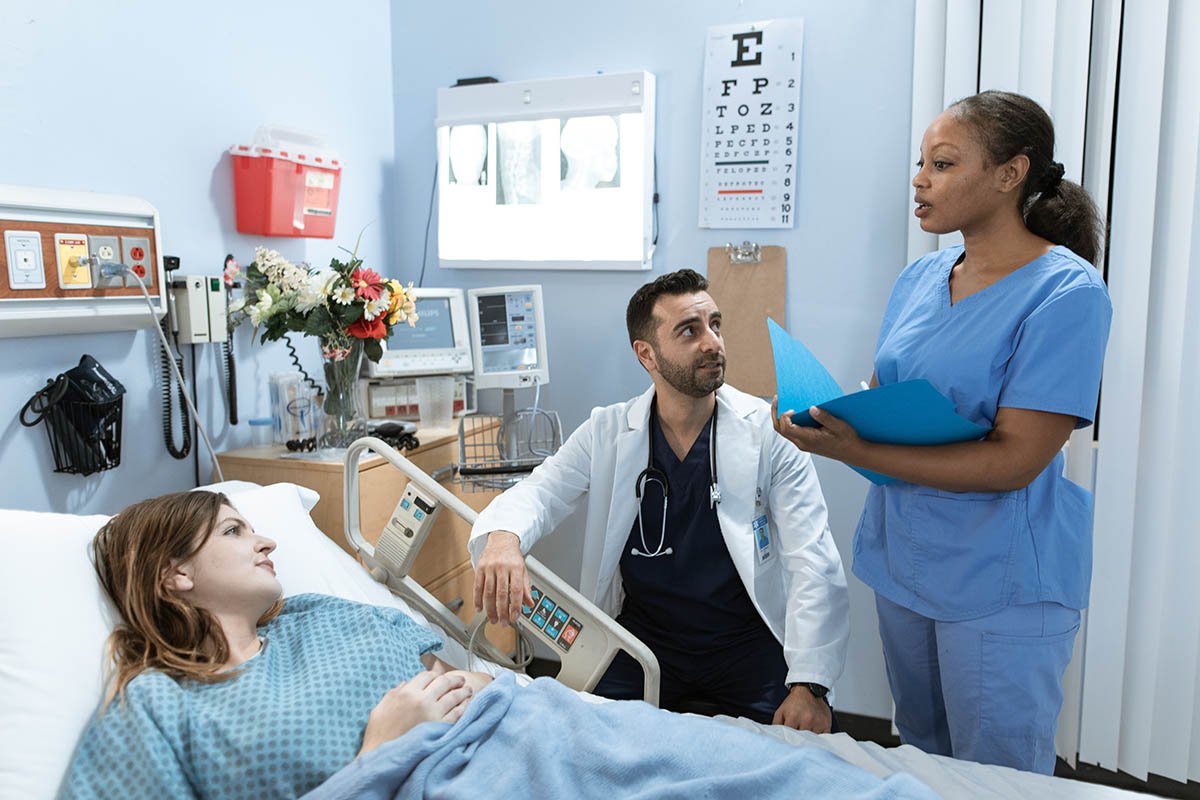
Advocacy may be defined as a process whereby a nurse or other health care professional provides a patient with the information to make certain decisions, usually related to some aspect of health care.
Nurses play many vital roles in the care of their patients, including that of advocate someone who acts or intercedes on behalf of another. Typically the healthcare professional with the most interpersonal contact with the patient, the nurse may be in the best position to act as the liaison between patient and family and other team members and departments.
To perform this function adequately, the nurse must be knowledgeable about and involved in all aspects of the patient’s care and have a positive working relationship with other team members.
Advocacy Roles of a Nurse:
1. The client advocate role first includes informing clients about the nature of their health problems.
2. Choices they have in seeking to resolve or modify their health care needs with nursing intervention.
3. This role is activated whenever the client is unable to assume responsibility for his or her health care needs.
4. Need can arise from a lack of knowledge or skills.
5. The nurses role is to help the client gather information about learn the behaviors necessary to execute the chosen option.
6. Second, the advocacy role is one of support when the client has been informed has made reasoned choice and must implement them.
7. The clients right to choose health care options,
8. It recognizes the client inherent right to make decisions for self and to rake individual responsibility for a chosen decision.
9. The advocacy role requires the nurse to view the client as on equal partner resolving the client’s health care needs. To fulfill this role the nurse is respectful of client choices, even when the decisions reached are not what the nurse would recommend for the client.
Mass Communication:
Mass communication is the study of how people and entities relay information through mass media to large segments of the population at the same time. In other words, mass communication refer to the imparting and exchanging of information on a large scale to a wide range of people.
Function of Mass Communication:
The major functions of mass communication are:
1. Surveillance d
2. Interpretation
3. Transmission of values
4. Lineage
5. Entertainment
The functions served by mass communication are very similar to those fulfilled by others types of communications. The way mass communication performs these function is discussed here.
Surveillance:
Surveillance relates to the constant flow of public information or news about events occurring within the country and in the world. It is the most obvious of all functions of mass communication. It refers to the news and information role of media. They work as the sentinels or guards. Correspondents for wire services, TV networks and newspapers are located across the globe.
Interpretation:
Interpretation function is closely related with the surveillance function. It prevents undesirable consequences of communication. Now-a-days, mass communicators have realized their responsibility to evaluate and interpret events for the reader. They select the important news and issues for the attention of the people and not only provide information of the events but they also provide information on the ultimate meaning and significance of these events,
Transmission of Values:
The transmission of values is a subtle but an important function of the mass media. It is also called socialization function. Our society is portrayed in the mass media and by seeing, watching or reading this people learn which are the important values.
Lineage:
The mass media are able to link together different elements of society that are not directly connected by interpersonal channel.
For example, newspapers generate opinion; develop feeling for whatever happenings are reported. Advertising through mass media links together the needs of buyers with the products of sellers.
Entertainment:
Entertainment is the most obvious function of all media functions. In the past entertainment functions were fulfilled by interpersonal communication. The importance of the entertainment function has grown as the people have got more leisure time.