The biliary tract-The course is designed for the basic understanding of anatomical structures and physiological functions of human body, musculoskeletal system, digestive system, respiratory system; cardiovascular system; urinary system, endocrine system, reproductive system, nervous system, hematologic system, sensory organs, integumentary system, and immune system.The aim of the course is to acquire knowledge and skills regarding anatomy and physiology.
The biliary tract
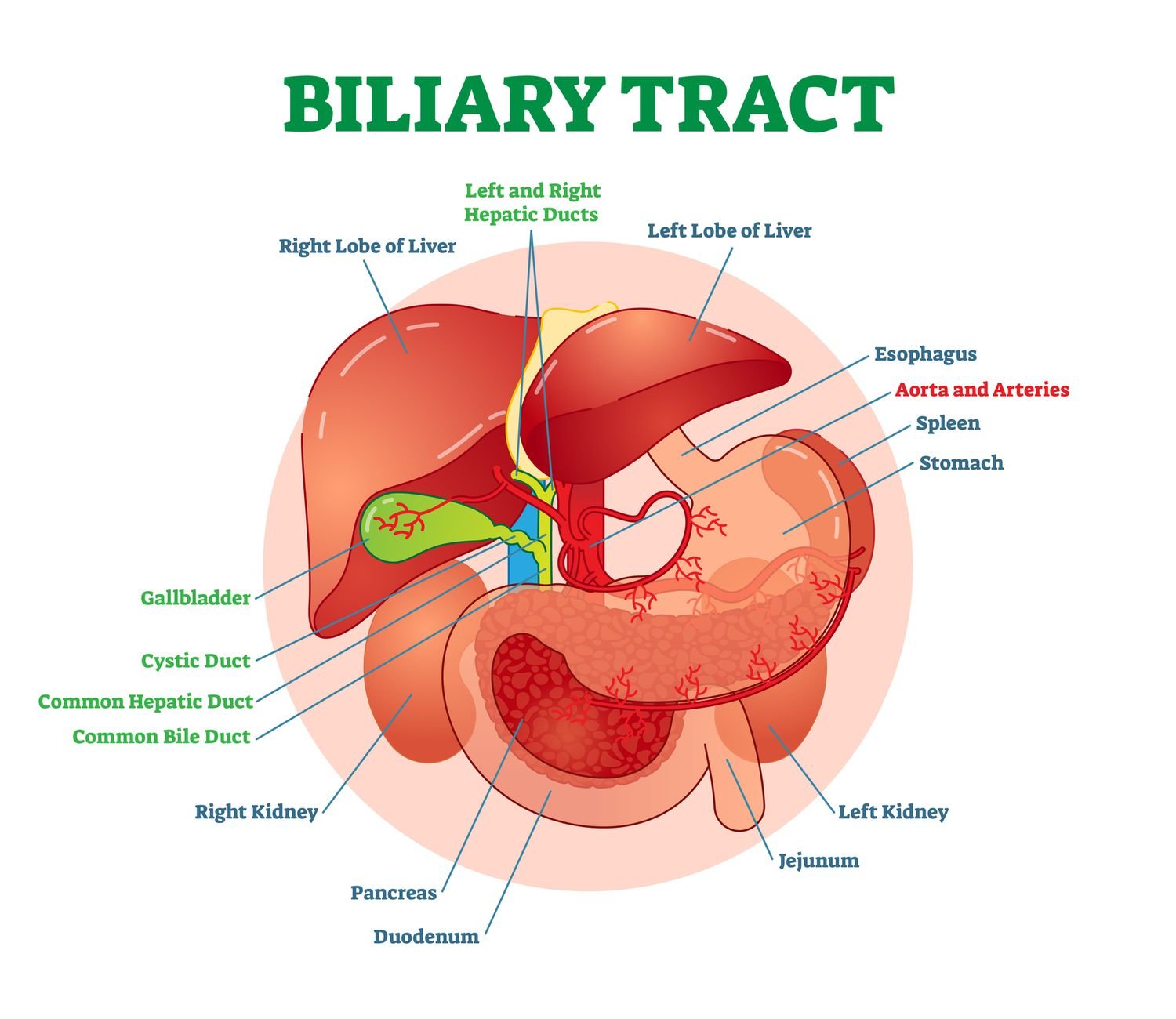
The biliary tract is the excretory apparatus of the liver. It extends from the liver, connect with gallbladder, and empties into the descending part of duodenum. The biliary tract / tree consists of,
- The right and left hepatic ducts.
- The common hepatic duct
- The gallbladder.
- The Cystic duct.
- The common bile duct
The bile ducts merge and eventually form the larger right and left hepatic ducts, which unite and exit the liver as the common hepatic duct. The common hepatic duct joins the cystic duct (cystic = bladder) from the gallbladder to form the common bile duct. From here, bile enters the small intestine into the descending part of the duodenum (duodenum papilla) to participate in digestion.
(Ref:- R.S. Winwood and J.L. Smith, Sears’s Anatomy and Physiology for Nurses, 6 edition, P-181)

Gallbladder
The gallbladder is a saclike organ attached to the inferior surface of the liver. This organ stores and concentrates bile, which drains to it from the liver by way of the bile ducts, hepatic ducts, and cystic duct, respectively. A sphincter valve at the neck of the gallbladder allows a 35- to 100-ml storage capacity. When the gallbladder fills with bile, it expands to the size and shape of a small pear.
Bile is a yellowish green fluid containing bile salts, bilirubin, cholesterol, and other compounds. Contraction of the muscular layer of the gallbladder ejects bile through the cystic duct into the common bile duct, which conveys bile into the duodenum.
Parts:-
There are three parts of gallbladder:
- Fundus: The extended round end, which may project from the inferior border of liver.
- Body: This is the meddie and major part of the gallbladder.
- Neck Neck is the narrow upper part. It is situated near the right end of the porta hepatis.
Functions of gallbladder:-
- The gallbladder receives bile from liver.
- It acts as a reservoir for the storage of bile.
- Decreases the pH of the liver bile.
- It releases stored bile when fatty food is present in the small intestine.
Justification of bile as a digestive juice.
Though bile has no enzymes, bile is a digestive juice because –
- The bile acids in the bile helps to emulsify the large fat particles of food into many small particles and thereby helps in digestion.
- It helps in absorption of the digested fat by forming micelle.
- It also helps in the absorption of fat soluble vitamins (vit A,D,E & K).
(Ref: Guyton and Hall 12th 783p.)
Read more: