
The synovial joint- The course is designed for the basic understanding of anatomical structures and physiological functions of human body, musculoskeletal system, digestive system, respiratory system; cardiovascular system; urinary system, endocrine system, reproductive system, nervous system, hematologic system, sensory organs, integumentary system, and immune system.
The aim of the course is to acquire knowledge and skills regarding anatomy and physiology.
The synovial joint
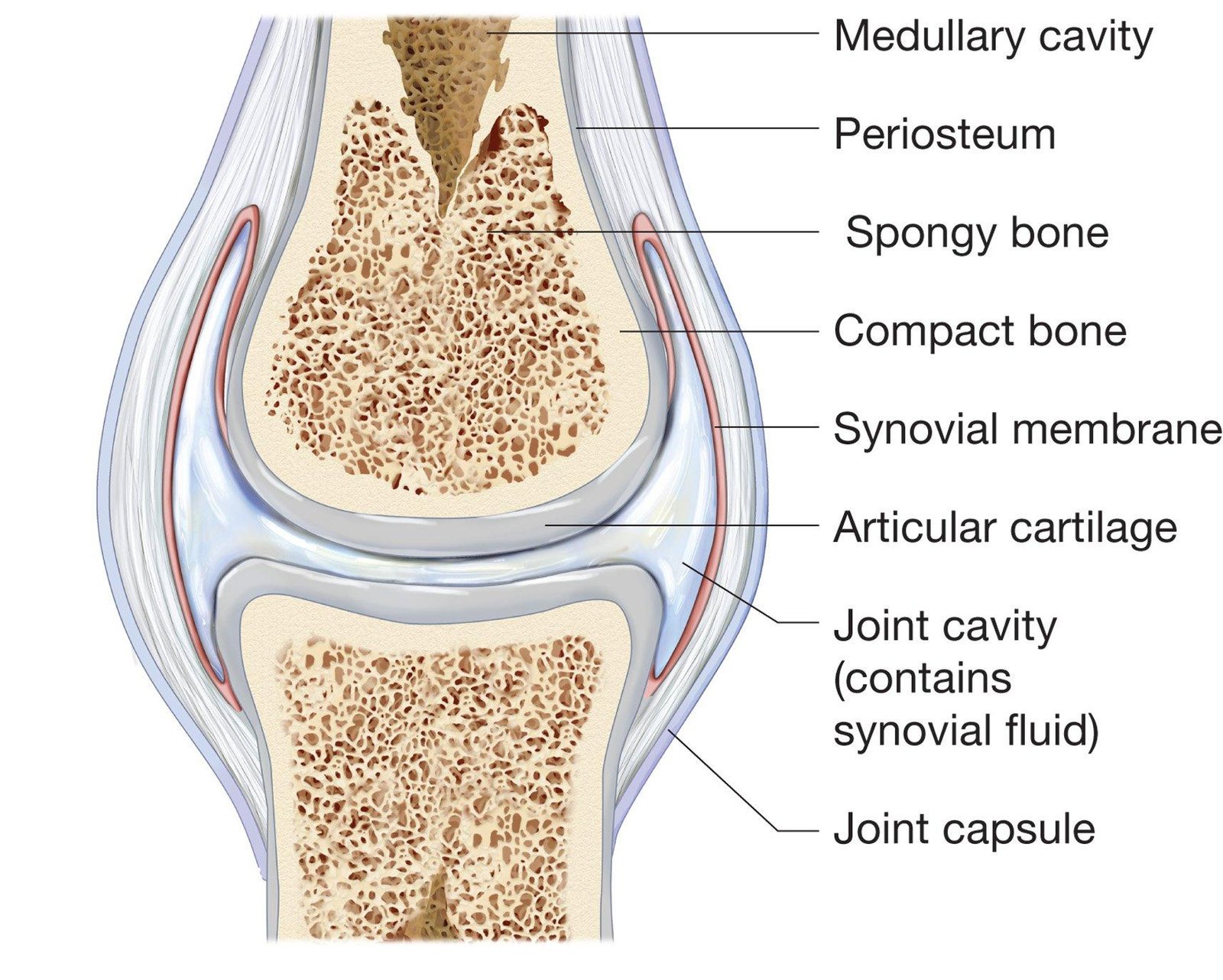
Synovial joints are the most common and important joints in the body. They normally provide free movement. They are called synovial joints because they are lined with a synovial membrane and contain a lubricating fluid called synovial fluid.
Synovial joints have certain characteristics that distinguish them from other joints. The unique characteristic of a synovial joint is the presence of a space called a synovial (joint) cavity between the articulating bones.
The two layers of the articular capsule: the fibrous membrane and the synovial membrane. Synovial fluid lubricates the synovial cavity, which is located between the synovial membrane and the articular cartilage. The synovial membrane secretes synovial fluid, which forms a thin film over the surfaces within the articular capsule.
Tendons, Ligaments, Cartilage and Bursae
TENDONS
A tendon is a tough band of fibrous connective tissue that usually connects muscle to boneand is capable of withstanding tension Tendons are cordlike structures that attach muscles to the periosteum of the bone.
LIGAMENTS
Ligaments consisting of fibrous tissue connect two adjacent, freely movable bones. They help protect the joints by stabilizing their surfaces and keeping them in proper alignment. In some instances, ligaments completely enclose a joint
CARTILAGE
Cartilage is a firm, dense type of connective tissue that consists of cells embedded in a substance called the matrix. The matrix is firm and compact, thus enabling it to withstand pressure and torsion. The primary functions of cartilage are to reduce friction between articular surfaces, absorb shocks, and reduce stress on joint surfaces.
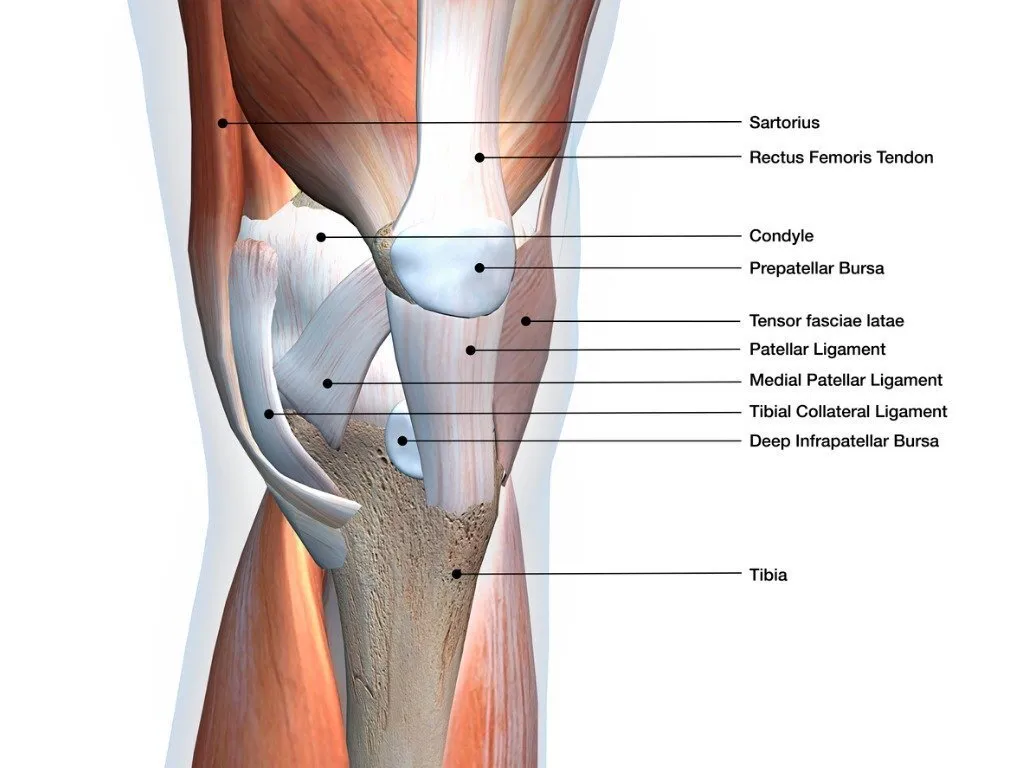
BURSAE
A bursa is a small sac filled with synovial fluid. Bursae reduce friction between areas, such as tendon and bone and tendon and ligament