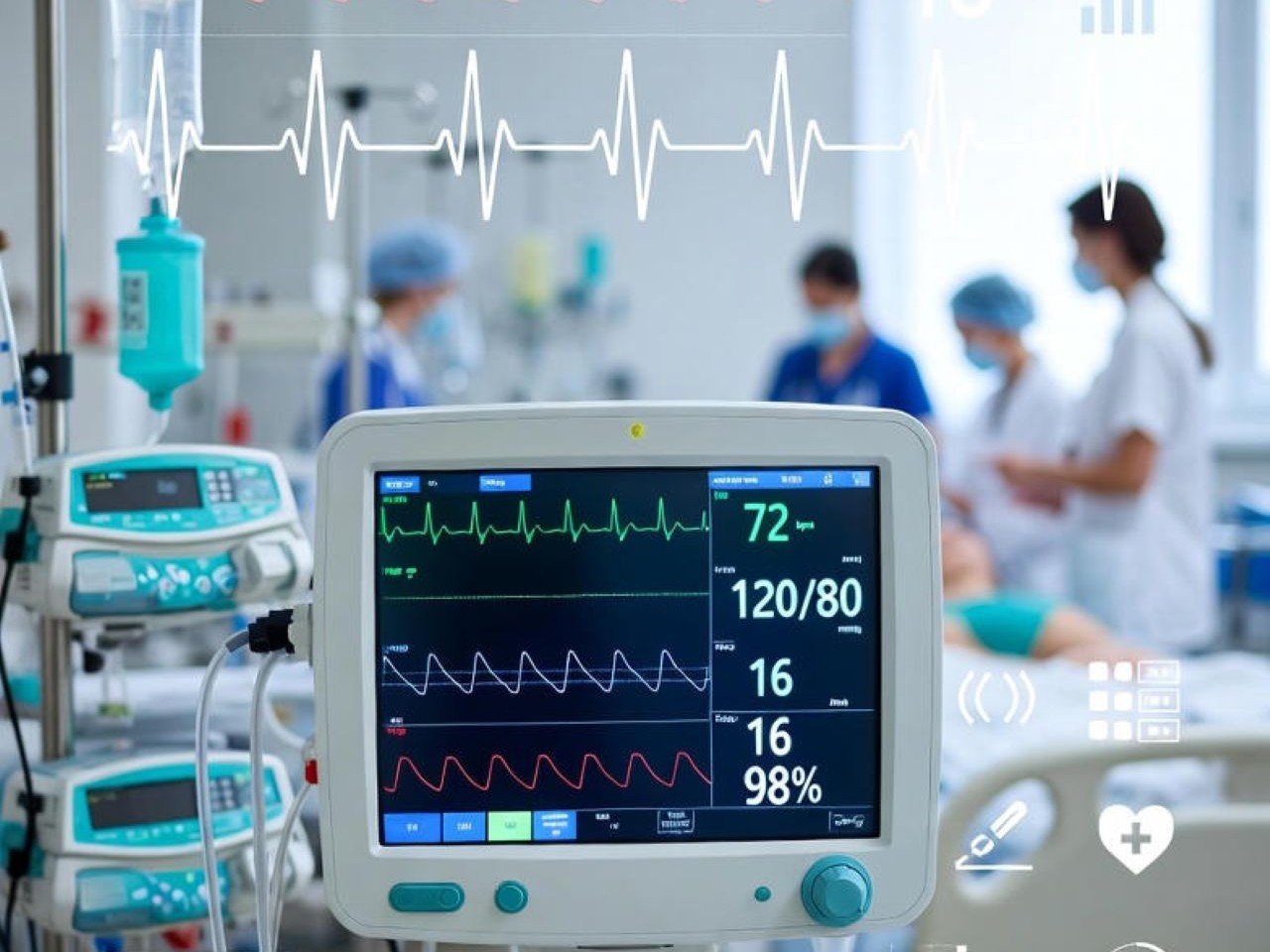
Vital signs are fundamental clinical indicators that provide immediate and ongoing information about a patient’s physiological status. They serve as the first and most essential assessment tools in healthcare, allowing nurses and other healthcare professionals to evaluate how well the body’s vital organs and systems are functioning. Through the regular observation and measurement of vital signs, subtle changes in a patient’s condition can be detected early—often before more serious clinical deterioration becomes apparent.
The core vital signs—body temperature, pulse rate, respiratory rate, blood pressure, and oxygen saturation—reflect the body’s haemodynamic stability and overall health. These measurements offer objective data that guide clinical decision-making, support diagnosis, and inform the planning and evaluation of nursing and medical interventions. In many situations, pain is also recognised as the fifth vital sign, as it significantly influences physical, emotional, and psychological well-being.
Vital signs must never be interpreted in isolation. Instead, they should be assessed collectively and compared with the patient’s normal baseline values, age, and medical condition. Any deviation from expected ranges may indicate disease, stress, medication effects, or physiological imbalance and may necessitate prompt intervention. For this reason, accurate measurement, careful interpretation, and timely reporting of vital signs are central responsibilities in nursing practice.
This article provides a comprehensive overview of vital signs, their definitions, purposes, methods of measurement, influencing factors, and clinical significance, highlighting their indispensable role in ensuring safe, effective, and patient-centred care.

Introduction to Vital Sings
The vital or cardinal signs are body temperature, pulse rate, respiration and blood pressure. These signs should be looked at in total, to monitor the vital functions of the body. The signs reflect changes in functions that otherwise it might not be observed.
Temperature, pulse, respiration, blood pressure (BP) and oxygen saturation are measurements that indicate a person’s hemodynamic status. These are the five vital signs most frequently obtained by healthcare practitioners.
Vital signs will potentially reveal sudden changes in a patient’s condition and will also measure changes that occur progressively over time. A difference between patients’ normal baseline vital signs and their present vital signs may indicate the need for intervention (Perry et al., 2014). Checklist 15 outlines the steps to take when checking vital signs
Definition of Vital Signs
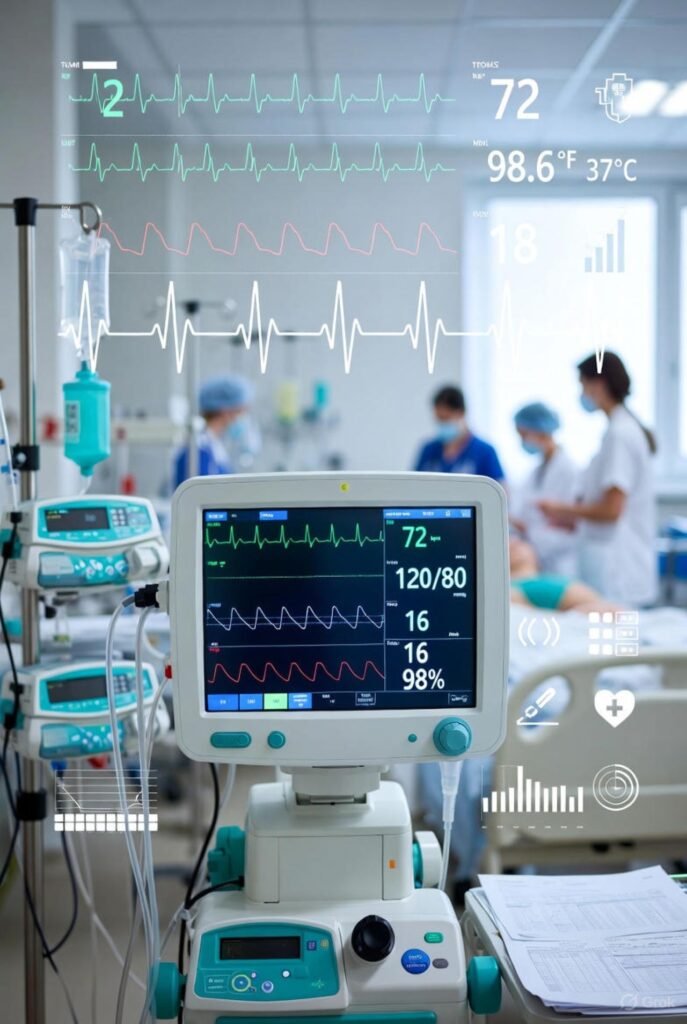
Vital signs are a set of measurable clinical parameters that indicate the functioning of the body’s vital organs and systems. They provide essential information about a person’s physiological status and are used by healthcare professionals to assess, monitor, and evaluate an individual’s overall health condition.
In clinical practice, vital signs are considered the signs of life, as their presence confirms that essential body functions—such as circulation, respiration, and temperature regulation—are being maintained. Any deviation from normal values may signal illness, injury, or physiological imbalance requiring prompt medical or nursing intervention.
Traditionally, the core vital signs include:
- Body temperature – reflects the body’s ability to generate and regulate heat
- Pulse (heart rate) – indicates cardiac activity and circulatory status
- Respiratory rate – reflects pulmonary function and oxygen exchange
- Blood pressure – measures the force of blood against arterial walls
In modern healthcare, oxygen saturation is also routinely included, as it provides crucial information about tissue oxygenation. Additionally, pain is often recognised as the fifth vital sign, as it significantly influences physical, emotional, and psychological well-being.
Vital signs are objective measurements that can be observed, measured, recorded, and monitored over time. They serve as a baseline for comparison, help detect early changes in a patient’s condition, guide clinical decision-making, and evaluate the effectiveness of treatment and nursing care.
In summary, vital signs are fundamental indicators of life and health, forming the cornerstone of patient assessment in all healthcare settings—from community clinics to critical care units.

Purpose of Vital Sings
The purpose of recording vital signs is to establish a baseline on admission to a hospital, clinic, professional office, or other encounter with a healthcare provider. Vital signs may be recorded by a nurse, physician, physician’s assistant, or other healthcare professional.
The healthcare professional has the responsibility of interpreting data and identifying any abnormalities from a person’s normal state, and of establishing if current treatment or medications are having the desired effect.
Abnormalities of the heart are diagnosed by analyzing the heartbeat (or pulse) and blood pressure. The rate, rhythm and regularity of the beat are assessed, as well as the strength and tension of the beat, against the arterial wall. Vital signs are usually recorded from once hourly to four times hourly, as required by a person’s condition.
The vital signs are recorded and compared with normal ranges for a person’s age and medical condition. Based on these results, a decision is made regarding further actions to be taken.
All persons should be made comfortable and reassured that recording vital signs is normal part of health checks, and that it is necessary to ensure that the state of their health is being monitored correctly. Any abnormalities in vital signs should be reported to the healthcare professional in charge of care.

Principles of Vital Signs
- Vital signs are regulated by the body’s vital organs and physiological systems and often reveal even the slightest deviation from normal body function.
- Changes in a patient’s condition, whether improvement or deterioration, can be detected early through careful observation and monitoring of vital signs.
- Significant variations in vital sign readings may indicate underlying problems, such as inadequate oxygenation, impaired circulation, metabolic imbalance, or systemic illness.
- Vital signs provide specific, objective information that assists healthcare professionals in diagnosis, treatment planning, medication administration, and ongoing nursing care.
- A patient’s emotional and psychological state, including anxiety, fear, pain, or stress, may also cause notable changes in vital signs and should be considered during assessment.

Timings of Taking Vital Signs
Vital signs should be measured and recorded at specific times to ensure accurate assessment of a patient’s physiological status and to detect any change in condition promptly. The following are key situations when vital signs must be taken:
- On admission of the patient to any healthcare facility to establish baseline data.
- At regular intervals during hospitalisation, as per the physician’s order or institutional policy.
- During a patient’s visit to a clinic, outpatient department, or physician’s office.
- Before and after any surgical procedure to assess physiological stability and recovery.
- Before and after invasive diagnostic procedures, such as endoscopy, lumbar puncture, or biopsy.
- Before and after administration of medications that may affect cardiovascular, respiratory, or temperature regulation, such as antihypertensives, antipyretics, sedatives, or analgesics.
- Whenever there is a change in the patient’s general physical condition, for example, loss of consciousness, sudden weakness, shortness of breath, or an increase in the intensity of pain.
- Before and after nursing interventions that may influence vital signs, such as ambulation of a patient previously on bed rest or performance of range-of-motion exercises.
- Whenever the patient reports non-specific symptoms of physical distress, such as feeling dizzy, unwell, faint, or “different” from usual.

Guidelines for Taking Vital Signs
- The primary nurse responsible for the patient’s care is best placed to measure vital signs, interpret their significance, and make informed decisions regarding nursing interventions.
- Equipment used for measuring vital signs must be appropriate, calibrated, clean, and in proper working condition to ensure accurate and reliable readings.
- Nurses should have a thorough understanding of the normal ranges of all vital signs, as this knowledge is essential for identifying abnormalities.
- A patient’s normal vital sign values may differ from standard reference ranges due to age, physical condition, or chronic illness. These individual values should be used as a baseline for comparison over time.
- The nurse should be aware of the patient’s medical history, current therapies, and medications, as many drugs and conditions influence vital sign measurements.
- Environmental and situational factors that may affect vital signs—such as physical activity, emotional stress, pain, or recent procedures—should be minimised or considered during assessment.
- Vital signs should be taken using an organised and systematic approach, ensuring consistency, accuracy, and completeness of findings.
Vital Sign Measurement
Normal (oral) = 35.8°C to 37.3°C.Oral temperature: Place the thermometer in the mouth under the tongue and instruct patient to keep mouth closed. Leave the thermometer in place for as long as is indicated by the device manufacturer.
Factors Influences Heat Loss
- Sleep: Body temperature is low
- Fasting: Leads to decreased heat production
- Illness and lower vitality: Due to depressed nervous system, the heat production is lowered
- Prolonged exposure to cold
- Use of narcotic drugs.
Body Heat is Lost through
- Conduction: Transfer of heat from body to substance (air, water and cloths) directly in contact
- Radiation: Transfer heat from body to heat waves which travel through the space
- Evaporation: Transfer to heat from body in form of vapors (liquid is converted into vapors)
- Convection: It is transfer of heat from the surface of one subject to the surface, such as skin by movements of heated air or fluid particles.
Preparation of the Equipment
- If a thermometer is included in the admission pack, keep it at the patient’s bedside and, on discharge, allow him to take home
- Otherwise, obtain a thermometer from the nurse’s station or central supply department
- If use an electronic thermometer, make sure it’s been recharged
- Wipe the thermometer before use (Fig. 8.2).
Equipment
- Mercury or electronic thermometer, chemical dot thermometer, or tympanic thermometer
- Water soluble lubricant or petroleum jelly (for rectal temperature)
- Facial tissue
- Disposable thermometer sheath or probe cover
- Alcohol sponge.
Common Sites for Taking Body Temperature
- Mouth
- Axilla
- Groin
- Vagina
- Rectum.

Temperature of Vital Sings
Definition
Temperature is a measurement of body heat and is expressed in degrees Celsius (°C) or Fahrenheit (°F). Body temperature refers to the degree of heat maintained by the body as a result of the balance between heat production (thermogenesis) and heat loss (thermolysis).
In clinical practice, temperature measurement involves monitoring the patient’s body temperature using a clinical thermometer to assess the body’s ability to regulate heat effectively.
Purpose of Measuring Body Temperature
The measurement of body temperature is undertaken to:
- Determine the patient’s current body temperature
- Assist in the diagnosis of illness, particularly infection and inflammatory conditions
- Evaluate the patient’s recovery from illness or response to treatment
- Plan and implement immediate nursing interventions
- Assess the patient’s response to medications or therapeutic measures
- Identify and recognise deviations from normal temperature and assess their clinical significance
Indications for Measuring Body Temperature
Body temperature should be measured under the following circumstances:
- As a routine part of assessment on admission to establish baseline data
- At intervals determined by hospital or agency policy to monitor changes in the patient’s condition
- Before, during, and after administration of medications that affect temperature regulation, such as antipyretics or anaesthetics
- Whenever there is a change in the patient’s general condition, such as chills, fever, altered consciousness, or signs of infection
- Before and after nursing interventions that may influence body temperature, including bathing, application of heat or cold, or physical activity

Vital Sign of Pain
Pain is widely recognised as the fifth vital sign, assessed alongside temperature, pulse, respiration, and blood pressure. As pain significantly influences a patient’s physical comfort, emotional state, and psychological well-being, its assessment and management are essential components of holistic nursing care. Unrelieved pain can interfere with daily activities, delay recovery, and negatively affect quality of life.
Pain is a subjective and complex experience, often resulting from actual or potential tissue damage. According to the International Association for the Study of Pain (IASP), pain is defined as “an unpleasant sensory and emotional experience associated with, or resembling that associated with, actual or potential tissue damage.”
Pain is generally classified into two main types:
Acute pain:
Acute pain has a sudden onset, is usually of short duration, and is often associated with injury, surgery, or illness. It typically resolves as healing occurs and serves as a protective warning signal.Chronic pain:
Chronic pain persists beyond the expected period of healing and may continue for weeks, months, or even years. It often affects emotional well-being, sleep patterns, and functional ability, requiring long-term management strategies.
Regular pain assessment enables nurses to evaluate the effectiveness of interventions, adjust care plans, and advocate for appropriate pain management. Because pain is subjective, it should be assessed using validated pain assessment tools and always in conjunction with the patient’s self-report.
Recording and Documentation of Vital Signs
Accurate recording and documentation of vital signs are essential components of safe, effective, and professional nursing practice. Vital signs provide objective evidence of a patient’s physiological status, and their correct documentation ensures continuity of care, supports clinical decision-making, and serves as a legal record of the care provided.
In all healthcare settings, vital signs must be measured accurately, recorded promptly, and communicated clearly to the appropriate members of the healthcare team.
Importance of Recording Vital Signs
Proper documentation of vital signs is important because it:
- Establishes a baseline of the patient’s health status on admission
- Helps in early detection of deterioration or improvement
- Guides medical and nursing interventions and treatment planning
- Enables trend analysis over time
- Facilitates effective communication among healthcare professionals
- Provides legal evidence of patient assessment and nursing care
Principles of Accurate Documentation
When recording vital signs, nurses should adhere to the following principles:
- Record values immediately after measurement
- Ensure readings are clear, legible, and accurate
- Document the date and time of assessment
- Record the route or site of measurement (e.g. oral temperature, radial pulse)
- Use standard units of measurement (°C, beats/minute, breaths/minute, mmHg, %)
- Avoid assumptions or estimations—record only actual findings
Components to Be Documented
Each vital sign entry should include:
- Temperature: value and site of measurement
- Pulse: rate, rhythm, and volume
- Respiration: rate, rhythm, depth, and effort
- Blood pressure: systolic and diastolic readings, arm used, and patient position if relevant
- Oxygen saturation: percentage and whether oxygen therapy is being used
- Pain score: if pain is assessed as the fifth vital sign
Methods of Documentation
Vital signs may be documented using:
- Paper-based charts or observation sheets
- Electronic Health Records (EHRs)
- Early Warning Score (EWS) or NEWS charts, where applicable
When electronic systems are used, nurses must ensure correct data entry and verify that readings are saved accurately.
Reporting Abnormal Findings
Any abnormal or sudden change in vital signs must be:
- Recognised promptly
- Documented clearly
- Reported immediately to the responsible healthcare professional
The nurse should also document:
- The action taken
- The time of reporting
- The response or instructions received
Legal and Ethical Considerations
Vital signs documentation is a legal document. Incomplete, inaccurate, or delayed entries may expose nurses and healthcare institutions to legal liability. Nurses should:
- Never alter or falsify records
- Correct errors according to institutional policy (without erasing original entries)
- Maintain patient confidentiality at all times
Nursing Responsibilities
The nurse responsible for patient care is accountable for:
- Ensuring vital signs are recorded at prescribed intervals
- Interpreting trends and recognising clinical significance
- Communicating concerns effectively
- Using documentation to support patient safety and quality care
Recording and documentation of vital signs are not merely routine tasks but critical nursing responsibilities that directly influence patient outcomes. Accurate, timely, and thorough documentation enables early intervention, supports interdisciplinary care, and provides a reliable legal record of patient assessment.
Consistent adherence to documentation standards ensures that vital signs fulfil their purpose as essential indicators of life and health.

Vital sign assessment is essential in the determination of a patient’s health status, Careful measurement techniques and knowledge of the normal range in vital signs for a particular patient will ensure that patients monitored to enable clinicians to carefully monitor therapy and prevent adverse events.
An alteration in a patient’s vital signs can provide objective evidence of the body’s response to physical and psychological stress or changes in physiological function.
Measuring and recording a patient’s vital signs accurately is important as this gives an indication of the patient’s physiological state. Vital signs are recorded upon arrival to the emergency department, on admission to a ward, at regular intervals during a patient’s stay and also before, during and after a procedure (such as pacemaker implant).
Patients undergoing surgery will often have their vital signs recorded on admission to hospital, on the morning of surgery, during surgery, in the recovery room and back on the ward at certain intervals. Some surgical patients will have their vital signs recorded when the attending pre-admission clinic.